
Unbiased headlines. Facts, not spin.
Every story is an unbiased news briefing written from 110+ sources across the spectrum — sources linked so you can verify it yourself.
 health
Major Story (7/10)
Event date: September 7, 2026
health
Major Story (7/10)
Event date: September 7, 2026
California Confirms 592 Severe Silicosis Cases in Countertop Workers as Industry Pushes Congress to Block Lawsuits
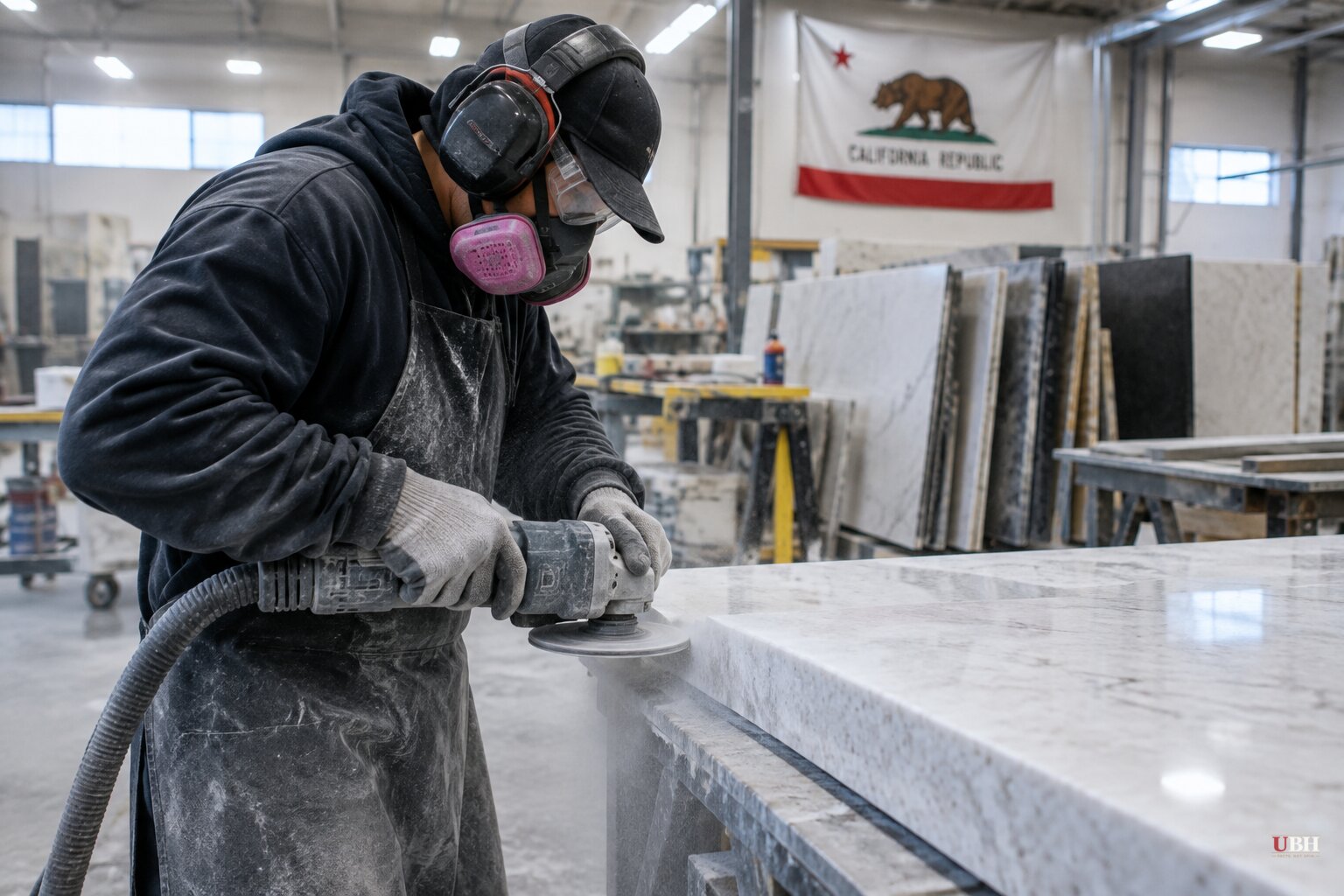
California's Department of Public Health has identified 592 cases of what it calls "especially severe" silicosis among engineered stone countertop workers between January 2019 and June 2026, according to findings published in NEJM Evidence and reported by Healio. Thirty-one of those workers have died, at a median age of 52.
The first case CDPH identified set the pattern. A worker was diagnosed at age 32 and died of respiratory failure at 38, according to Dr. Amy Heinzerling, a CDPH medical officer who co-authored the study. Most patients are Latino men who cut and polished engineered quartz slabs for kitchen and bathroom counters, inhaling crystalline silica dust in the process.
"Clinicians should be on the lookout for silicosis in countertop fabrication workers," Heinzerling told Healio, urging doctors to screen both symptomatic and asymptomatic workers with chest CT scans and report cases to public health authorities.
Workers Suing, Industry Fighting Back Through Congress
Sick workers around the country are now suing the artificial stone industry for billions of dollars, according to Bloomberg's Josh Eidelson. California is weighing an outright ban on the product. At the same time, manufacturers' allies in Congress are working to ban the lawsuits themselves rather than address the underlying exposure problem, Bloomberg reported.
If the product is dangerous enough that a state government is considering banning it, using federal legislation to close the courthouse door on injured workers looks like protecting a business model at the expense of the people it's hurting. A liability shield doesn't reduce silica dust in a single shop.
The Workers' Comp System Is Failing Sick Workers
Even workers who qualify for help often can't get it. Eleazar Resendiz Cortes, 39, was diagnosed with silicosis after years cutting countertops and now struggles to sweep a floor or bike with his kids, according to reporting from KQED's Farida Jhabvala Romero, carried by NPR affiliates Bozeman Public Radio and UPR. He filed for workers' compensation two years ago. He still hasn't been paid.
Two insurers, AmTrust North America and Omaha National, denied his claim, saying it wasn't supported by medical, legal or factual evidence. Both companies told Romero they can't discuss specifics but are committed to handling claims fairly.
His attorney, Barry Rodich, represents roughly 100 other stonecutters whose workers' comp claims have been denied. Rodich says insurers have a financial incentive to stall. "I've had cases where there is probably no legitimate basis to maintain a denial," he told Romero. "But they are just maintaining it until a judge tells them that they have to pick it up."
There's a counterargument worth taking seriously. Yvonne Lang, an attorney who represents insurance companies and has helped settle silicosis claims, told Romero that stoneworkers often cycle through multiple employers over their careers, which genuinely complicates who's liable. "When there's multiple employers, the employers are going to point the fingers at each other," Lang said. Insurers are also screening for fraudulent claims, she said, which is a legitimate business concern, not automatically bad faith.
But the numbers suggest something is broken regardless of intent. A study published last year in the American Journal of Public Health examined insurance data for 114 California silicosis patients and found most were covered by public health insurance. Only eight had their medical care paid through workers' compensation. That means taxpayers, not the insurers who collected premiums to cover workplace injuries, are absorbing most of the cost.
A Similar Fight Is Playing Out in Coal Country
The same chemical hazard is driving a parallel crisis among Appalachian coal miners, according to The Guardian. Miners are developing black lung disease at younger ages than previous generations. John Robinson, who mined coal in southwest Virginia, was diagnosed at 47; his grandfather's generation typically wasn't diagnosed until their 60s, 70s or 80s.
A 2024 Mine Safety and Health Administration rule, finalized under the Biden administration, cut the permissible silica exposure limit from 100 micrograms per cubic meter to 50. The National Stone, Sand & Gravel Association, a mining trade group, legally challenged the rule. According to the group's spokesperson, Kerry Lynch, NSSGA did not oppose the tighter exposure limit itself, only the rule's frequent air sampling and medical surveillance requirements. When the Trump administration did not defend the rule in court, the Eighth Circuit stayed it, and MSHA has notified the court it will reconsider the challenged portions.
A safety rule years in the making, aimed at a documented incurable disease, is now on ice because the agency responsible for it declined to defend it.
What Happens Next
California lawmakers haven't yet voted on a formal ban of engineered stone, and no timeline for that decision has been reported. Rodich continues appealing Resendiz Cortes' denied claim to state officials. Whether Congress moves forward with legislation limiting silicosis lawsuits, and whether MSHA restores the full silica rule for miners, remain open questions with no resolution date set as of this month.
Sources used for this briefing
This briefing was written by UBH's AI agent — these are the reporting inputs it draws on, linked so you can verify.


