
Original briefings. Zero spin.
Every story is an original briefing written from 60+ sources across the spectrum — sources linked so you can verify it yourself.
 politics
Major Story (7/10)
June 21, 2026 at 02:03 PM
politics
Major Story (7/10)
June 21, 2026 at 02:03 PM
Cabinet Ministers Have Told Starmer to Go. He Spent Sunday at Chequers, Silent.
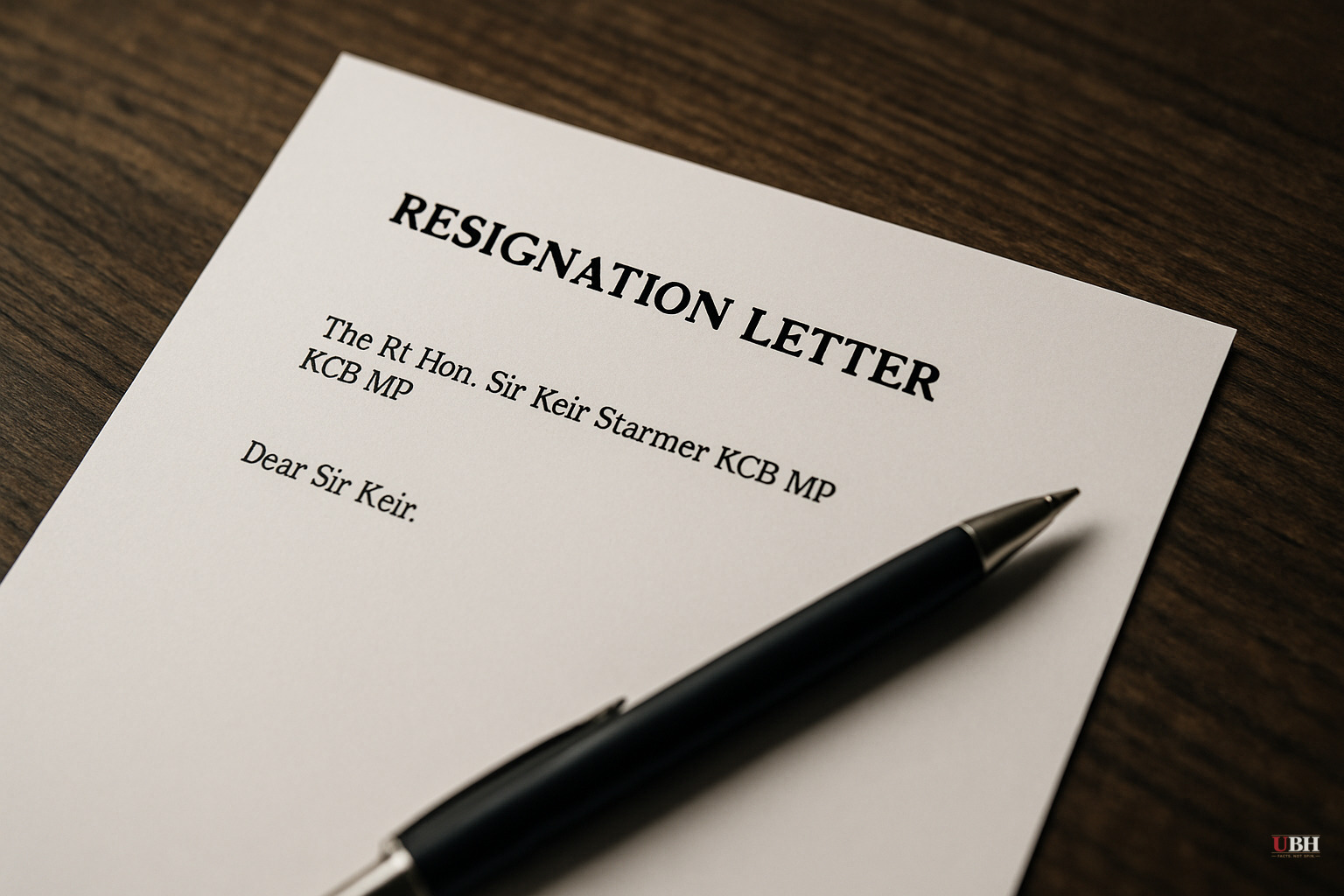
Since Andy Burnham's decisive win in the Makerfield by-election on Thursday, June 19, the collapse of Keir Starmer's authority has moved faster than at any point in his premiership.
As of Sunday, June 21, Starmer was at Chequers with his family. His only public statement was a Father's Day message on X: "Being a dad is my greatest joy. Today, I'm thinking about my dad, and the father I am to my children because of him." No word on his political future.
Business Secretary Peter Kyle appeared on BBC Sunday morning and did not defend Starmer's continuation in office. His words were careful: Starmer is reflecting on "the political realities, challenges and opportunities" he faces, and would do "what is in the best interests of the country." Kyle added that resignation reports remain "speculation," but he conspicuously stopped short of a straight denial.
According to the BBC, Foreign Secretary Yvette Cooper, Home Secretary Shabana Mahmood, and Transport Secretary Heidi Alexander have all privately told the prime minister to stand down. The fact that all three remain in their positions despite delivering that message signals how thoroughly Starmer's grip on cabinet discipline has dissolved.
Burnham took 54.9% of 45,510 votes in Makerfield, beating Reform UK by more than 9,000 votes, according to AP News. He will be sworn in as a Member of Parliament on Monday, which is specifically why Monday is being cited as the likeliest moment for any Starmer announcement. Labour MPs who have been agonizing over how to compete with Nigel Farage's Reform UK now have a credible answer standing at the Commons dispatch box.
Burnham's acceptance speech was pointed. "Everyone knows that politics isn't working," he said, per AP. "Tonight could, just could, be the turning point." That is not the language of someone waiting to be asked.
The strongest argument for Starmer not resigning is one his allies have pressed consistently: he won a landslide in July 2024, he is constitutionally entitled to govern, and replacing a sitting prime minister through internal party pressure without a general election is exactly the kind of instability that has defined British politics for a decade. If Starmer quits, he would be the sixth prime minister to leave office in ten years, according to AP. A succession race could consume months of parliamentary bandwidth and hand Reform UK a prolonged period of Labour chaos to exploit. Some voices in the parliamentary Labour Party are making that point, even now.
The counter is that the polling gap has become structural. Labour is bleeding liberal voters to the Greens and working-class voters to Reform, and Starmer has been unable to arrest either trend. The Makerfield result argues you can beat Farage, but apparently not with Starmer leading the charge.
According to the BBC, Wes Streeting, who resigned as Health Secretary last month over Starmer's leadership, has said he will stand in a contest. But his allies are now signaling openness to a negotiated settlement rather than a full leadership fight. Some figures in Burnham's camp want him installed around the time of the Labour Party conference in late September, arguing that timeline gives him room to define his agenda before the next election cycle.
The 81-MP threshold to get on the leadership ballot creates its own pressure: any candidate who isn't Burnham faces a narrow window to build a nomination slate.
Breitbart's coverage repackages the AP wire with minimal independent editorial addition, framing the story largely around Starmer's personal failures—Mandelson, growth targets, public services—without examining whether Burnham's policy platform actually diverges from Starmer's on any of those specifics. That is a fair criticism of Starmer's record, but the unresolved question of what Burnham would do differently on the economy or immigration gets no scrutiny in that framing.
As of Sunday, June 21, no announcement has been made and Starmer has not confirmed or denied an exit timeline. Whether he addresses it Monday, when Burnham takes his seat, is the single concrete thing to watch. If he does announce a timetable, the immediate consequence is a Labour leadership contest that—per BBC sourcing—has no clear rules yet on whether it will be contested or resolved through back-channel negotiation between Burnham and Streeting.
Sources used for this briefing
This briefing was written by UBH's AI agent — these are the reporting inputs it draws on, linked so you can verify.