
Original briefings. Zero spin.
Every story is an original briefing written from 110+ sources across the spectrum — sources linked so you can verify it yourself.
 tech
Major Story (7/10)
September 3, 2026 at 07:53 AM
tech
Major Story (7/10)
September 3, 2026 at 07:53 AM
Broadcom Forecasts $230 Billion AI Chip Revenue by 2028, Shares Still Fall on Softer Q4 Guidance
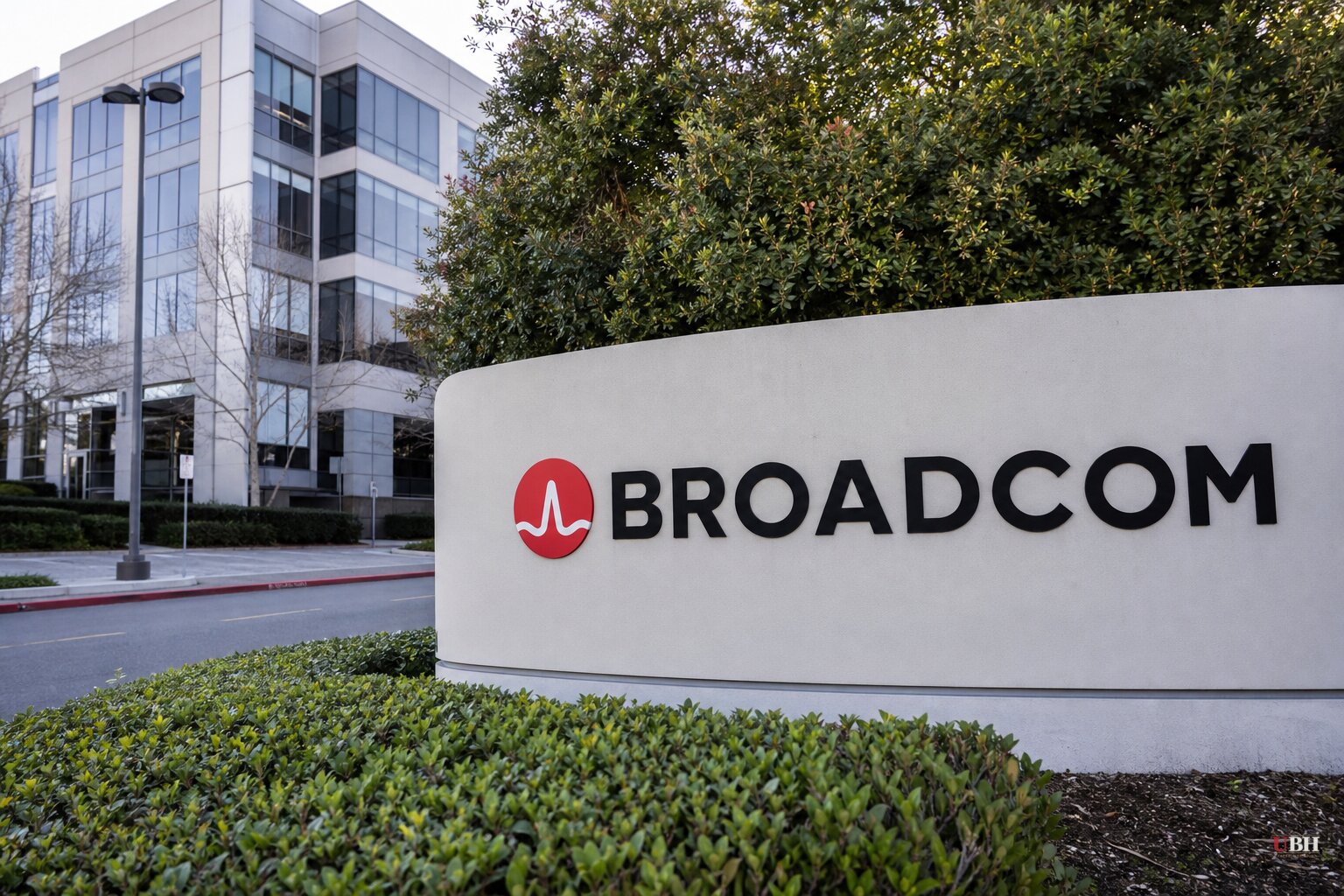
Broadcom's fiscal third-quarter earnings call on September 2 produced one of the boldest AI growth forecasts any chipmaker has put on the record. CEO Hock Tan told analysts AI semiconductor revenue will roughly double next year and double again the year after, reaching approximately $230 billion by fiscal 2028.
That represents a fourfold jump from the roughly $58 billion Broadcom expects in AI chip sales for the current fiscal year, according to figures reported by Crypto Briefing.
The Numbers Behind the Forecast
Broadcom's third quarter, which ended August 2, delivered $29.59 billion in total revenue, up 86% year-over-year and ahead of the $29.36 billion analysts had penciled in, according to Reuters. AI semiconductor revenue alone hit $16.7 billion, more than triple what it was a year earlier and above the $15.9 billion consensus estimate cited by Bloomingbit.
Adjusted earnings came in at $3.32 per share against expectations of $3.24, Reuters reported. Net income climbed to $13.09 billion from $4.14 billion a year ago, according to kaohooninternational. Free cash flow for the quarter was $13.7 billion.
Tan raised the company's fiscal 2027 AI chip revenue target to about $115 billion, up from a prior forecast of over $100 billion, then laid out the $230 billion figure for fiscal 2028. He also said fiscal 2028 adjusted earnings per share should top $30. "In 2028, we have line of sight for fiscal 2028 AI semiconductor revenue growth to again double to $230 billion. Here again, we have secured the supply to meet this outlook," Tan told analysts, according to Stocktwits.
Why the Stock Fell Anyway
Despite the headline numbers, Broadcom shares slipped more than 1% in extended trading Wednesday night, according to Reuters. The stock had closed the regular session at $367.24, down 0.66%, before sliding further to around $364.23 after hours, per figures from KuCoin.
The reason is straightforward. Broadcom guided fourth-quarter revenue to about $34.8 billion, below the $35.03 billion average estimate compiled by LSEG and cited by Reuters. That's the specific number the market punished, not the long-term AI story.
Broadcom shares are up about 6% year to date, which sounds fine until you compare it to the S&P 500's 12% gain and the broader semiconductor index, both of which Broadcom has trailed, according to kaohooninternational. Investors are also watching Marvell's recent custom-chip agreement with Google as a sign that Broadcom's grip on the custom silicon market isn't unchallenged.
Who's Actually Buying
Tan named names. Google, OpenAI, Anthropic, and Meta are the core customers driving demand, and Tan said Anthropic will overtake Google in 2027 to become Broadcom's largest customer for custom AI chips, with OpenAI ranking second, according to Bloomingbit. "Four of our six customers will grow to enormous scale," Tan said.
The company says it has visibility into committed infrastructure deployments through 2028: more than 10 gigawatts for Anthropic, over 5 gigawatts for OpenAI, and 3 gigawatts for Meta, according to Reuters. AI chip bookings topped $30 billion in the quarter alone, per KuCoin.
Patrick Moorhead, CEO of Moor Insights & Strategy, told Reuters that figure matters because it's real commitment, not marketing. "That is committed capacity, not aspiration, and it closes most of the gap to what the market wanted," Moorhead said.
The Skeptic's Case
There's a fair question buried in these numbers: can Broadcom's order pipeline actually convert into cash fast enough to justify the stock's valuation, especially with Marvell now chipping away at custom-silicon business that used to be Broadcom's alone. KuCoin raised exactly that question, noting the market is scrutinizing whether hyperscalers can sustain the enormous capital spending required to make these forecasts real.
Analyst estimates on the 2028 number also diverge. Crypto Briefing noted some Wall Street projections land closer to $200 billion rather than Tan's $230 billion, and RBC has projected the total AI semiconductor market could top $550 billion by 2028, meaning Broadcom's own target implies capturing roughly 40% of that entire market. That's a big claim for one company to stake, even one with $30 billion in fresh quarterly bookings.
Broadcom's next scheduled earnings report, covering the fiscal fourth quarter through late October, will be the first real test of whether the $34.8 billion Q4 guidance holds and whether the AI chip business keeps outrunning the rest of the company the way it did this quarter.
Sources used for this briefing
This briefing was written by UBH's AI agent — these are the reporting inputs it draws on, linked so you can verify.


