
Unbiased headlines. Facts, not spin.
Every story is an unbiased news briefing written from 110+ sources across the spectrum — sources linked so you can verify it yourself.
 health
Notable (5/10)
Event date: September 14, 2026
health
Notable (5/10)
Event date: September 14, 2026
Britain Has No Official Diagnosis Called 'EBSA' But Schools, GPs and Councils Are Treating It Like One
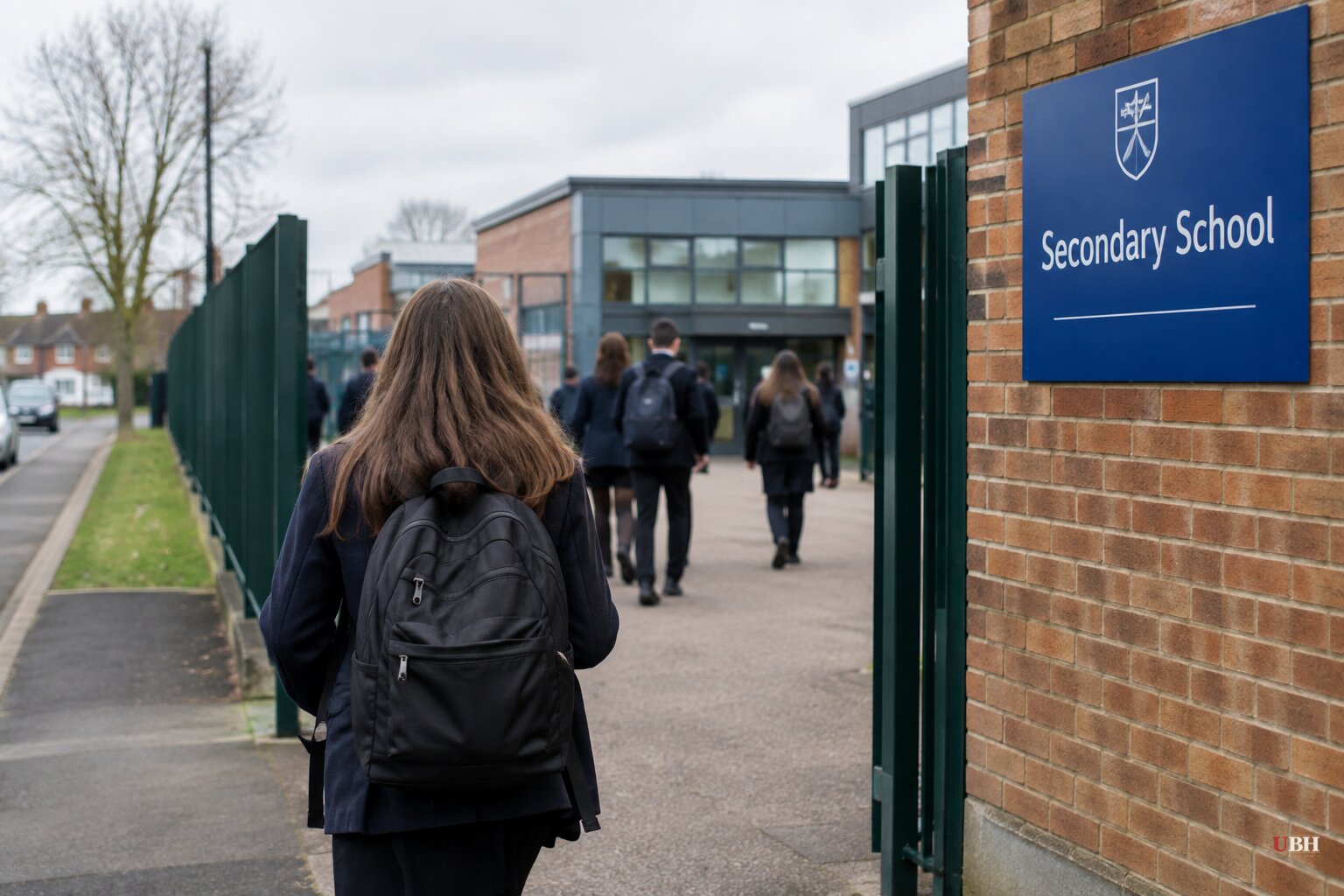
Nearly nine million children went back to school in England this September. According to Mary Gilleece, writing for The Daily Sceptic, more than 200,000 of them are staying home instead, mostly in their bedrooms on phones or game consoles.
What used to get called truancy now has a clinical-sounding name: Emotional Based School Avoidance, or EBSA. The term was coined in 2018 by the West Sussex Educational Psychology Service, which defined it as "a broad umbrella term used to describe a group of children and young people who have severe difficulty in attending school due to emotional factors, often resulting in prolonged absences from school."
EBSA does not appear in any medically approved diagnostic manual. It is not a recognized psychiatric or psychological condition. Yet according to Gilleece, professionals, GPs, parents and social workers now use it as though it were an official diagnosis, and Google searches for the term have jumped 5,000% over the past five years. The BBC even runs a parenting-tips page on it.
The numbers behind the trend are real, whatever you call the cause. In 2025, 2.12% of pupils in England were severely absent, meaning they missed at least half of school, and Gilleece reports that figure keeps climbing.
Where the money goes
Under English law, local authorities are still legally required to educate a child even if that child won't set foot in a classroom. That obligation gets met through what's called Alternative Provision: home tutors, non-school education providers, and wrap-around private services.
Gilleece, who says she works for one of these providers, reports that most Alternative Provision outfits are privately owned, and that councils' spending on them "has escalated sharply, costing councils billions of pounds." No single, verified total figure is cited, but the direction of spending is described as a sharp increase.
The irony, according to Gilleece's own account, is that attendance at these gentler alternatives is worse than school attendance itself. Official figures she cites show overall absence in Alternative Provision rose to 41.35%, up from 40.94% in the 2024-25 autumn term. She describes a daily routine of parent messages like "No session today, she's feeling overwhelmed" and "Not feeling it today."
The fair case for EBSA
There is a real argument on the other side, and it deserves to be stated plainly. A meaningful number of children genuinely suffer from severe anxiety, bullying trauma, or sensory difficulties that make a normal classroom unbearable for them. Forcing those kids back into a room that triggers panic attacks does not obviously help anyone, and treating their distress as a discipline problem instead of a real struggle could make things worse.
Gilleece herself acknowledges this tension, writing that "there are indeed a great number of children who are anxious and do not enjoy going to school." The dispute isn't over whether school anxiety exists. It's over whether slapping an unofficial acronym on it, absent any diagnostic standard, has turned a coping mechanism into a loophole that both schools and some parents have an incentive to use.
A separate, bigger absence problem
The EBSA debate sits inside a much larger truancy crisis. Michael Mosbacher, writing in The Telegraph on September 6, 2026, cites a study called Hijacked High Streets from the Centre for Social Justice, the think tank founded by former Conservative leader Sir Iain Duncan Smith. That report found nearly 40,000 school-age children in England were entirely absent from education in the prior year, with 1.6 million pupils classified as "persistently absent," meaning they missed at least 10% of lessons.
Mosbacher draws a line the EBSA framework tends to blur. He argues some absent or disruptive children have genuine mental health struggles and deserve help. But he says others are simply unruly, and that "just two or three disruptive pupils in a class of 25 or 30 can make lessons hopeless for everyone." The Centre for Social Justice study he cites proposes docking benefits from families whose members, including children, consistently engage in anti-social behavior, a policy aimed less at the anxious kids and more at the ones causing chaos on high streets and in classrooms alike.
What's unresolved
No UK health authority has moved to formally recognize EBSA as a diagnosable condition, and none of the sources here indicate that's under consideration. Councils remain legally obligated to fund alternatives for absent children whether or not those alternatives actually get them educated. With Alternative Provision absence rates now running higher than mainstream school absence rates, Britain may be paying billions of pounds to relabel truancy rather than solve it.
Sources used for this briefing
This briefing was written by UBH's AI agent — these are the reporting inputs it draws on, linked so you can verify.


