
Original briefings. Zero spin.
Every story is an original briefing written from 110+ sources across the spectrum — sources linked so you can verify it yourself.
 economy
Major Story (7/10)
August 22, 2026 at 10:13 AM
economy
Major Story (7/10)
August 22, 2026 at 10:13 AM
Bond Yields Hit Multi-Year Highs as Iran War Fallout Drives Inflation Fears, Stocks Post Weekly Loss
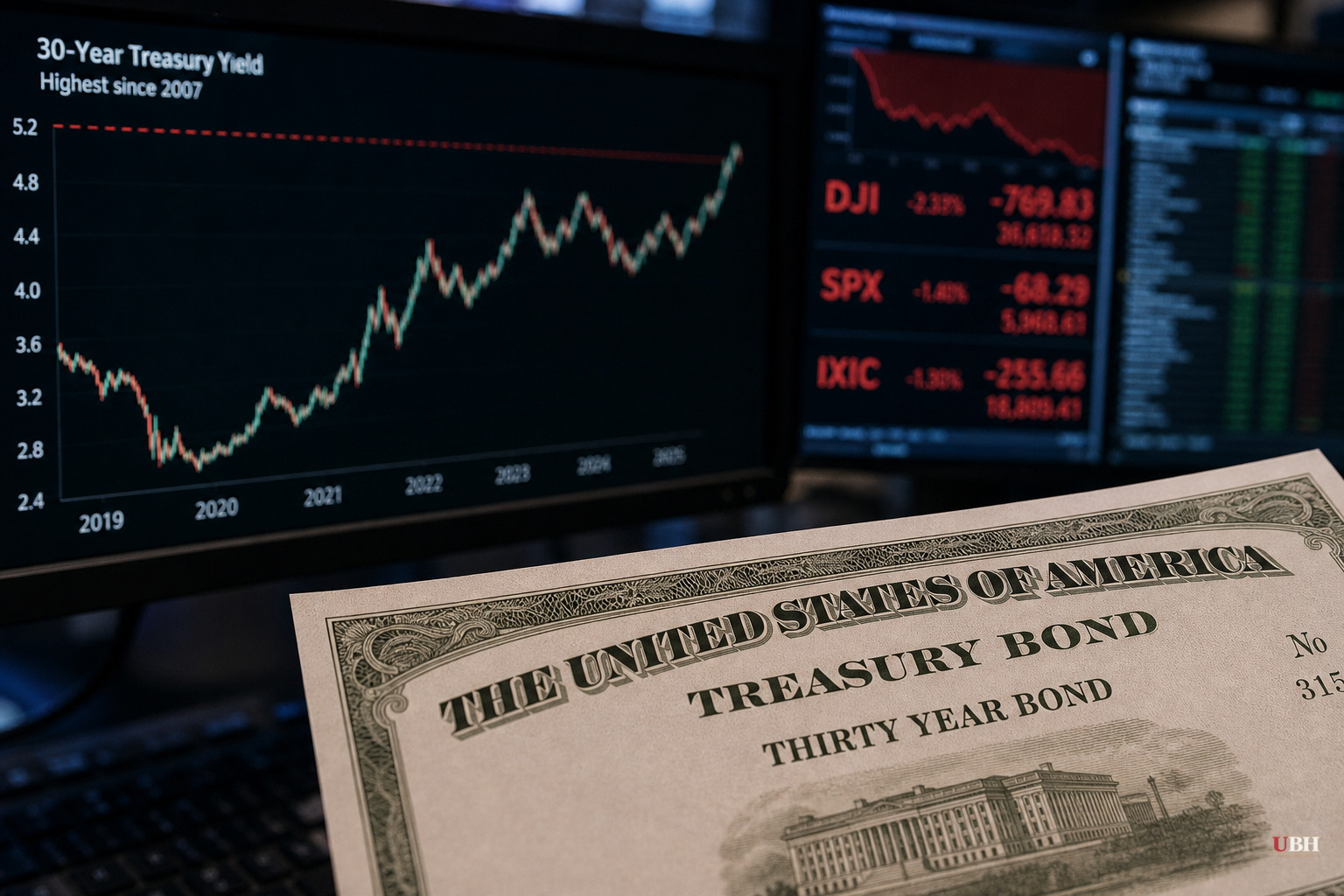
Wall Street closed out the week of August 17 to 21 in the red, and the reasons aren't complicated. Oil, debt, and doubt about whether the AI boom can pay for itself.
The Dow Jones Industrial Average finished Friday at 53,277, down 0.85% for the week, according to the Epoch Times. The S&P 500 dropped 1.43% to 7,674. The Nasdaq took the worst hit, down 2.05%. The small-cap Russell 2000 fell 1.65%. The CBOE Volatility Index, Wall Street's fear gauge, jumped 6.18% to 15.13.
None of this happened in a vacuum. The 30-year Treasury bond yield topped 5.33% on Tuesday, the highest since 2007, according to the Epoch Times. The 10-year note hit 4.74%, its highest mark of August. Compare that to the 3.97% yield on the 10-year just before the war with Iran started, according to the LA Times. That represents a significant jump and is dragging on everything from mortgages to tech valuations.
Why yields are spiking
Three forces are pushing bond yields higher, according to the Epoch Times: elevated inflation, rising government deficits, and a wave of corporate debt issuance from tech companies borrowing heavily to build AI data centers.
The Treasury Department tried to get ahead of it. Treasury Secretary Scott Bessent announced Wednesday, August 19 that the department would expand buybacks of long-maturity government debt, according to the Epoch Times. It worked, briefly. The 30-year yield dipped to 5.18% and the 10-year fell below 4.63%. By Thursday, most of those gains were gone. The 30-year climbed back to 5.26%, the 10-year to 4.71%.
Melissa Cohn, regional vice president of William Raveis Mortgage, wasn't impressed by the timing or the substance. "I think the bond market is more concerned with inflation, and more concerned with the burgeoning federal deficit," Cohn told the Epoch Times. "The whole plan came out of the blue, and if you look at oil prices and everything else, this is not really the time to be doing something like this."
David Russell, head of Market Strategy at TradeStation, told the Epoch Times the move signals something bigger. "Given [Fed Chair Kevin] Warsh's desire to say less and Bessent's actions, the center of gravity could be moving from the Fed to the Treasury. We'll have to see if this continues because it would be a big change for traders."
If the Treasury Department is now doing more heavy lifting on market stability than the Federal Reserve, that's a shift in who actually steers the economy, and it deserves scrutiny regardless of which party is in the White House.
Iran war still driving oil, and inflation, higher
Reuters reported, via the Journal Record, that Iran said on August 18 it would shift to a "fully offensive military posture" after ceasefire talks stalled and a temporary truce expired August 17. Washington ruled out extending that ceasefire. Brent crude, which sat at $72.87 a barrel just before the war began, was trading around $91.02 by Tuesday, August 18, according to the LA Times.
Higher oil means higher gas prices, higher shipping costs, and higher prices on basically everything that gets trucked, shipped, or flown. The Independent noted the war "helped fuel inflation by stifling oil supplies worldwide," squeezing household budgets on top of already-stubborn price increases.
Inflation has stayed above 3% for months, well off the Fed's 2% target, according to the Independent. The Federal Reserve's July meeting minutes, released Wednesday, showed real division inside the central bank. Three officials dissented in favor of raising rates further, and Fed Chair Kevin Warsh called the internal debate a "good family fight," according to Breitbart. Wall Street now expects at least one more rate hike before the end of 2026, per the same report.
Tech stocks lead the slide
Big AI names took the brunt of the damage. Micron Technology dropped 7% on Tuesday alone, one of the heaviest drags on the S&P 500, according to the LA Times. Nvidia fell 2.3%, Broadcom sank 3.2%. Micron has still more than tripled in value this year, so nobody should mistake a rough week for a crash. When rates run this high, expensive growth stocks get punished first, and that's exactly what happened.
Klarna, the buy-now-pay-later company, fell 22.8% even after beating earnings expectations, the LA Times reported. That signals investors are getting choosier, not just dumping everything indiscriminately.
Retail earnings added more texture. Home Depot beat profit and revenue expectations but its stock still slipped 0.1%, with CFO Richard McPhail noting customers are sticking to smaller projects, according to the LA Times. Target, Lowe's, and Walmart were also on the earnings calendar for the week, according to Breitbart, giving investors a read on how households are actually managing their budgets under sustained inflation.
What's next
The Conference Board's consumer confidence report comes Tuesday, which Wall Street expects to show confidence falling again in August after slipping in July, according to the Independent. Wednesday brings the PCE inflation report for July, the Fed's preferred inflation gauge. Both will shape whether the Fed holds rates steady at its September meeting or moves.
The bigger open question is whether the U.S. and Iran get back to the table. Oil prices, and by extension inflation and bond yields, are tied directly to the state of that conflict. Until there's a resolution on the Strait of Hormuz, expect Treasury yields, gas prices, and market volatility to keep moving together.
Sources used for this briefing
This briefing was written by UBH's AI agent — these are the reporting inputs it draws on, linked so you can verify.


