
Original briefings. Zero spin.
Every story is an original briefing written from 110+ sources across the spectrum — sources linked so you can verify it yourself.
 economy
Major Story (7/10)
Event date: August 8, 2026
economy
Major Story (7/10)
Event date: August 8, 2026
America Races to Build a Rare-Earth Supply Chain Without China. It's Years Behind Schedule.
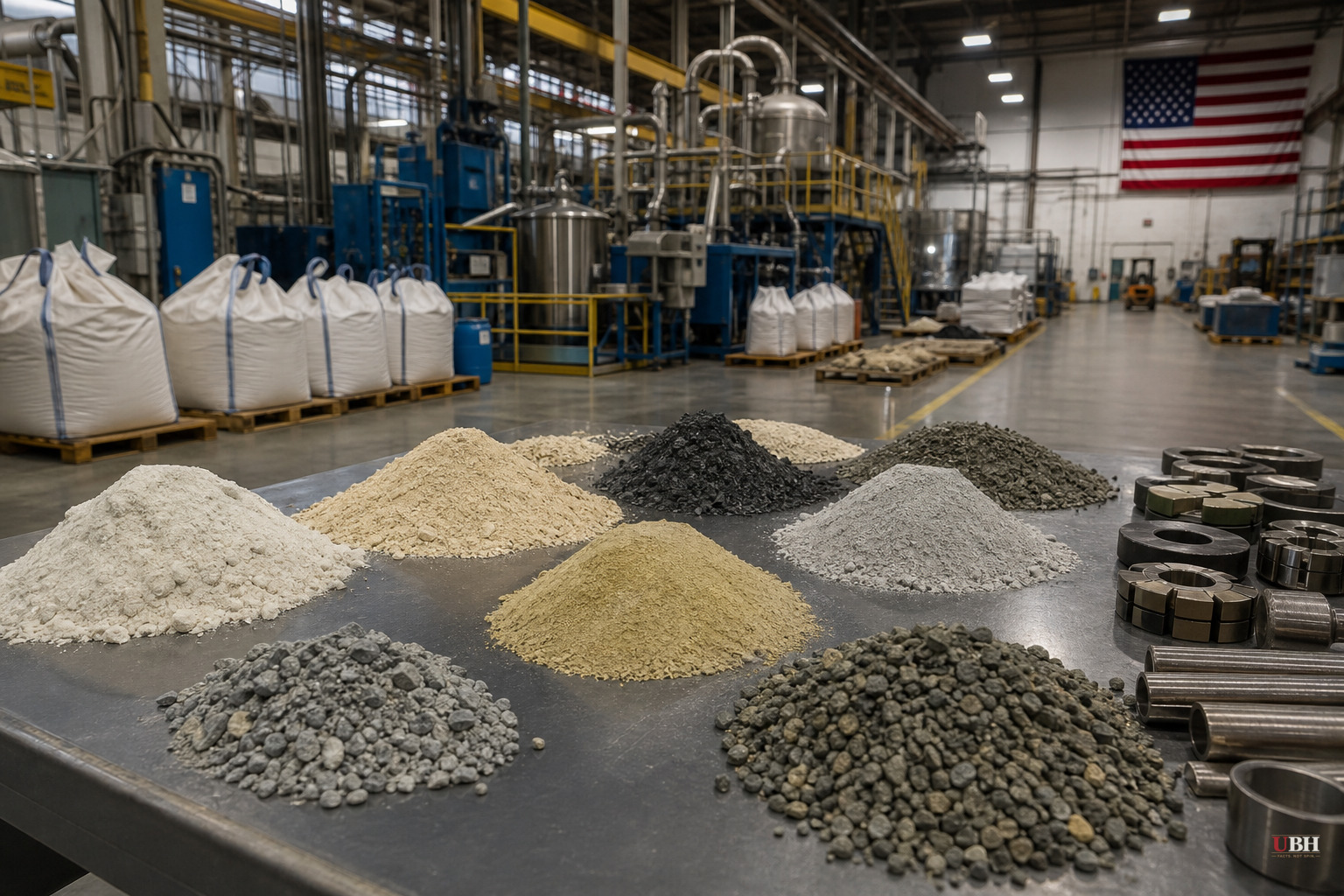
A warehouse in Exeter, New Hampshire, is running a bet on American industrial independence. Inside, workers in heat-resistant suits use electrolysis to pull neodymium, praseodymium, terbium, dysprosium, samarium and yttrium out of mining waste, according to the Associated Press. The company, Phoenix Tailings, just landed a $500 million Pentagon loan to build what it calls the "Freedom facility." It will take 14 to 18 months to finish, according to Anthony Balladon, the company's chief commercial officer and co-founder.
China controls the processing and metallization stage of the rare-earth supply chain, the step that turns raw material into usable magnets, more thoroughly than it controls mining itself, the AP reported. The Trump administration wants military contractors to build weapons faster while simultaneously banning them from sourcing critical-mineral components from China. Those two demands are in direct tension, and Balladon put it plainly: "It will be a tall order and a challenge to replenish these stocks and scale up in the time frame needed to meet defense demand and regulations."
The urgency is not abstract. Tomahawk cruise missiles, THAAD interceptors and F-35 fighter jets all depend on these materials, and the AP notes munitions are being drawn down rapidly amid the ongoing war in the Middle East. You cannot mine, refine and metallize your way out of a magnet shortage in a few months. Most new U.S. mines are years from producing anything, according to the AP, which is why companies like Phoenix Tailings are turning to mine waste and recycled magnets and disk drives instead of waiting on new extraction sites.
Washington is throwing money at the workforce gap too
The bottleneck isn't just refineries. It's people. The Department of Energy announced on August 7 that it will invest up to $100 million in a program called PROSPECT, aimed at building the critical-minerals workforce, according to the Epoch Times. The DOE estimates the mining sector alone will need roughly 6,000 new engineers over the next decade. Since 2015, enrollment in U.S. mining education programs has dropped about 45%, the department said.
Energy Secretary Chris Wright framed it as a national security necessity: "A strong domestic mining and minerals workforce is essential to powering America's future, strengthening our national security, and ending our dependence on foreign adversaries for the materials that underpin modern energy, manufacturing, and defense." The program's near-term goal is to double the number of graduates in mining-related degrees within two years. That is an ambitious target for an industry that has spent a decade losing students, not gaining them.
Europe has the opposite problem: money without communities
While the U.S. struggles with processing capacity and workforce, Europe's critical-minerals strategy is running into a different wall: nobody wants the mine in their backyard. Mining.com reported that opposition to Serbia's Jadar lithium project, which Brussels has designated a strategic project despite Serbia not being an EU member, rose from 55.5% in mid-2024 to 63.5% by March 2025, according to the EU Institute for Security Studies.
The EU's Critical Raw Materials Act sets targets for 2030: 10% of strategic raw materials extracted domestically, 40% processed within the bloc, 25% recycled. Setting targets is easy. Mining.com's analysis notes that local opposition isn't irrational. Mining consumes land and water, generates waste, and leaves environmental scars long after production stops. Communities have legitimate reasons to distrust company promises. China's ability to build mineral infrastructure faster reflects a political system that gives objectors fewer avenues to stop projects the state wants built.
A regulatory fight with an ally, not just a rival
There's also friction with Europe on a separate front. The Daily Signal, in an opinion piece by Steven Bucci, argued that the EU's Corporate Sustainability Due Diligence Directive forces American companies to document detailed supply-chain relationships, information Bucci contends could expose vulnerabilities to adversaries like China if it leaks or gets misused. Bucci also flagged that the EU granted French energy giant TotalEnergies an exemption from certain requirements, calling out an inconsistency in how the rule gets applied. This is an opinion argument, not a settled fact, and no EU official response is included in that reporting to weigh the other side.
Where this leaves the supply chain
None of the individual moves—the New Hampshire refinery, the $100 million workforce program, the $3 billion in mining investment Trump has touted—closes the gap overnight. The AP's reporting is the most grounded on this: American mines still take years to permit and build, just like Europe's do. The difference is the U.S. is trying to skip ahead using waste reprocessing and recycling while new mines catch up.
The open question is whether 14 to 18 months for one refinery and two years to double engineering graduates is fast enough to matter for weapons systems that are being consumed now. Phoenix Tailings' own co-founder isn't promising it will be easy. The Pentagon's bet is that partial capacity soon beats full capacity too late.
Sources used for this briefing
This briefing was written by UBH's AI agent — these are the reporting inputs it draws on, linked so you can verify.


