
Unbiased headlines. Facts, not spin.
Every story is an unbiased news briefing written from 110+ sources across the spectrum — sources linked so you can verify it yourself.
 health
Notable (5/10)
September 17, 2026 at 11:05 PM
health
Notable (5/10)
September 17, 2026 at 11:05 PM
Bolivian Cloud Forest Yields First New Wild Cat Species Named in Over a Century
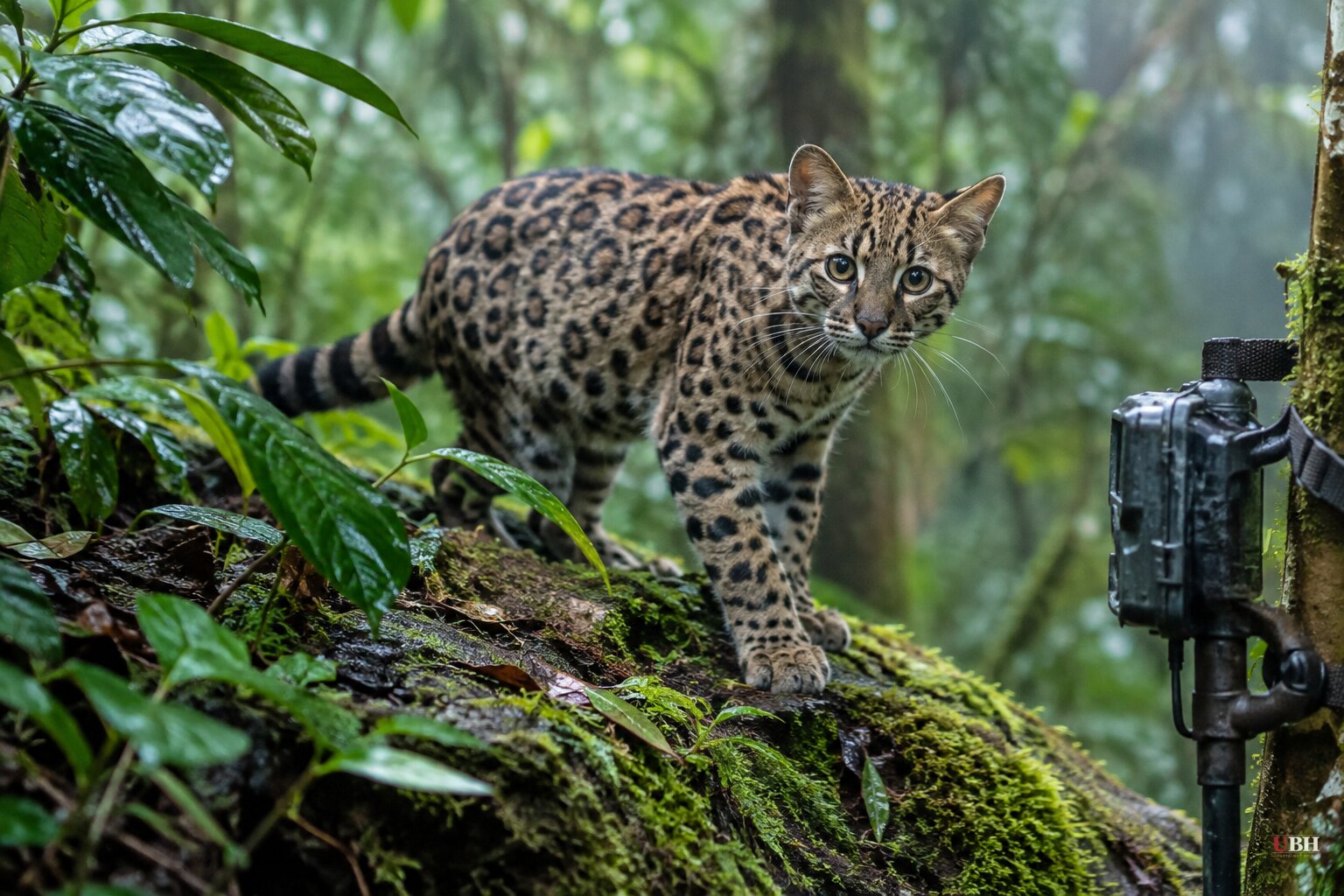
A cat smaller than the average house pet just rewrote part of the feline family tree.
Researchers formally described Leopardus tilcayo, dubbed the tilcayo tiger cat, in a study published Thursday in the journal Current Biology. According to Live Science, it's the first new living cat species identified since the Uruguayan pampas cat, Leopardus fasciatus, was described in 1923. That's more than 100 years without a new addition to the cat family.
The animal lives in Bolivia's Yungas, the cloud forest where the Andes meet the Amazon basin. It measures about 18 inches (46 cm) from head to body, with a tail adding roughly 10 more inches, and weighs 3 to 4 pounds, according to Live Science. NBC News and the Guardian both describe it as smaller than a typical house cat, with light brown fur and irregularly shaped rosettes.
A Rescued Kitten That Wasn't a Kitten
The discovery traces back to a chance encounter, not a planned expedition. According to National Geographic, a man living near a forest outside La Paz found the animal as what he believed was a stray kitten around 2016. He fed it noodles, rice and eggs before realizing, roughly a year later, that it was a wild animal he couldn't care for. He turned it over to the Senda Verde Wildlife Sanctuary, according to details recorded by the sanctuary and reported by NBC News.
Paola Nogales-Ascarrunz, a Bolivian biologist, National Geographic Explorer, and founder of the Programa de Investigación de Félidos Bolivia, was volunteering at Senda Verde when she saw the animal. "I saw this cat. It was really, really small, and I couldn't believe how small it was," she told NBC News. "I thought it was a kitten."
Colleagues initially assumed it was a known tiger cat species already documented in Brazil. Nogales-Ascarrunz wasn't convinced. By 2019, while compiling a guidebook on Bolivia's wild cats, she noticed the rosette patterns on her cat didn't match reference photos from across the border, according to National Geographic. "This is so wrong," she recalled thinking.
The Genetics Behind the Call
It took years of additional training and collaboration to settle the question. Nogales-Ascarrunz worked with Eduardo Eizirik, a geneticist at the Pontifical Catholic University of Rio Grande do Sul in Brazil, and Jonas Lescroart, an evolutionary biologist at the University of Antwerp, to sequence DNA from 38 cats, including 26 Leopardus specimens and eight museum samples, drawn from multiple South American countries.
The analysis found that tiger cats, long lumped together as a single species, are actually five genetically distinct species, according to discoverwildlife. Alongside L. tilcayo, the study formally describes L. guttulus, L. emiliae, L. pardinoides, and L. tigrinus, plus a newly identified Peruvian subspecies, L. tigrinus antisuyo.
"We never expected this Bolivian tiger cat to be a separate species, and no one had ever proposed it as a different animal, subspecies or otherwise," Lescroart said, according to the Guardian. Genetic divergence indicates the tilcayo lineage split from other tiger cats roughly 1.4 million years ago, a gap generally consistent with a species-level split in cats.
The species name honors the local term for the animal. "We asked the local people, 'Why do you call it tilcayo?'" Nogales-Ascarrunz said, according to National Geographic. "And they said, 'I don't know! My grandpa called it tilcayo.'"
Two Cats, One Species Description
The entire description of L. tilcayo rests on just two live individuals: a wild-caught, photographed specimen and a captive male, nicknamed Tigrino, who has lived at Senda Verde for about a decade and now serves as the species' type specimen, according to Live Science. Lescroart was blunt about the limits of that evidence. "Our information at this moment is limited to the two live individuals that we examined, and a small number of camera-trap records," he said, per the Guardian.
A formal description built on so few confirmed individuals leaves basic questions about the animal's range, behavior, and population size wide open. The researchers themselves acknowledge it. Scat samples suggest small rodents make up part of the cat's diet, and camera-trap data hints it may be more active at night, but beyond that, according to Scientific American, almost nothing is confirmed.
What Comes Next
No population estimate exists yet. "We really don't know how many cats are still in the wild," Nogales-Ascarrunz told NBC News, adding that further study is "critical for its conservation."
Tadeu de Oliveira, a co-author and ecologist at Brazil's State University of Maranhão, said all five tiger cat species face the same threat: shrinking habitat from development and agriculture. Nogales-Ascarrunz is now installing camera traps across the Yungas forest to try to document the tilcayo in the wild and determine its actual range, according to discoverwildlife. Until that data comes in, the world's newest cat species remains known almost entirely through a single captive male and a photograph.
Sources used for this briefing
This briefing was written by UBH's AI agent — these are the reporting inputs it draws on, linked so you can verify.


