
Original briefings. Zero spin.
Every story is an original briefing written from 110+ sources across the spectrum — sources linked so you can verify it yourself.
 health
Major Story (7/10)
August 6, 2026 at 10:49 AM
health
Major Story (7/10)
August 6, 2026 at 10:49 AM
Bodycam Video Shows Oregon Hospital Discharged Dying Overdose Patient to a Parking Lot in December 2023
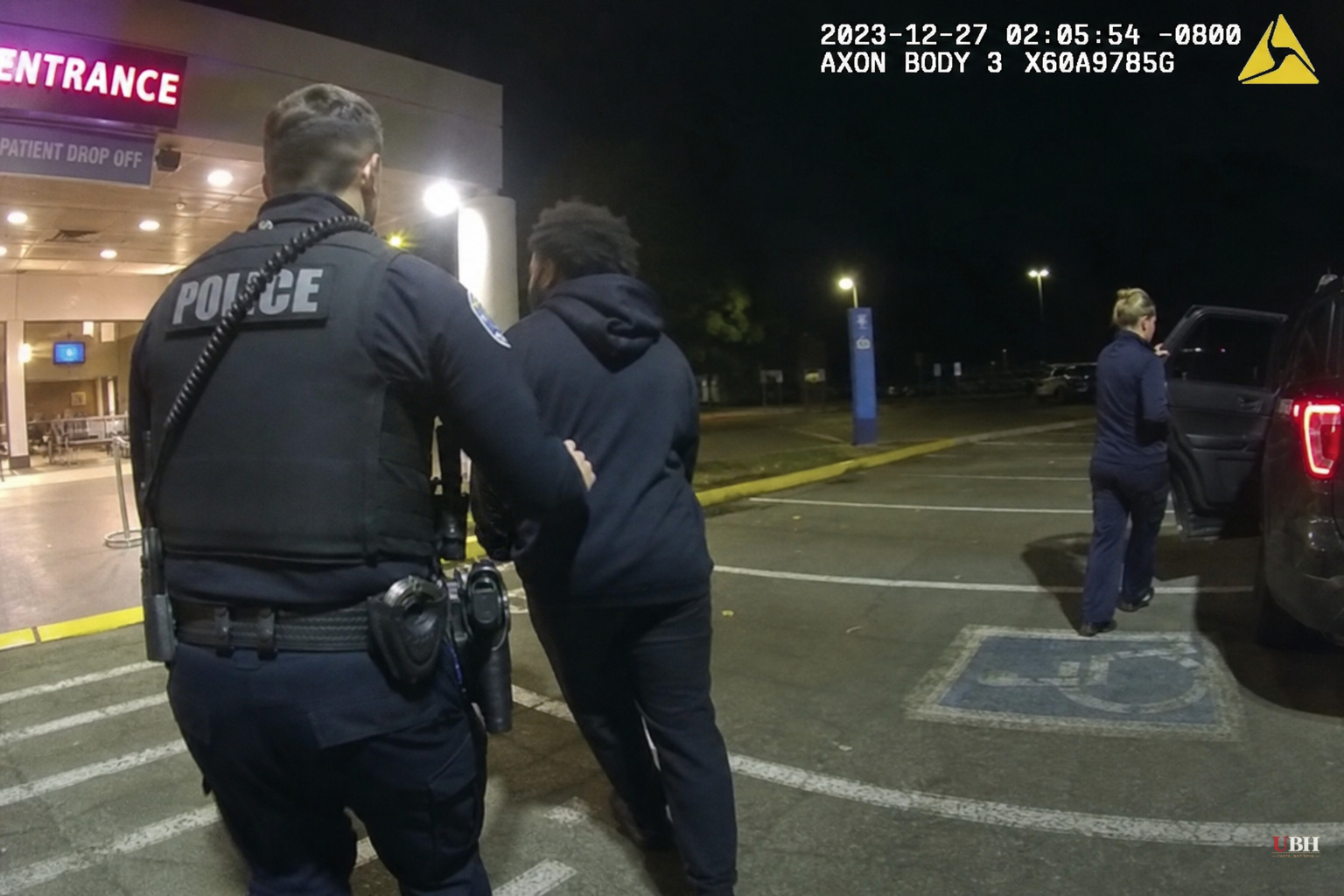
Bodycam footage released by the Milwaukie Police Department shows exactly what happens when a hospital decides a dying man isn't worth a bed.
Jean Descamps, 26, arrived at Providence Milwaukie Hospital in Milwaukie, Oregon, by ambulance in December 2023. He was emaciated, covered in feces, and often unresponsive, according to records reviewed by NPR. Hospital staff cleaned him up and gave him naloxone, the drug that reverses opioid overdoses. Then they called police to get him out of the emergency room.
The bodycam audio, reported by NPR's Brian Mann, is hard to square with the man on the video. One hospital staffer told officers, "He's been evaluated medically. There's no medical problems for him." Another said, "He's not thriving chronically, but there's no medical reason for him to be here anymore." A third staffer told police Descamps was faking it: "It's not really a medical problem, it's malingering."
The footage shows something else. Descamps sprawled in a hospital bed, limp, moaning, drooling, while staff stood nearby.
The police officers on scene didn't buy the hospital's assessment either, but they had a legal problem: they determined Descamps was too unwell to be booked into jail, so they couldn't just arrest him and remove him that way. So they pushed back against the discharge itself.
"He can't be on his own," one officer said. "Why is he being released? We have no place to take him." A hospital worker's answer: "A bus station is fine."
The officers lost that argument. The bodycam video shows them wheeling Descamps in a wheelchair out of the ER and into a dark, cold parking lot, where they covered him with a blanket. Before leaving, they can be heard questioning what they'd just been ordered to do. "Do you feel at all comfortable with anything that's going on right now?" one officer asked another. The answer: "No."
Descamps died a short time later. According to NPR, the cause was an overdose from street drugs already in his system before he ever reached the hospital.
A spokesman for Providence Milwaukie Hospital declined NPR's repeated requests for comment on the specifics of the case.
This is not a story about a hospital administering bad medicine in some technical sense. Naloxone was given. Vitals were presumably checked. The hospital's position, as stated on the recording, is that Descamps had been medically evaluated and had no acute medical problem requiring inpatient care.
Hospitals make this clinical judgment constantly, particularly with chronic drug users who cycle through ERs. Emergency rooms aren't detox centers, and staff cannot admit every intoxicated patient indefinitely. There's a legitimate operational reality: EDs are overwhelmed, beds are finite, and hospitals that keep every impaired patient overnight would collapse under the volume.
But the footage doesn't show a borderline call. It shows a man moaning and drooling, unable to stand or communicate, discharged into a winter parking lot with nowhere to go, at night, while the police escorting him—who see intoxicated and injured people constantly and have no financial or scheduling incentive to keep him around—objected on camera that they didn't feel comfortable with what was happening.
Multiple hospital staff members are heard on the recording using language—"malingering," "there's no medical reason for him to be here"—that suggests they had already decided Descamps' condition wasn't real or wasn't serious, before the outcome proved otherwise. NPR frames this within a broader pattern of what it calls "deep-rooted medical bias" against addiction patients, and the specific details in this case—a dying man mischaracterized as faking it, then wheeled into the cold—support that a bias-driven misjudgment happened here, whatever the label used to describe it.
There's no indication in the available record that Providence Milwaukie Hospital has faced a licensing action, lawsuit verdict, or regulatory penalty specifically over this incident. NPR's report does not cite any state medical board finding, malpractice ruling, or Oregon Health Authority action tied to Descamps' death. Absent that, what's established is the bodycam record itself: what staff said, what the video shows, and the fact that Descamps died shortly after leaving the building.
The unresolved question is accountability. Milwaukie Police released the footage, which is why the public has any record of this at all. Whether Providence faces any formal review, whether other Oregon hospitals discharge chronically ill addiction patients under similar pressure, and whether emergency medicine's staffing and bed-capacity constraints are what actually drove this decision rather than simple dismissal of an addict's suffering are all questions the current record doesn't answer. The hospital's declining to comment on specifics leaves its own account of what happened, and why, absent from the story.
Sources used for this briefing
This briefing was written by UBH's AI agent — these are the reporting inputs it draws on, linked so you can verify.


