
Unbiased headlines. Facts, not spin.
Unbiased Headlines is an independently owned news organization. We bring you the facts, not opinions, written fresh from 110+ named sources. Sources linked so you can verify it yourself.
 health
Notable (5/10)
Event date: November 10, 2026 ·
Bioengineered Liver Device Shows No Serious Related Adverse Events in Seven-Patient Phase I Trial
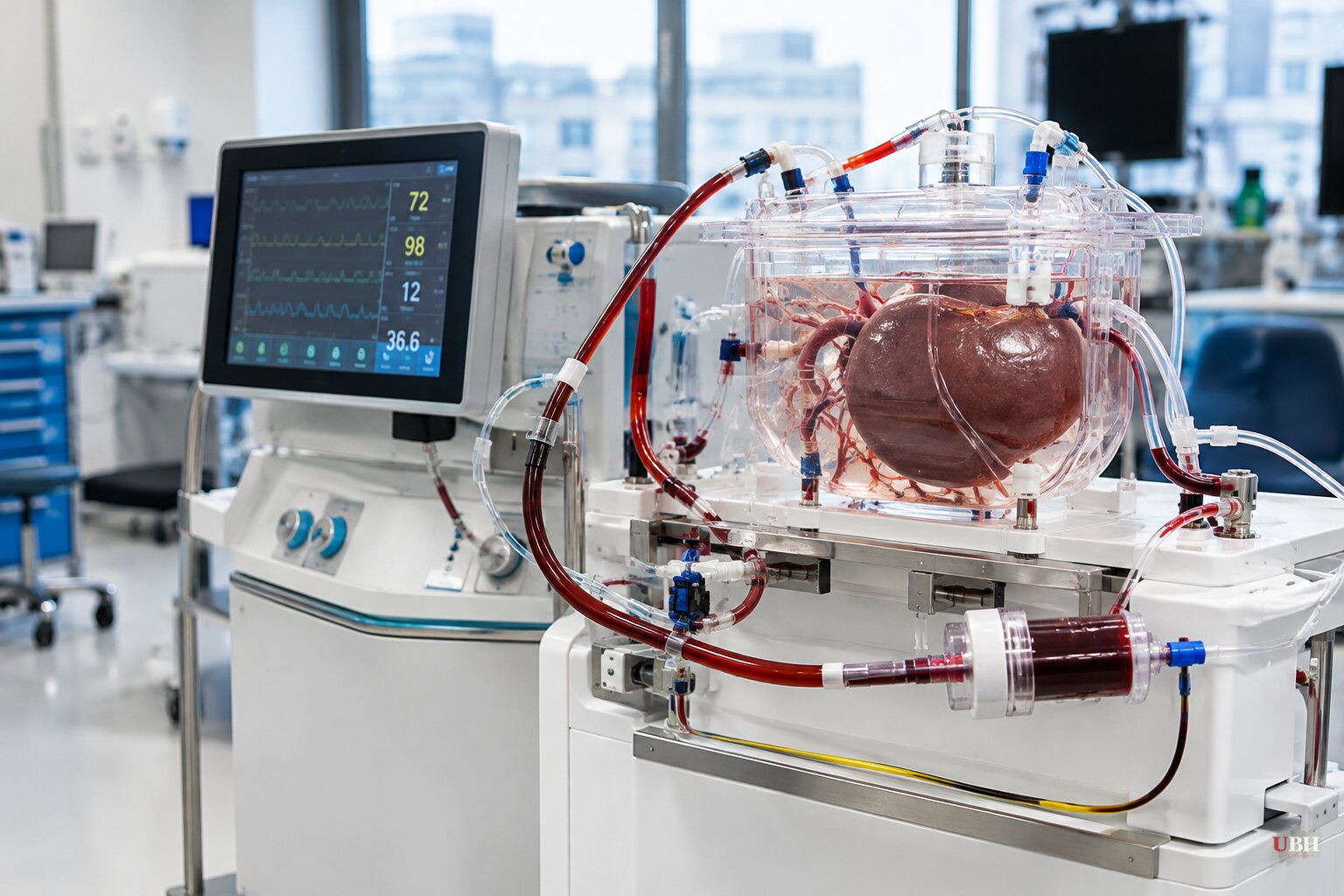
A single-use bioengineered liver connected to an external blood circuit was safe in a small phase I trial of patients with liver failure, according to results presented at the American Association for the Study of Liver Diseases annual meeting in Denver.
Christopher J. Danford, MD, of Intermountain Health in Salt Lake City, reported no serious or unexpected adverse events related to the miroliverELAP system. Every patient was alive at the end of the scheduled 48 hours of treatment.
What the system is
The device pairs an extracorporeal blood circuit with a bioengineered liver built to replicate key functions of a human one. Its maker says it is manufactured by seeding a decellularized porcine liver scaffold with allogeneic human endothelial cells and human liver cells. Those cells come from donated human livers that were judged unsuitable for transplant and supplied by organ procurement organizations.
The FDA granted the system a Regenerative Medicine Advanced Therapy designation for acute liver failure in April.
Danford said no earlier human study has tested a bioengineered liver. "The hope is that an external bioengineered liver may provide some support that either bridges the patient to recovery or transplant," he said.
The patients and the numbers
Seven critically ill patients started therapy. Five completed the planned treatment. Those five ranged in age from 27 to 43.
Acute alcoholic hepatitis was the primary cause in four of them. Acute-on-chronic liver failure was the cause in the fifth. Their mean MELD score, a standard measure of liver disease severity, was 36.
To enroll, patients needed a MELD score of at least 20, an INR of at least 2.0, and hepatic encephalopathy of grade 1 to 3 on the West Haven scale. Anyone eligible for transplant was excluded.
The primary endpoints were serious adverse events attributable to the system and survival through the treatment period. Secondary endpoints included survival 21 days after treatment. Three of the five patients who completed therapy were alive at that point.
The trial recorded 42 adverse events in total. Seventeen occurred during treatment, and 11 of those were rated possibly or probably related to treatment.
Early signs of benefit
Danford said the system showed signs of efficacy. Encephalopathy improved, and patients needed less vasopressor support over the course of treatment.
None of the patients were transplant candidates. Danford said that "many of them would have been potentially transplantable by the end of treatment." On that basis, he said, the team is moving ahead with a phase II and III clinical trial.
Why the field is watching
Fulminant hepatic failure, acute alcoholic hepatitis and acute-on-chronic liver failure have no good treatment other than a transplant. Danford noted that donor livers are scarce and acute liver failure moves fast, so a significant number of patients die before a transplant becomes available.
The system also draws on a resource that would otherwise go unused. The human cells in it come from donated livers that were not suitable for transplantation.
The data are early. Phase I trials exist to test safety, and this one enrolled seven people. Two of them did not finish the planned therapy. Of the five who did, two were not alive at 21 days.
The next step is the combined phase II and III trial Danford described. It will have to show whether the improvements in encephalopathy and vasopressor needs translate into survival, and whether more patients reach recovery or a transplant.
Sources used for this briefing
1 link from 1 independent newsroom (syndicated copies of the same report count once)
These are the sources it draws on, linked so you can verify.


