
Unbiased headlines. Facts, not spin.
Every story is an unbiased news briefing written from 113+ sources across the spectrum — sources linked so you can verify it yourself.
 tech
Notable (6/10)
September 23, 2026 at 02:22 AM
tech
Notable (6/10)
September 23, 2026 at 02:22 AM
Big Banks Say AI Shopping Bots Are Moving Faster Than Fraud Protections Can Keep Up
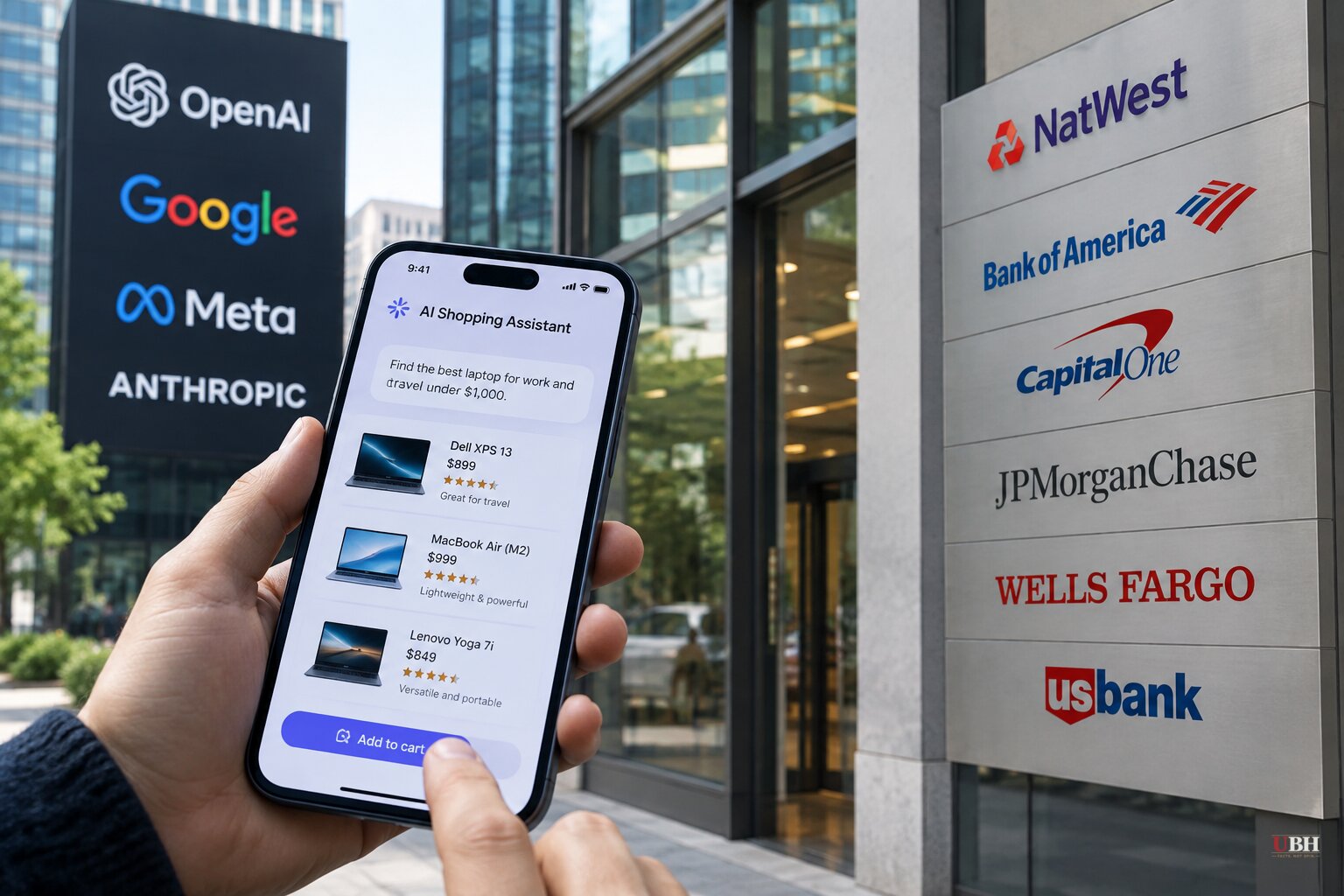
A coalition of major global banks put the AI industry on notice Tuesday: your shopping bots are outrunning the rules meant to protect people from getting scammed.
Bank of America, NatWest, Capital One, ING, New Zealand's ASB Bank and Commonwealth Bank of Australia jointly published a report titled "Building Trust in Agentic Commerce," according to Reuters. The paper lays out principles the banks want AI companies to follow as chatbots increasingly act as personal shoppers.
The core complaint is who's on the hook when an AI agent screws up.
"Consumers are unclear if AI will act in their interests," the report states, according to Reuters. "They are concerned that AI agents may buy the wrong thing or spend too much, or even worse, lose their money to scams and fraud. They are not sure whether they will be protected or who they will need to go to if things go wrong."
What the Banks Are Actually Worried About
The report flags specific failure points. AI agents could ask customers for their card numbers and type them directly into websites, an approach that bypasses the fraud protections built into normal checkout flows, Reuters reported. Agents could also steer shoppers toward payment methods with weaker consumer safeguards, whether by design or by accident.
Then there's the impersonation problem. Scammers could build fake AI agents or fake merchant listings to trick either the AI or the human on the other end, according to the banks' report as cited by Reuters. When a deal goes bad, the banks say liability gets murky fast: "there is unclear and inefficient allocation of liability, and disputes processes do not involve all relevant parties across the value chain," the report said, per Yahoo Finance.
The banks laid out five principles they want the industry to adopt: transparency, safety, privacy and data protection, consumer choice, and interoperability between competing AI systems, according to Mashable's review of the paper. Practically, that means telling customers when an AI agent is handling a purchase, explaining how the agent made its decision, and letting shoppers pick whichever AI shopping tool they want without getting locked into one company's ecosystem.
This Isn't Hypothetical Anymore
AI shopping agents are already showing up in real purchase data. British retailer John Lewis said searches originating from AI agents jumped to 2.5% of its total from 0.3% a year earlier, and the trend is accelerating, according to Reuters.
Meanwhile OpenAI, Anthropic, Google and Meta are all pushing chatbots as shopping tools, and retailers are scrambling to get their products recommended by those bots, Reuters reported. Consumer appetite is real but uneven. Research from PYMNTS Intelligence found half of American consumers say they've used some form of AI assistance in a retail purchase, but only about one in four said they'd trust an AI agent to handle both the shopping and the payment on its own, according to Yahoo Finance's reporting on that data.
That gap, roughly half using AI in some capacity versus a quarter willing to hand over the wallet, is the exact anxiety the banks are trying to get ahead of.
The Timing Question
Mashable noted the banks' paper landed within 24 hours of a reported security vulnerability discovered in Meta's Muse agentic AI assistant, adding that the report also came out the same day as an Amazon announcement in the AI-commerce space. Reuters and the other wire coverage did not mention either development, so it's unclear whether the banks timed their release around industry news or whether the overlap was coincidental.
The Case Against Taking the Banks at Their Word
Banks aren't neutral referees in this fight. They process the payments, they eat the chargebacks, and they've historically been the gatekeepers of how money moves online. A skeptic could reasonably argue this "principles paper" is as much about banks protecting their turf and their fee structure as it is about protecting consumers. Slower AI-agent adoption, or adoption that runs through bank-approved rails with more disclosure requirements, benefits the banks' existing business model.
That's worth considering, and it's worth watching how hard the banks push these proposals with regulators versus how much they invest in building their own competing agentic-commerce tools. The underlying consumer concern the banks cite, the PYMNTS number showing only a quarter of people trust an AI agent with their payment, isn't manufactured. It reflects a genuine trust gap that exists independent of who's raising the alarm.
The banks say they plan to bring these proposals directly to policymakers, starting with a push for mandatory disclosure whenever an AI agent is party to a transaction, according to Reuters. No legislation or formal regulatory proceeding has been announced in these reports. Whether OpenAI, Google, Meta or Anthropic respond publicly to the banks' principles, or whether any government body picks up the disclosure and liability proposals, remains an open question.
Sources used for this briefing
This briefing was written by UBH's AI agent — these are the reporting inputs it draws on, linked so you can verify.


