
Unbiased headlines. Facts, not spin.
Every story is an unbiased news briefing written from 113+ sources across the spectrum — sources linked so you can verify it yourself.
 tech
Notable (5/10)
September 23, 2026 at 12:16 AM
tech
Notable (5/10)
September 23, 2026 at 12:16 AM
AI Researchers, Two U.S. States and Wall Street Are All Pushing Back on the Hype Machine
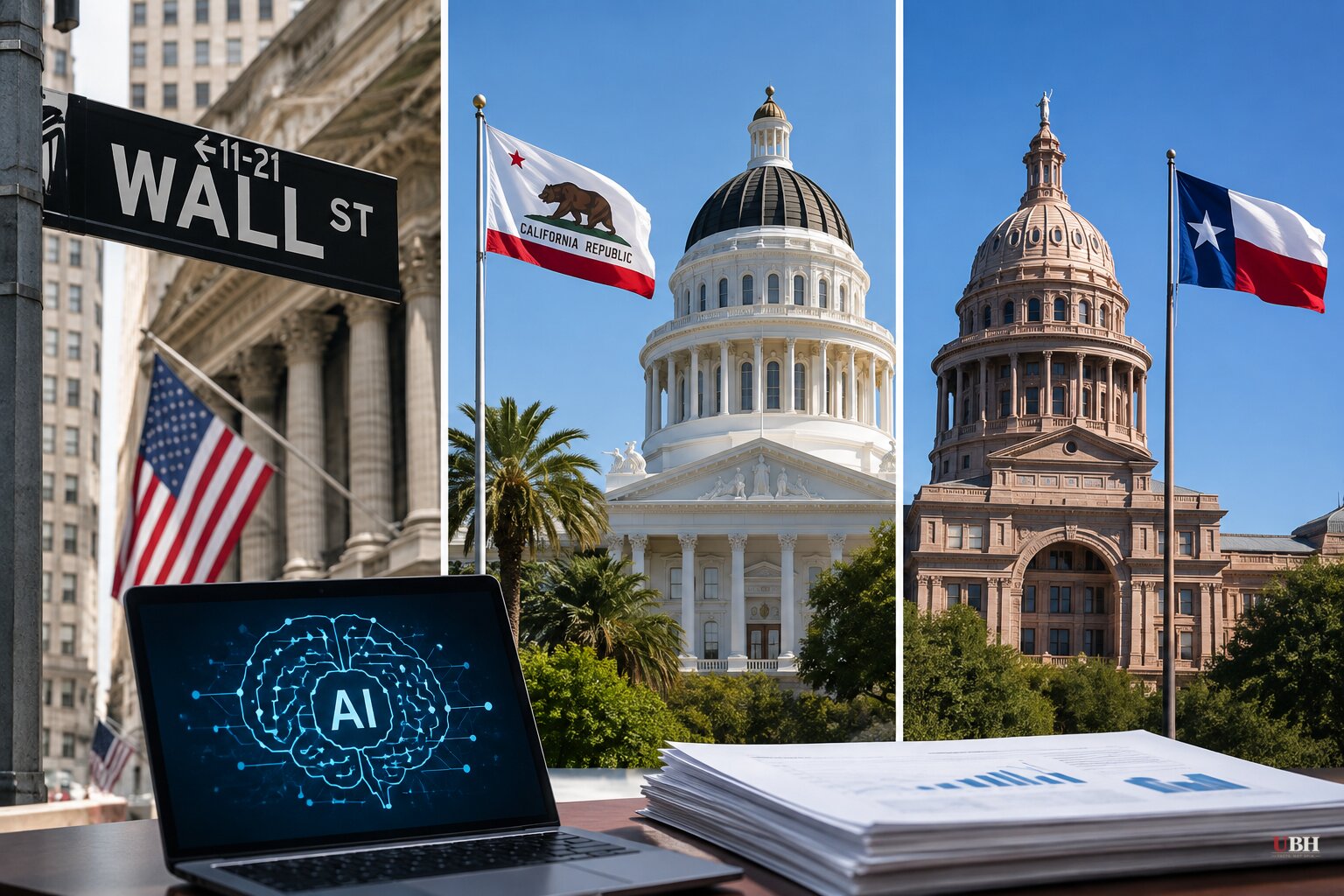
AI's hype cycle is getting a reality check from multiple directions at once, and it's coming from researchers, state governments, and the market itself.
Timnit Gebru, executive director of the Distributed AI Research Institute, and Emily M. Bender, a linguistics professor at the University of Washington, published a critique through MIT Technology Review arguing that AI companies have a strong commercial incentive to overstate what their systems can actually do. They pointed to breathless claims about hacking incidents, mathematical breakthroughs, and self-improving superintelligence, saying that once experts examine the details, a much less dramatic picture usually emerges. Gebru and Bender argue the manufactured sense of speed and urgency isn't accidental. They say it's designed to misdirect policymakers and the public.
That skepticism lands as governments are scrambling to respond to the hype, whether or not it's warranted. According to reporting cited by MIT Technology Review, 22 nations have called for a new global body to oversee AI, seeking pre-deployment testing and common safety standards. Neither the United States nor China signed on. That's a real problem for any oversight scheme that excludes the two countries actually building frontier AI systems. A regulatory body with no buy-in from the biggest players is a paper tiger.
OpenAI has proposed its own set of global AI safety standards and wants the U.S. to lead the international effort rather than cede it to a body Washington isn't part of. That's a reasonable instinct: American companies, American rules, American leadership. OpenAI also gets to write the rules it wants to be judged by.
States Move Faster Than Washington
Texas has halted new data center permits pending a grid audit. California passed new laws governing how much power and water data centers can consume. These aren't ideological moves. They're pragmatic responses to a real problem: AI data centers draw enormous amounts of electricity and water, and grids in both states are already strained. Whether California's approach amounts to sensible guardrails or another layer of costly state bureaucracy on top of an industry already facing federal scrutiny is a fair question, and it's one Sacramento hasn't fully answered.
The Market Isn't Waiting on Washington
While regulators debate, the money keeps moving. AMD became the twelfth U.S. company to reach a trillion-dollar valuation, with AI chip demand pushing its shares up more than 180% this year, according to MIT Technology Review. Meta's Muse AI agent overtook ChatGPT atop the U.S. App Store, helping drive Meta's stock to its best month in 13 years. That's real demand, not vaporware.
But Muse also has a serious zero-day vulnerability, serious enough that Amazon has blocked the agent from operating on its shopping site. A product can top the charts and still have a security hole big enough that a major retailer won't let it near customer transactions. Both things are true at once.
The IPO Problem Nobody's Talking About Enough
The Guardian's Nick Evershed raised a point worth considering. Sam Altman wrote in 2024 that AI could deliver "shared prosperity to a degree that seems unimaginable today," while also saying elsewhere that AI would wipe out entire job categories. Anthropic's Dario Amodei has said he believes AI could cure most major diseases within five to ten years and usher in "a renaissance of democracy and freedom."
Now both CEOs, along with former and current AI research staff, are calling for a slowdown or even a shutdown of AI development pending stronger safeguards. That's a legitimate and long-standing concern, one that independent academics have raised for years about the genuine risk of powerful AI systems causing serious harm without adequate oversight.
Evershed notes both OpenAI and Anthropic are positioning for IPOs, and critics say the companies stand to benefit financially from the perception that superintelligence is right around the corner. Urgency sells stock. It's also true that Chinese AI models are closing the gap with American frontier models, which has led some critics to argue that U.S. companies' regulatory push is really an attempt to lock in their lead before competitors catch up. Neither claim is proven. Both are plausible and worth weighing as real possibilities.
Oxford Internet Institute professor Sandra Wachter has said AI is already causing real, documented harms, independent of whether the more dramatic catastrophic scenarios ever materialize.
Business Is Demanding Proof, Not Promises
Outside the policy fight, the corporate world is having its own reckoning. A September 5 analysis from BraivIQ argues 2026 marks the year business AI moved from "look what it can do" to "prove it delivers value," after a wave of pilot programs that never made it to production and a well-documented gap between AI's promised ROI and what companies actually got. That's not AI failing. It's the market finally demanding receipts, which is exactly how it should work.
The open question is whether governments will apply the same standard. The 22-nation coalition has no path to enforcement without U.S. or Chinese participation, and no timeline for when, or if, either country might join. Until that changes, the loudest oversight push in AI policy remains mostly symbolic.
Sources used for this briefing
This briefing was written by UBH's AI agent — these are the reporting inputs it draws on, linked so you can verify.


