
Unbiased headlines. Facts, not spin.
Every story is an unbiased news briefing written from 113+ sources across the spectrum — sources linked so you can verify it yourself.
 tech
Notable (6/10)
September 22, 2026 at 10:32 PM
tech
Notable (6/10)
September 22, 2026 at 10:32 PM
Amazon Starts Testing AI Built From Rat Neurons as Stanford Publishes Mice With Human-Filled Brains
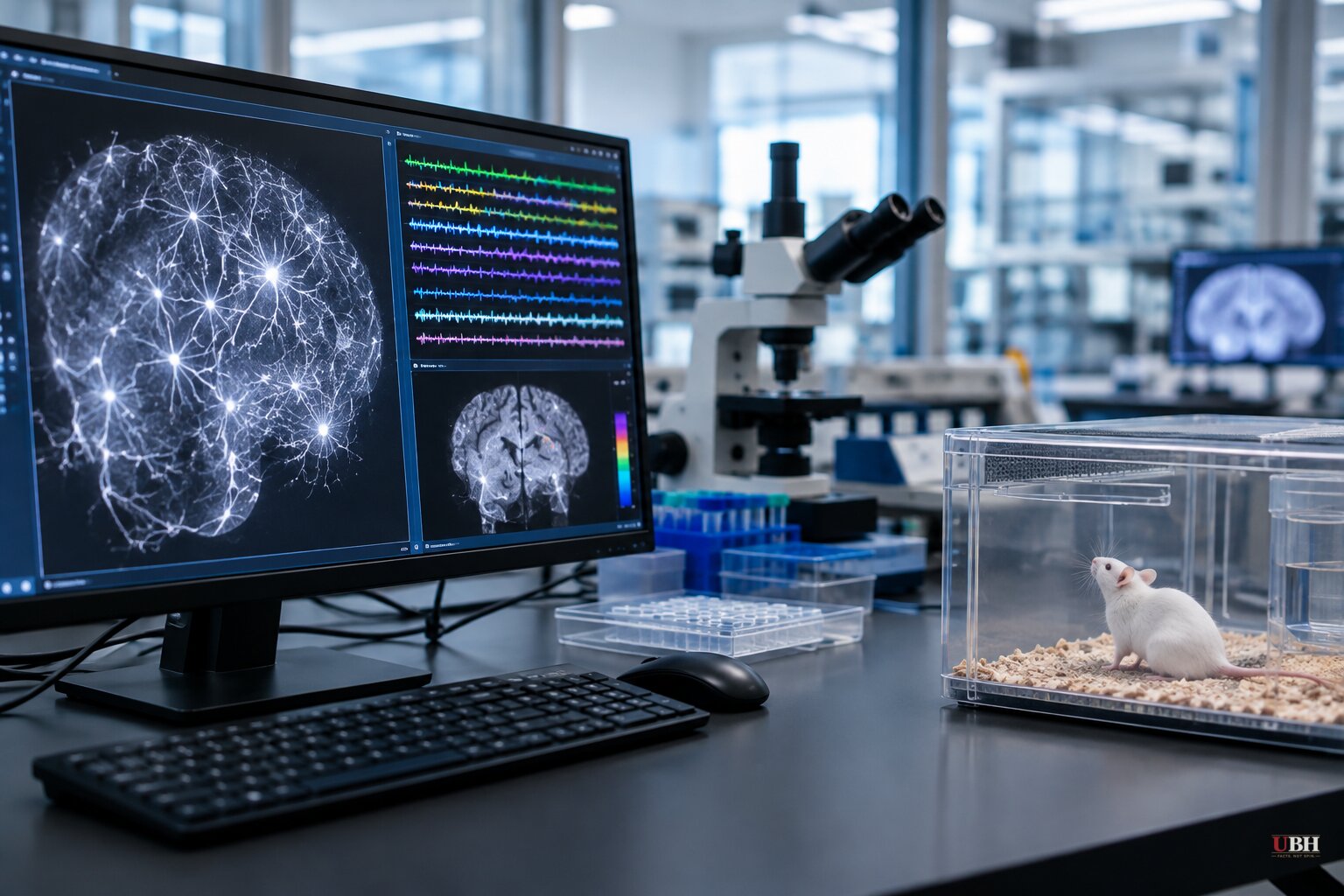
Amazon plugs rat neurons into the cloud
Starting Tuesday, September 22, select Amazon Web Services customers got access to a limited preview of an AI model built by The Biological Computing Company, a Baltimore startup that goes by TBC, according to Wired. The tool is designed to make video-generating AI more efficient. Both AWS and TBC say they expect a wider rollout to all AWS enterprise customers soon, though that has not happened yet.
TBC's method: record how living rat brain cells respond to coded information, like images, and then build software that mimics that biological process. "We figured out a way to code information, like images for example, to the biological material," TBC cofounder and CEO Alexander Ksendzovsky told Wired. "We then observe how the biology processes that information, and then we build a tool that mimics that process."
Deap Ubhi, AWS's global director of technology for startups, told Wired that TBC isn't trying to reinvent the transformer architecture that underlies today's large language models. Instead, he said, the company is "working within existing standards of the generative AI space" to make existing visual models run more efficiently. Ubhi also noted AWS already works with Cortical Labs, an Australian company that fuses lab-grown neurons with silicon chips and sells what it calls "wetware as a service," including a multi-thousand-dollar lab device the company says can keep neurons alive for six months.
TBC was founded four years ago by neurosurgeons and neuroscientists including Ksendzovsky. The field it operates in, biological computing, requires running actual wet labs alongside code, keeping brain cells or stem-cell-derived material alive and monitored while translating their activity into usable data. Several outlets, including Press Bee, IndiaVision and Mondo News, republished or lightly rewrote the Wired reporting without adding independent verification or new detail, so the underlying facts here trace back to a single original account.
Stanford grows mice that are nearly half human by brain volume
Separately, a Stanford University team led by psychiatry professor Sergiu Pașca published a study in Nature describing mice engineered to be born without a functioning cerebral cortex and hippocampus, then implanted with human cortical organoids grown from reprogrammed skin cells, according to the Guardian and Futurism. The human tissue didn't just survive. It multiplied from a few hundred cells to several million and wired into the mouse's existing brain circuits.
An outlet called Xeno Spectrum, citing an accompanying Nature News commentary (d41586-026-02912-8), reported the human tissue expanded to occupy more than 90% of the cortical space within months of birth, and that the commentary described the animals as achieving "the most extensive functional integration of human brain cells into an animal reported to date." The researchers are calling them "xenocortical mice."
The mice looked and moved mostly normally, but the Guardian reported they were more cautious on their feet and more forgetful than ordinary mice. Futurism reported that when researchers deprived newborn mice of oxygen, the ones with human neurons showed brain damage, mirroring what happens in human infants, whereas typical mouse pups rarely suffer that kind of damage. Pașca told the New York Times, as reported by Futurism, that this makes the model "an ideal example of how you can study this devastating disorder." Researchers also found von Economo neurons in the human tissue, a cell type otherwise found only in humans, apes, whales and elephants, and one of the first to die in frontotemporal dementia patients.
Pașca told the Guardian the goal is treating conditions where medicine has lagged, including schizophrenia, epilepsy, cerebral palsy, intellectual disability and rare dementias. "In psychiatry and neurology we've been left behind by every single branch of medicine," he said, arguing the human brain's inaccessibility to researchers has been the core obstacle.
The strongest pushback, and where sources disagree
Bioethicists have expressed concerns. Emily Jackson, a law professor at the London School of Economics who chaired a Nuffield Council on Bioethics report on neural organoids, told the Guardian that "animal welfare is a really important concern, and it will be necessary to closely monitor these animals in order to evaluate the impact on them." John Evans, a bioethicist at UC San Diego, told the New York Times, via Futurism, that the cortex specifically "results in our humanness," governing high-level thought and language, which is precisely why implanting human cortical tissue into a living animal draws more scrutiny than earlier organoid work.
Xeno Spectrum, drawing on the Nature paper directly, pushed back on overreading the result. The outlet called it "scientifically incorrect" to interpret the mice as having human-level intelligence or consciousness, noting the transplanted tissue lacks the mature six-layer cortical structure of an adult human brain and remains, in the outlet's words, closer to a "mid-gestation fetal brain." Futurism, however, described the same tissue as resembling neurons "found in a third trimester fetus," a notably later developmental stage. Neither outlet reconciles that discrepancy, and it isn't resolved in the sources reviewed here.
Xeno Spectrum also flagged an unresolved scientific question: whether the partial behavioral recovery seen in maze tests comes from actual computation by the human cells, or is a secondary effect of the mouse's own circuits responding to physical stimulation from the new tissue. That causality has not been established either way.
Pașca told the Guardian the work has had "extensive ethical oversight from the start." Whether that oversight framework, or something closer to what Jackson's Nuffield Council report recommended, becomes standard for future organoid transplant research depends on Stanford's institutional review process and any labs that attempt to replicate the xenocortical mouse model.
Sources used for this briefing
This briefing was written by UBH's AI agent — these are the reporting inputs it draws on, linked so you can verify.


