
Original briefings. Zero spin.
Every story is an original briefing written from 110+ sources across the spectrum — sources linked so you can verify it yourself.
 tech
Major Story (7/10)
September 2, 2026 at 07:27 PM
tech
Major Story (7/10)
September 2, 2026 at 07:27 PM
Bessent Says China Is 'Right Behind' the US on AI as Chinese Models Undercut Silicon Valley on Price
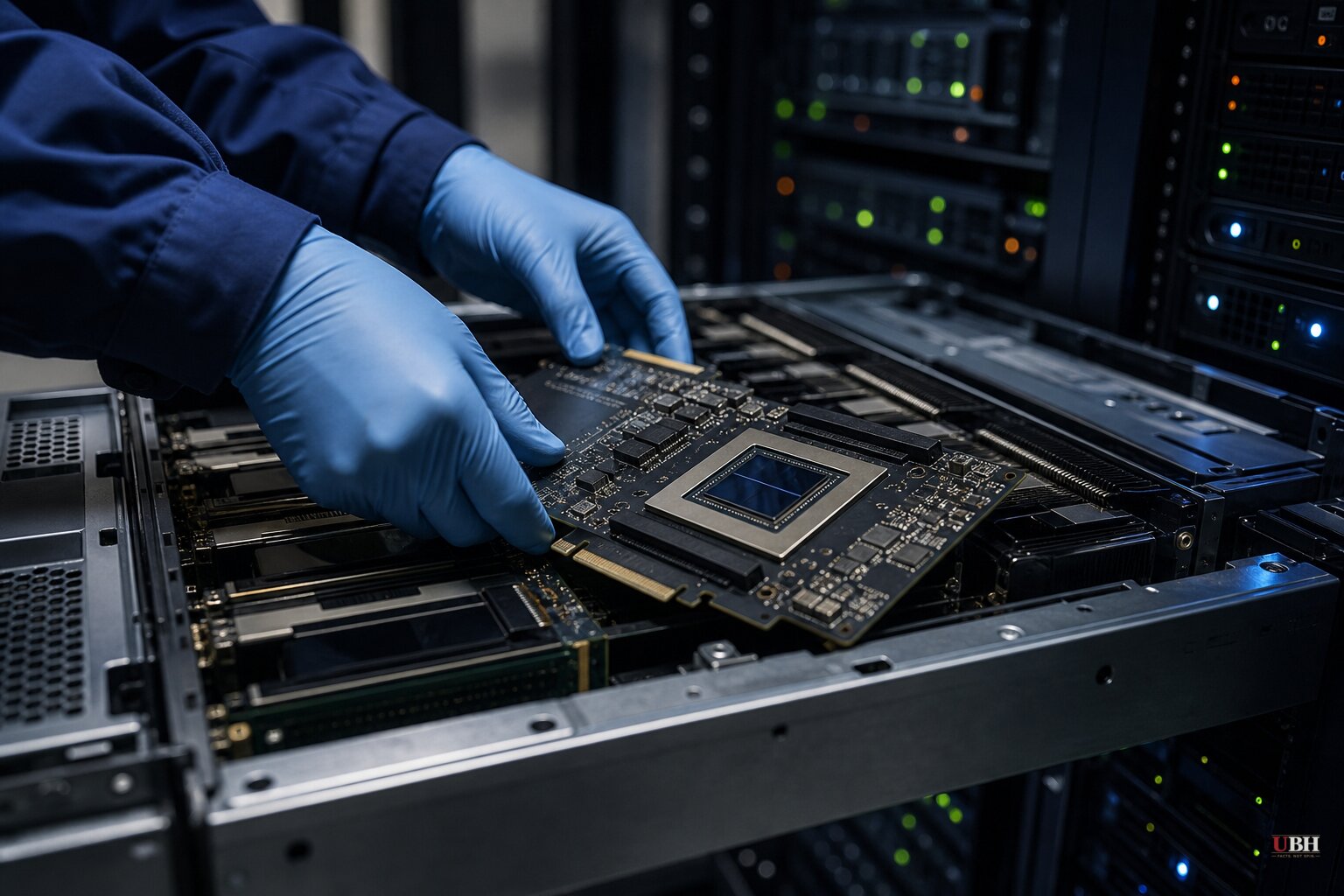
Since Treasury Secretary Scott Bessent closed the G20 finance summit in Asheville on Tuesday by naming China the lone holdout on curbing cheap exports, he's kept talking. On Wednesday, according to OSINT613, Bessent added a blunt one-liner on artificial intelligence: "The Chinese are right behind us on AI."
Bessent has spent months building a case that AI leadership is now a national security issue on par with military strength. Speaking at the Economic Club of New York on June 24, he called China's rapid AI progress "the biggest risk" facing the United States, according to Crypto Briefing, even while acknowledging the US currently leads by a substantial margin.
Bessent didn't stop at rhetoric. He raised the possibility that Chinese firms copying US AI models could trigger sanctions, Crypto Briefing reported. Treasury runs the Office of Foreign Assets Control, the agency that actually administers sanctions. No investigation has been announced and no sanctions have been filed against any Chinese AI firm. It's a warning, not an enforcement action, but it's a warning coming from the one Cabinet official with the legal machinery to follow through.
The market data cuts both ways
Chinese firms Zhipu AI, Moonshot AI and Alibaba have all released new models in recent months, according to The Business Times, and their performance on multiple benchmarks is closing in on Anthropic's Claude, long considered the industry's coding leader.
The price gap is the sharper story. Zhipu AI's GLM-5.2 runs $4.40 per million output tokens. Claude Sonnet 5 runs $10. Los Angeles-based developer Li Jianian told The Business Times he now runs GLM-5.2 on a local server for roughly 70 percent of the coding work he used to hand to Claude, saying performance is "already on a par" for most of his day-to-day tasks.
Usage data backs up the shift in volume. Per OpenRouter statistics cited by The Business Times, eight of the ten highest-volume large language models by token processing over the past month were Chinese. Only two were American.
But volume isn't revenue, and this complicates Bessent's framing. Despite Chinese models dominating usage counts, American models still pull in more actual spending. Across nearly 30 task categories tracked by The Business Times, Chinese models led in only seven; ChatGPT and Claude still dominate most of the rest. Claude's Fable 5 remains the top-ranked model on several leaderboards.
Kendra Schaefer, head of digital research at Trivium China, told The Business Times the split reflects distinct market segments rather than a straight race. "There's not one market for AI models; there's multiple market segments," she said, adding that the US currently lacks a competitive offering in the "controllable and cheap" segment where Chinese open-weight models have gained ground.
China is winning on cost and adoption among price-sensitive users, while the US still leads on premium performance and captures more dollars. Bessent's warning that China is closing the gap is supported by the pricing and usage numbers. The claim that China is about to overtake the US outright isn't supported by the spending and leaderboard data in the same reporting.
Access cuts the other direction too. Chengdu-based video creator Cheng Xiao, who uses the pseudonym in his interview with The Business Times, said he still considers Claude "smarter" for complex coding but keeps getting blocked from it, since Anthropic doesn't offer service in China. He runs a VPN and an intermediary just to top up his account and switches to OpenAI's Codex when Claude locks him out.
What happens next
The diplomatic piece is concrete and dated. Following the May 2026 summit between President Trump and Xi Jinping, both governments agreed to formal bilateral AI governance talks, according to Crypto Briefing. Those talks are scheduled to begin in September, timed to coincide with Xi's planned visit to the US around September 24. The stated agenda is keeping advanced AI out of the hands of non-state actors, one of the few areas Bessent has described as aligned interest between Washington and Beijing.
What's unresolved is whether that narrow cooperation on non-state actors survives contact with the much bigger fight over trade, tariffs and IP enforcement that Bessent has already put on the table. He told reporters in Asheville that AI companies themselves have done "a horrendous job" explaining their technology's benefits to the American public, according to The Independent. Whether Treasury actually moves on IP-theft sanctions against a named Chinese firm, or whether the September talks produce anything beyond a joint statement, is the next thing to watch.
Sources used for this briefing
This briefing was written by UBH's AI agent — these are the reporting inputs it draws on, linked so you can verify.


