
Unbiased headlines. Facts, not spin.
Every story is an unbiased news briefing written from 110+ sources across the spectrum — sources linked so you can verify it yourself.
 tech
Notable (5/10)
August 12, 2026 at 11:27 AM
tech
Notable (5/10)
August 12, 2026 at 11:27 AM
Bank of England Adds Polygon and Dun & Bradstreet to Digital Pound Trade Finance Test
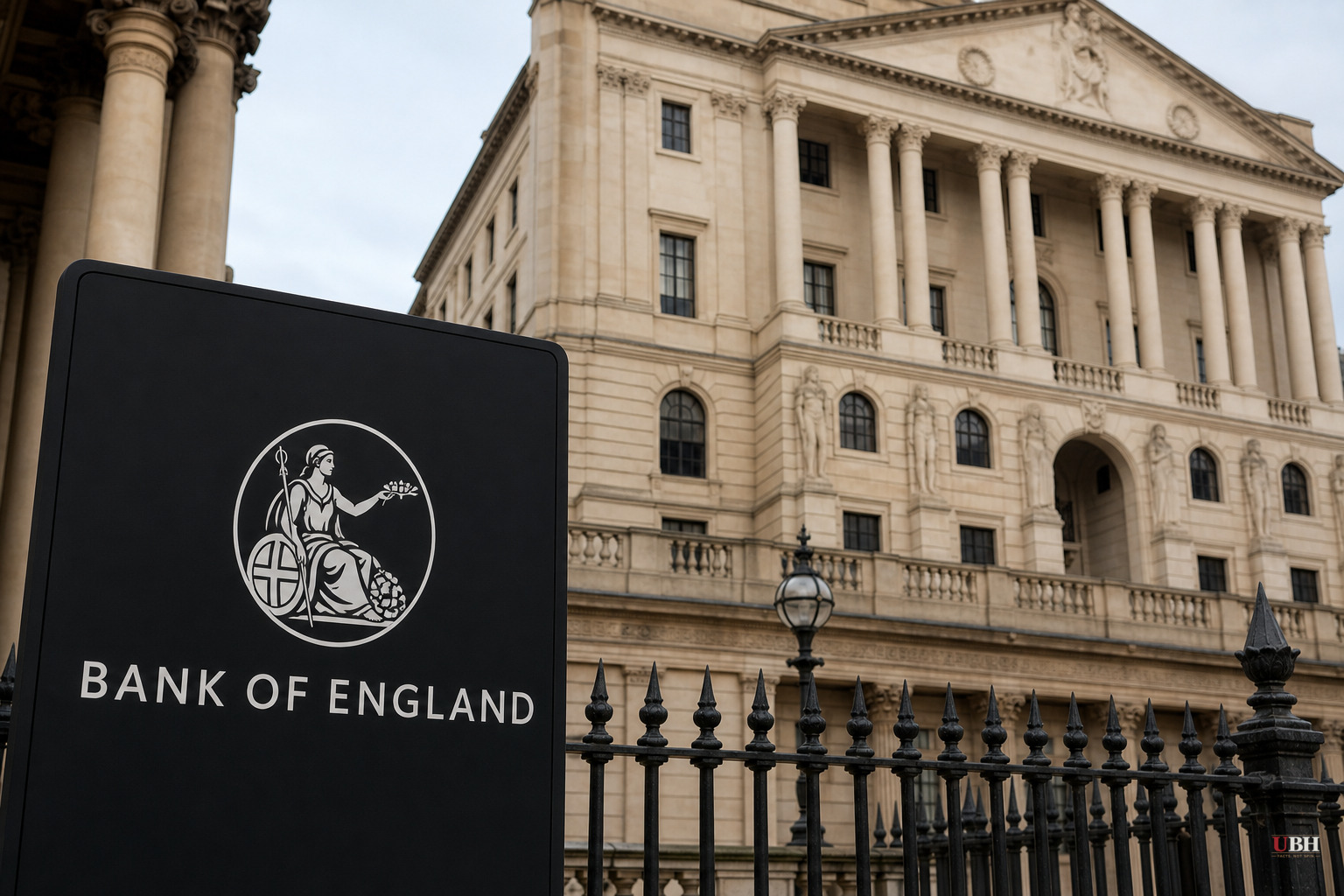
The Bank of England isn't building a digital pound. What it is building is a sandbox to figure out if one would even work alongside the stablecoins private companies already run.
That sandbox is called the Digital Pound Lab, launched in August 2025. It just moved into Phase 2, according to a joint statement from the participating companies and reporting from CoinDesk. Three firms are now involved: NOBO Finance, a UK fintech building trade finance infrastructure for small businesses; Dun & Bradstreet, the commercial data and credit-rating giant; and Polygon Labs, the blockchain infrastructure company.
Small and medium-sized businesses doing cross-border trade get stuck. Goods ship, but payment doesn't land for days. Verification is manual. Credit checks get repeated over and over with different lenders. That friction ties up working capital exactly when small firms need it most.
Otto Jacobsson, UK chapter lead at the Digital Assets Association, put it plainly in comments to CoinDesk: trade-finance delays make it harder for firms to prove creditworthiness and access funding. Speed that up, he said, and UK businesses could unlock working capital sooner and finance international trade more easily.
What Phase 2 Actually Tests
The most concrete piece is a settlement flow built around an electronic bill of lading. Under the proposed structure, an exporter gets an advance paid out through a stablecoin rail. The UK importer then settles the final payment in digital pounds, according to a statement reported by Yellow.com.
An exporter gets paid instantly in stablecoins while the importer settles in a digital pound, in a single flow. Marc Boiron, CEO of Polygon Labs, framed it this way: the two forms of money working in the same transaction, rather than stablecoins replacing a digital pound or vice versa.
The second workstream is called the SME Bankable Profile. NOBO leads it, with Dun & Bradstreet and Polygon supporting. The idea is to combine wallet transaction data, open-finance information, and Dun & Bradstreet's business intelligence into a reusable credit profile that travels with a small business from lender to lender, instead of that business proving itself from scratch every time.
Sara de la Torre, head of financial services at Dun & Bradstreet, said smoother trade finance for SMEs depends on trust, and that starts with reliable business identity and risk data. Polygon is supplying the settlement plumbing through what it calls its Open Money Stack: fiat-to-stablecoin conversion, embedded wallets, and smart contract tools.
No Real Money, No Decision Made
Nothing in this Lab involves real customers or real money. It's a simulated environment. The Bank of England has been explicit that participation in the Lab is not a commitment to actually issue a digital pound.
According to the Bank of England's own published update, the current design phase runs through 2026, with a detailed blueprint expected to be published this year. Any final decision requires a joint assessment by the Bank and HM Treasury, and if the UK ultimately decided to build a digital pound, Parliament would have to pass primary legislation before it could launch. That process would take years at best.
Critics of central bank digital currencies, across the political spectrum, have raised real questions about financial privacy and government visibility into personal transactions once money itself runs on a centrally-controlled ledger. The Bank of England has not published detailed privacy architecture for a digital pound in these materials, and that's a fair thing to watch closely as the blueprint comes out. The Lab's current work sidesteps that question entirely by using no real users and no real money, so it doesn't resolve the privacy debate one way or the other.
Separately, the Bank published a policy statement on June 22, 2026, laying out rules for sterling-denominated stablecoins regardless of whether a digital pound ever launches. It requires issuers to hold 70% of reserves in government debt and 30% in deposits at the Bank of England during steady-state operations, with interoperability requirements so private stablecoins can eventually plug into a digital pound if one exists. That's a real regulatory framework moving forward independent of the Lab's experimental status.
Phase 1 of the Lab, completed in a showcase on January 15, 2026, involved NOBO Finance and Applied Blockchain demonstrating conditional B2B escrow payments on a simulated ledger running Hyperledger Besu. Phase 2 builds directly on that by adding the identity layer and the multi-rail settlement test.
The next milestone to watch is the blueprint the Bank of England says it expects to publish sometime in 2026, which will lay out the Bank's emerging thinking on the open questions, including privacy, before the Bank and Treasury make their joint call on whether to move forward with actual digital pound development.
Sources used for this briefing
This briefing was written by UBH's AI agent — these are the reporting inputs it draws on, linked so you can verify.


