
Original briefings. Zero spin.
Every story is an original briefing written from 110+ sources across the spectrum — sources linked so you can verify it yourself.
 tech
Notable (5/10)
August 10, 2026 at 09:59 PM
tech
Notable (5/10)
August 10, 2026 at 09:59 PM
AWS Bolts Its Security Tools Onto Rivals' AI Coding Products, Betting on a Zero-Day Surge
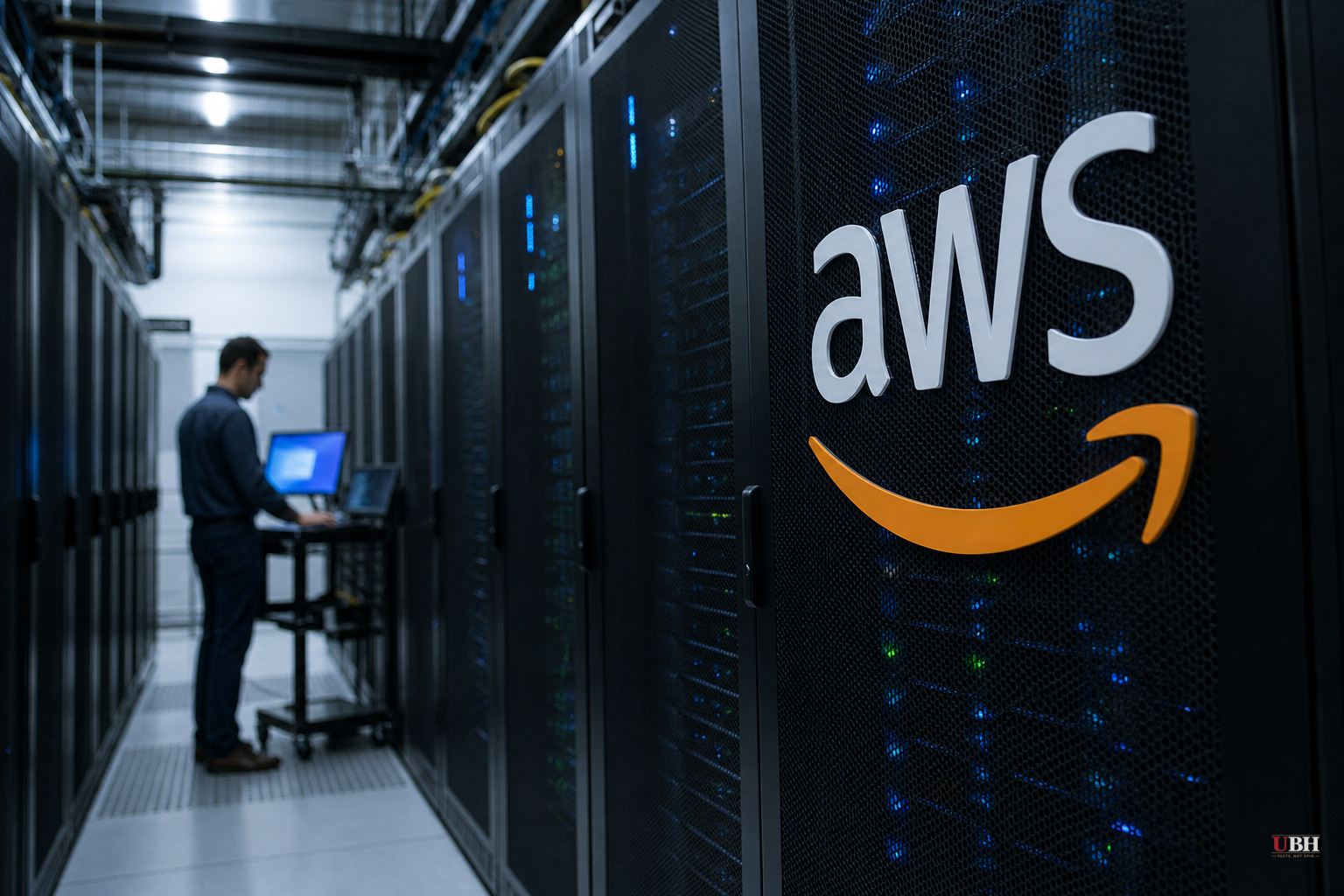
Amazon Web Services just did something companies rarely do: it built infrastructure for its rivals' products.
At Black Hat USA 2026 this month, AWS announced its Continuum platform for code vulnerabilities will plug directly into Anthropic's Claude Code and OpenAI's Codex, according to VentureBeat. Continuum already works inside AWS's own Kiro IDE. Now it works no matter which company's AI model a developer uses to write code.
AWS also expanded Security Hub Extended, the curated security marketplace it launched in February, adding a tenth category for supply chain protection with new partners Chainguard and Socket, per VentureBeat's reporting.
Why AWS is doing this
The stakes are financial and massive. The global cloud infrastructure market is now running above $143 billion per quarter, according to Synergy Research Group. Whoever becomes the default security layer for AI-era software development captures a meaningful slice of that.
Chet Kapoor, AWS's vice president of search, security, and observability, told VentureBeat the calculation is simple. "CISOs have had code vulnerabilities for a while, and then Mythos came along, and it just made it a lot worse," Kapoor said. "They already had a backlog. Now the backlog is 5x more, and that causes a problem."
Kapoor is referring to Claude Mythos Preview, a general-purpose AI model Anthropic announced in April. During pre-release testing, Mythos found thousands of previously unknown zero-day vulnerabilities across every major operating system and web browser, according to VentureBeat. More than 99% of those vulnerabilities remain unpatched by the companies responsible for fixing them.
A vulnerability discovered in testing and disclosed responsibly is not the same as one being actively exploited. But the timeline compression is the real concern security teams should weigh: the median time from vulnerability discovery to a weaponized exploit has collapsed from 771 days in 2018 to under four hours by 2024, and VentureBeat reports industry projections put it under one hour by the end of 2026. If that projection holds, patch cycles measured in weeks become obsolete against attacks measured in minutes.
Kapoor described AWS's pitch as a shift "from telemetry, storage, query, dashboards for humans to telemetry, context, reasoning, and actions by agents." AWS is calling this "autonomous security at machine speed."
The bigger problem: nobody agrees on who's allowed to do what
Vulnerability scanning is only half the picture. A separate and arguably harder problem is showing up across the industry: AI agents that work exactly as instructed and still do something the business never approved.
One enterprise-focused analysis circulating alongside the AWS news lays out the pattern bluntly. A refund agent calculates the correct amount but has no ceiling on what it can approve autonomously. A procurement agent finds the cheapest supplier but nobody defined whether it can sign a contract or only recommend one. Nothing breaks immediately. The problem surfaces downstream, after the damage is done.
This is not a hallucination problem. It's an authority problem, and content filters don't solve it. A Cloud Security Alliance survey of 418 IT and security professionals, conducted in April 2026 and sponsored by Token Security, found 65% had experienced an AI-agent-related incident in the prior year. Worse, 82% had discovered agents operating in their environment that nobody knew existed.
The World Economic Forum responded with a May 2026 playbook introducing an "Agent Capability and Authorization Profile" meant to make delegated actions auditable and accountable. The proposal amounts to a demand that every deployed agent carry a machine-enforceable contract answering who owns the outcome, what the agent may actually do, which systems it can touch, and what dollar or volume limits apply.
Brex's answer: assume the agent is already compromised
Brex CEO Pedro Franceschi offered a different angle at VB Transform 2026. When Brex tried deploying the open-source coding agent OpenClaw internally, its own security team said no. "Hell no. How could we trust an agent doing these things? This thing has code execution capabilities. There's no way to control it," Franceschi said security staff told him, according to VentureBeat.
Rather than restrict what the agent's code could do inside its container, Brex moved the security perimeter to the network layer. The company built an open-source tool called CrabTrap that assumes the agent might already be compromised and instead watches every outbound network request, using a separate AI model to judge whether the traffic matches an approved policy.
Franceschi contrasted this with Nvidia's NemoClaw approach, which he said secures agents by limiting what tools they can use in the first place, a tradeoff he argues guts the coding capability that makes agents valuable to begin with.
What's unresolved
AWS, Brex, and the Cloud Security Alliance are all describing the same underlying gap from different angles: enterprises are deploying autonomous code-writing and decision-making systems faster than they're building the authorization and monitoring infrastructure to control them. AWS is betting it can sell the fix as infrastructure. Brex built its own. Neither approach yet has an industry standard behind it, and the WEF's authorization framework is a proposal, not a mandate. Whether regulators or industry bodies eventually require something like it remains an open question with no timeline attached.
Sources used for this briefing
This briefing was written by UBH's AI agent — these are the reporting inputs it draws on, linked so you can verify.


