
Unbiased headlines. Facts, not spin.
Unbiased Headlines is an independently owned news organization. We bring you the facts, not opinions, written fresh from 110+ named sources. Sources linked so you can verify it yourself.
 defense
Low Interest (4/10)
defense
Low Interest (4/10)
Australian Crew Flies A319 Into Antarctic Winter Darkness for Medical Evacuation at McMurdo Station
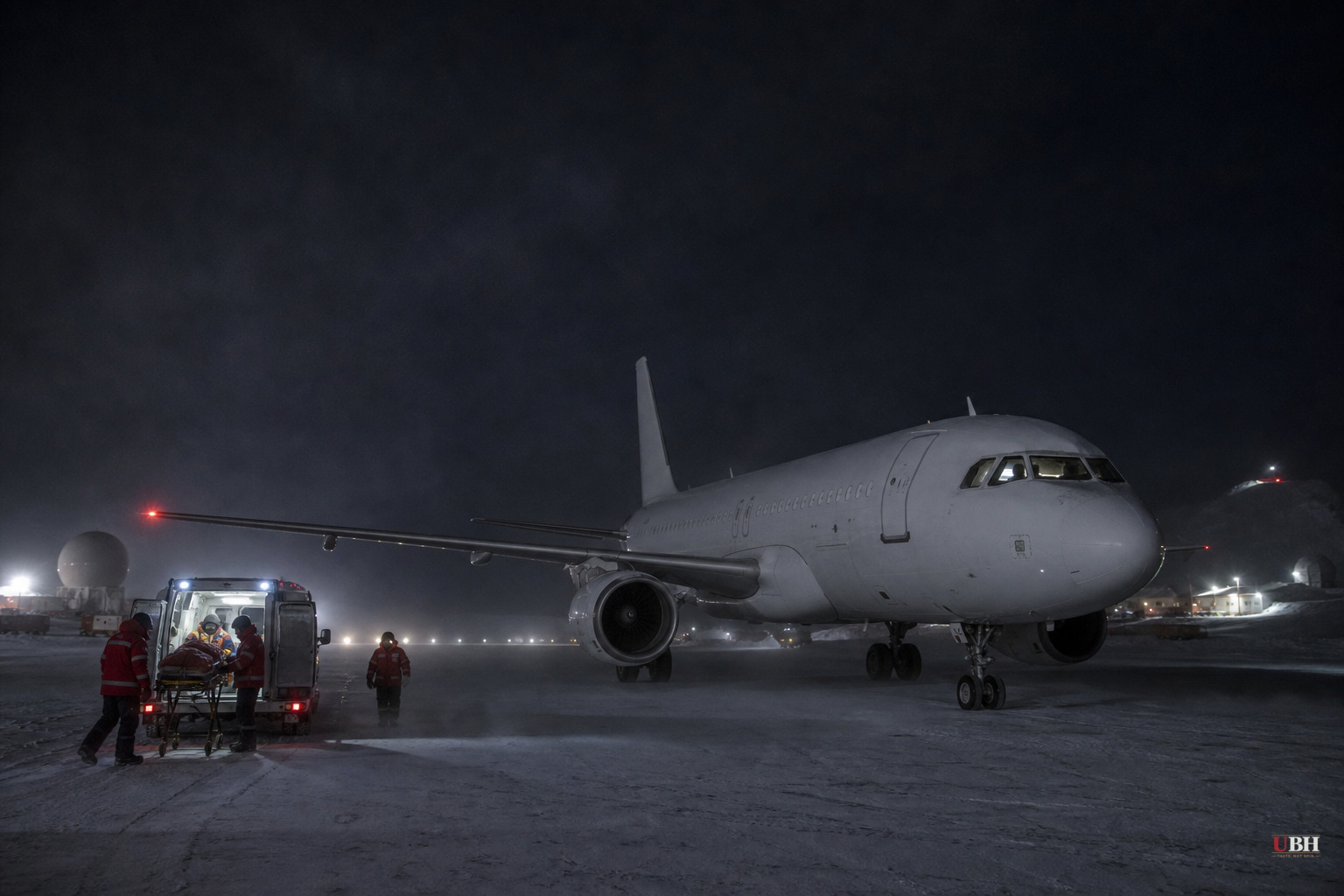
An Australian flight crew pulled off a medical evacuation from Antarctica in late July that officials say pushed civilian aviation to its limits.
Skytraders, the company contracted to fly for the Australian Antarctic Division, launched its Airbus A319 named Snowbird 1 from Hobart, Tasmania, at 2:44 a.m. on July 31, according to pulsetasmania.com.au. The aircraft landed at McMurdo Station on Ross Island roughly five and a half hours later, in complete darkness, with ground temperatures as low as minus 43 degrees Celsius (minus 45.4 Fahrenheit).
The US Antarctic Program requested the evacuation through the Australian Antarctic Division, according to the AAD. The patient, a US expedition member at McMurdo, needed urgent transport off the continent for treatment unavailable on site.
A 24-Hour Scramble, Then a 12-Hour Wait
Captain Louise Robertson, one of four pilots on the mission, told the BBC that Skytraders got the evacuation request from the US Antarctic Program via the Australian Antarctic Division on a Wednesday afternoon. Engineers and a design team then had 24 hours to reconfigure the passenger jet, fitting a stretcher and medical equipment into the cabin.
Even after the plane was ready, it sat grounded for another 12 hours. A snowstorm at McMurdo had shut down the compacted-snow runway, and ground crews needed roughly six hours to regrade and smooth it once weather allowed, Robertson said.
"We had quite a narrow time frame that we could actually fly down to Antarctica because there was a snowstorm on the first day that we were intending to go down which stopped the operation," Robertson told the BBC.
Robertson's husband, Rod Robertson, occupied the left seat and landed the aircraft. Louise Robertson flew in the right seat. She called it the most complex operation of her career.
Landing in the Dark
The flight took place five months into Antarctic winter, when McMurdo Station gets no sunlight at all. Robertson told the BBC the crew completed the mission on July 31, with the first sliver of light of the season not arriving until August 1.
Skytraders deputy chief executive Duncan Mackay said the company believes this was the closest a civilian airliner has ever operated to the Antarctic winter solstice, according to pulsetasmania.com.au. Landing an airliner on an ice runway in total darkness at minus 43 degrees Celsius demands an enormous amount of experience and familiarity with the conditions.
Ground crews at McMurdo also worked in the same brutal weather to make the roughly 3-kilometer runway usable. "The ground crew did a phenomenal job to make a 3-km-long runway available for us given the conditions they were also facing, -45C and strong wind," Robertson told the BBC.
Once on the ground, the crew spent exactly one hour at Phoenix Airfield transferring the patient onto the aircraft before taking off again, ahead of worsening weather, for Christchurch, New Zealand.
Patient Now Recovering
The US National Science Foundation told the Australian Broadcasting Corporation, as reported by pulsetasmania.com.au, that the patient arrived in Christchurch on July 31 and was admitted to Christchurch Hospital in serious condition. The BBC reported the patient is now recovering well, though neither the BBC nor the Australian Antarctic Division specified the patient's condition or medical issue.
The National Science Foundation said winter medical evacuations from Antarctica happen infrequently and carry extreme risk, requiring significant skill to pull off successfully, according to pulsetasmania.com.au.
Emma Campbell, the Australian Antarctic Division's Head of Division, credited both her agency's personnel and international cooperation for the outcome. "This was a complex operation carried out in the depths of the Antarctic winter, and it highlights both the capability of our people and the strong partnerships that underpin Antarctic programs around the world," Campbell said, according to the AAD.
Captain Al Wallach, another pilot on the mission, credited the full team, not just the flight crew, for the success. "Every Antarctic mission demands absolute precision, but winter operations raise the complexity significantly," Wallach said, according to both the BBC and the AAD. Pulsetasmania.com.au reported an additional line from Wallach: "The conditions we encountered were right on the edge of even the most specialised aircraft capability."
Skytraders has flown for the Australian Antarctic Division for nearly 25 years and operates the main air link between Hobart and Antarctica. The company has not said whether the mission will change how it handles future winter medical emergencies, and no timeline has been given for when the patient might be released from Christchurch Hospital.
Sources used for this briefing
3 links from 3 independent newsrooms (syndicated copies of the same report count once)
These are the sources it draws on, linked so you can verify.


