
Unbiased headlines. Facts, not spin.
Unbiased Headlines is an independently owned news organization. We bring you the facts, not opinions, written fresh from 110+ named sources. Sources linked so you can verify it yourself.
 health
Notable (6/10)
Event date: October 13, 2026 ·
Army Says It Can't Shield Every Soldier From Bioweapons, Moves Outbreak Drills Into Combat Training
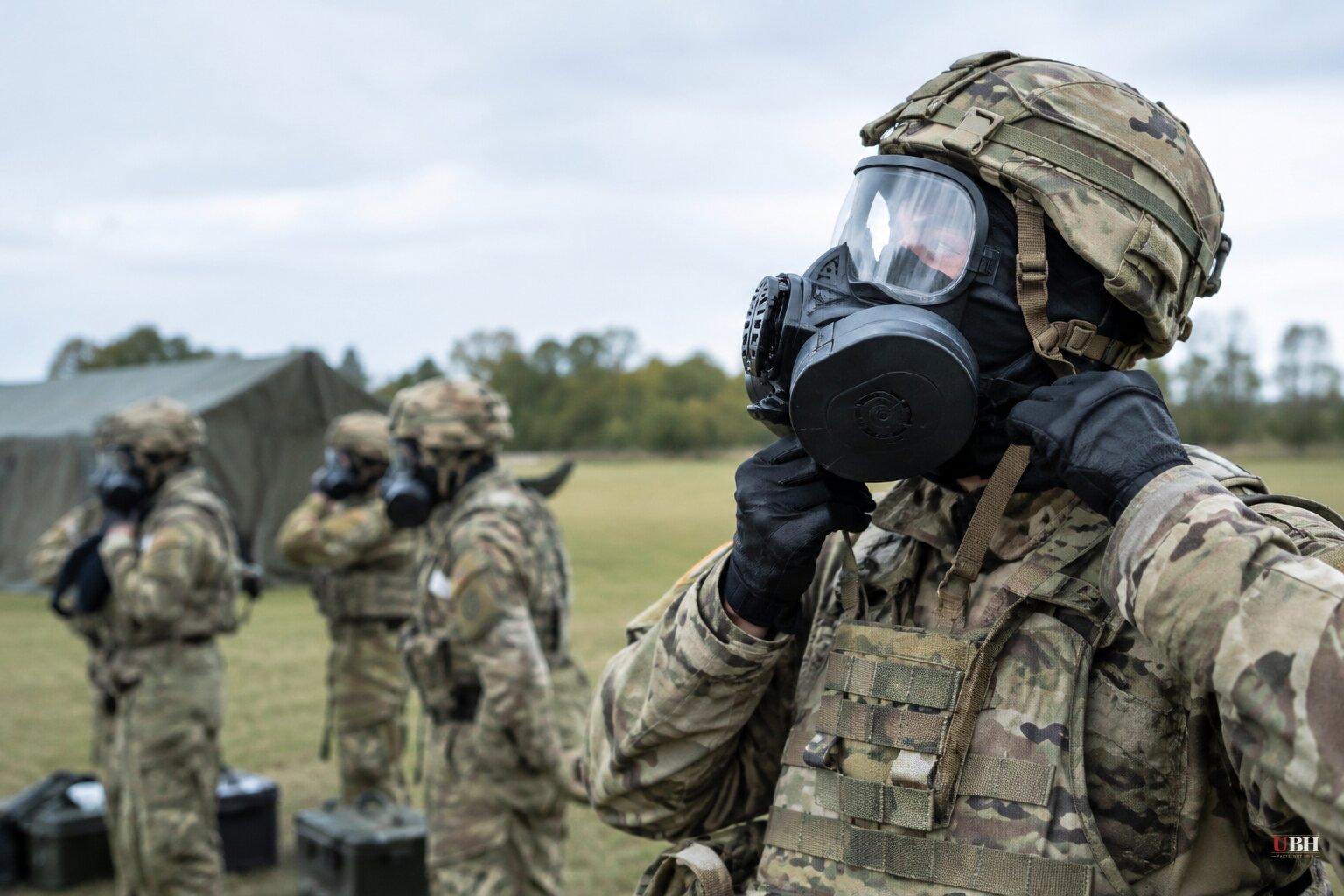
The U.S. Army has stopped pretending it can wall off its troops from biological weapons.
"Can we protect every soldier from every possible bio threat? Probably not," Dr. Alison Tamasi, a senior official at the Army's Nuclear and Countering Weapons of Mass Destruction Agency, told reporters at a Monday briefing. "We can't put them in a bubble."
That admission came with a newly signed plan. Biological incidents will move out of specialized drills and into the Army's major combat exercises, where commanders will have to handle an outbreak while still running their missions.
What the plan changes
The old model treated outbreaks mostly as a medical problem. Doctors and medics handled them while everyone else waited.
The new one pulls commanders, intelligence officers and logistics personnel into the response. The Army's stated goal is a force that can deploy and fight in biologically contested environments by 2035.
Tamasi offered one example: a simulated norovirus outbreak at a military port. Medical staff work to contain it. Meanwhile, logistics officers have to figure out how to keep critical supplies moving.
The point of the exercise is that a sick port is also a supply problem, and a supply problem is a combat problem.
Why the Army is doing this now
The Army ties the shift to artificial intelligence and biotechnology, which it says raise concerns about the weapons America's adversaries could develop in the near future.
One open question is Russia. U.S. officials continue to assess whether Moscow maintains an offensive biological weapons program after a mysterious death in Russia was linked to an anti-plague facility. That has revived questions about biological safety and transparency there.
AI is part of the worry on the technology side. Former CIA station chief Dan Hoffman pointed to a report from Anthropic describing eight months of disrupted malicious operations aimed at using advanced AI models for cyberattacks and bioweapons development. Hoffman argues the U.S. government must act aggressively to secure its critical technical infrastructure.
Ukraine: infection as a battlefield threat
A parallel story is playing out in Ukraine's hospitals. The New York Times reported on Oct. 31 that as many as 40 percent of injured soldiers there face severe infections that can lead to amputations and death. Its report describes an initiative in which doctors try treating those infections like biological warfare attacks.
The approach rests on a basic medical fact. Combat wounds are ragged and contaminated with dirt, fabric and metal fragments. They often become infected with multidrug-resistant bacteria such as Acinetobacter, Pseudomonas, Klebsiella and MRSA, which resist standard antibiotics.
The same logic drives the Army plan: treat the threat as something that disrupts operations, not just something that fills hospital beds.
The 40 percent figure is a high-end estimate, and the reporting on the initiative has not been matched by published clinical results. Other online accounts of Ukrainian pilot programs carry specific contract values and infection-rate reductions, but those figures come from a single unverified source. They are not included here.
The cost of getting this wrong
The Army's admission has a practical edge. If you can't protect everyone, you plan for the soldiers who get hit and for the units that have to keep operating around them.
That means money for training time, exercise design and supply-chain planning, all of which compete with other priorities. The Army has not said what the effort will cost or how many exercises will carry biological scenarios each year.
The 2035 target gives the service roughly nine years. Whether the exercises produce commanders who can run a port, a convoy or a field hospital under biological pressure will only show up in how those drills are graded, and the Army has not said how it will grade them.
Sources used for this briefing
4 links from 4 independent newsrooms (syndicated copies of the same report count once)
These are the sources it draws on, linked so you can verify.


