
Unbiased headlines. Facts, not spin.
Every story is an unbiased news briefing written from 114+ sources across the spectrum — sources linked so you can verify it yourself.
 defense
Major Story (7/10)
October 8, 2026 at 08:23 PM
defense
Major Story (7/10)
October 8, 2026 at 08:23 PM
Army Report on Potomac Midair Collision Cites Broken Radio Calls, Night-Vision Limits and Flawed Helicopter Route
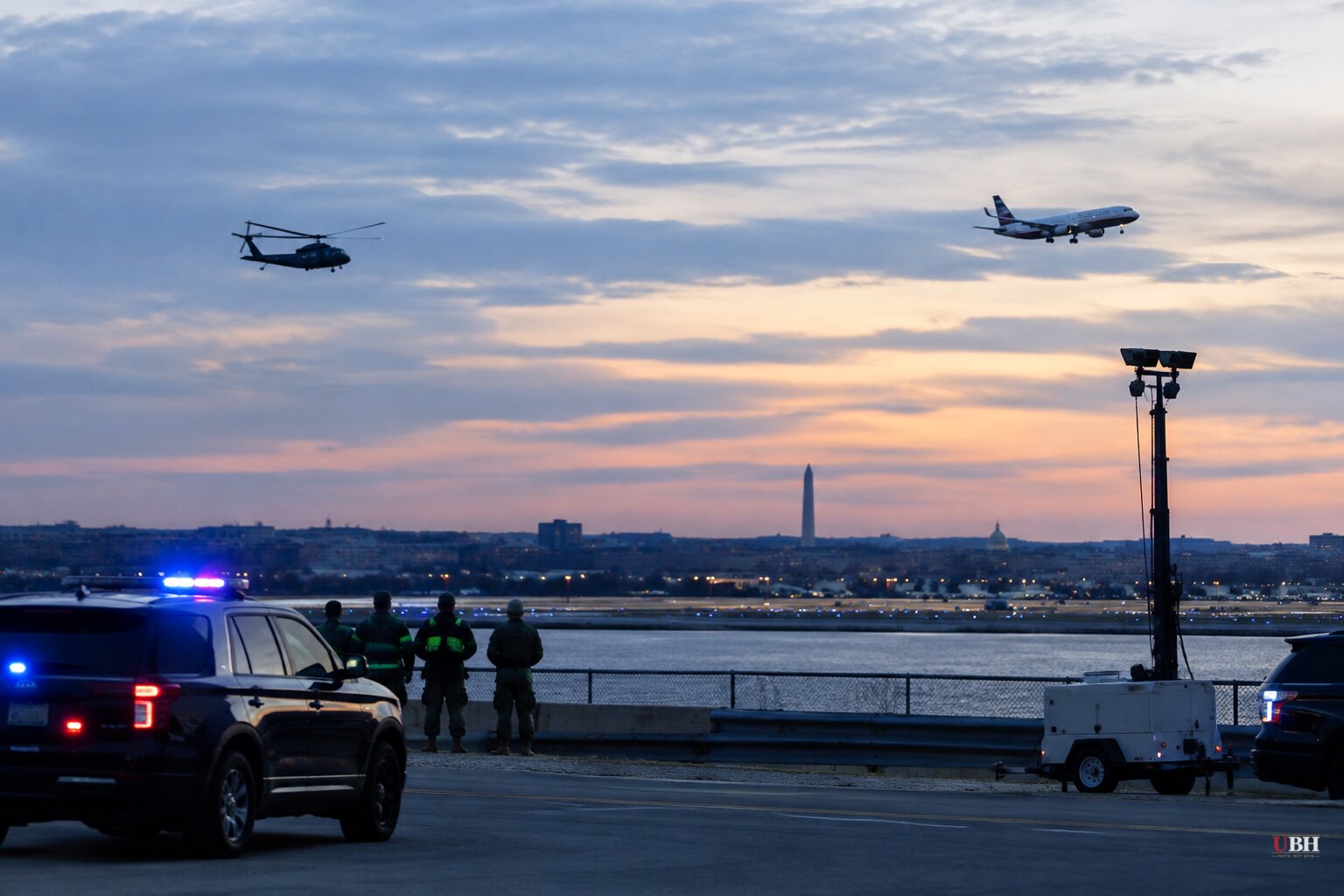
Since the Jan. 29, 2025 collision over the Potomac River killed 67 people, the Army's own investigation has stayed out of public view. That changed today, Oct. 8, when the service released its report on the crash, a few hours after the Associated Press obtained a copy from victims' families.
The report was completed in May. Families had spent months pressing the Army to release it, including through daily social media posts.
What the Army found
The lieutenant general who wrote the report concluded that "breakdowns across all layers of conflict management caused this accident." The "most salient contributing factor," the report said, "was the two broken radio transmissions." Those transmissions contributed to the Black Hawk crew not identifying American Eagle Flight 5342 as it circled to land on Reagan National Airport's alternate runway.
The military pilots were wearing night-vision goggles. The report says the goggles limited their field of vision and made it hard to spot the plane against the lights of the city.
The helicopter route in use at the time was poorly designed, according to the report. It provided only 75 feet (23 meters) of vertical separation.
The report also says the air traffic controller in the Reagan National tower could have prevented the crash. It acknowledges the military's own failings alongside that finding.
The collision was the deadliest plane crash on U.S. soil in more than two decades. Both aircraft fell into the icy Potomac.
How it compares with the NTSB
The Army report largely reinforces the conclusions of the National Transportation Safety Board. The NTSB's civilian investigation was broader. It emphasized years of warning signs the Federal Aviation Administration missed, along with a weak military safety culture.
The Army report goes further on one point of its own: it recommends the service look beyond Washington. It calls for a study of helicopter practices in every major city where Army aircraft operate, to check whether similar risks exist elsewhere.
An Army official, speaking anonymously because they were not authorized to discuss it publicly, said the review of helicopter flights in other cities is ongoing. Los Angeles and the Seattle-Tacoma region are among them.
Families want names, not a system
Tim Lilley is a former Army Black Hawk pilot and now a commercial jet captain. His son, Sam Lilley, was the first officer on the American Airlines jet. He said he needs more from the military. Some of the report is redacted, and the Army assigned responsibility for its shortcomings broadly across the service.
"The Army owes the families and the American public a full accounting of how these risks were allowed to persist, who was responsible for the decisions that allowed them to persist and what will be done to make sure this never happens again," Lilley said.
The Army responded in a statement Thursday afternoon. "We recognize the families' need for answers and remain committed to transparency regarding the Army's review," it said.
The Army's position is that it has now published a report that admits military failures alongside the controller's, and that a wider review is underway. Lilley's complaint is about what the report leaves out: individual decisions and the people who made them. The Army has not said whether anyone will be held accountable.
The push on Capitol Hill
The main group representing families of the passengers, who were flying from Wichita, Kansas, said the report strengthens their case for legislation. The Families of Flight 5342 want Congress to require aircraft to carry systems that show pilots where other traffic is.
"It's a simple concept anyone can understand: aircraft should be able to see each other in the sky. The technology is proven. All that's required is the political will to do the right thing," the group said in a statement Thursday.
"We have waited long enough. We waited for the NTSB. We waited for the Army. Both investigations are complete, and both make clear that collision avoidance technology must be part of the solution. There is nothing left for Congress to wait for," the group said.
Both chambers have passed aviation safety bills, but the two versions differ. Lawmakers are still working on a compromise to bring to a vote in the House and Senate. No vote date has been announced.
The open questions are now specific. Will the Army release the redacted portions, and will it identify who made the decisions that left a 75-foot margin in a busy approach corridor? The answers will likely shape whether the families' calls for a fuller accounting go beyond the Army's statement of commitment.
Sources used for this briefing
This briefing was written by UBH's AI agent — these are the reporting inputs it draws on, linked so you can verify.


