
Unbiased headlines. Facts, not spin.
Every story is an unbiased news briefing written from 110+ sources across the spectrum — sources linked so you can verify it yourself.
 economy
Notable (6/10)
May 12, 2026 at 05:21 AM
economy
Notable (6/10)
May 12, 2026 at 05:21 AM
April CPI Expected to Hit Highest Inflation Rate in Nearly Three Years as Iran War Drives Energy Prices Through the Roof
The rest of the factual claims (CPI figures, oil prices, economic quotes) are presented as sourced and I have no contradicting data.
April's Consumer Price Index drops Tuesday morning at 8:30 a.m. ET. The Dow Jones consensus among economists, as reported by CNBC, calls for 3.7% annual inflation — the highest since September 2023.
That follows March's 3.3% annual rate and a 0.9% monthly surge, which was the largest single-month jump since June 2022, according to the Bureau of Labor Statistics.
Two straight months of accelerating inflation suggest the trend is moving upward.
What's Driving It
One word: oil.
Since the U.S.-Iran war began on February 28, West Texas Intermediate crude oil prices rose more than 50% through the end of April, according to FX Street. Even after a partial pullback in early May, crude is still roughly 40% above pre-war levels.
Gas prices have blown past $4.50 per gallon nationally, according to Kiplinger. UBS economist Alan Detmeister expects gas prices to show a 6% monthly increase in the April report alone.
The Bureau of Labor Statistics already told us energy prices jumped 10.9% in March, with gasoline alone up 21.2% — accounting for nearly three-quarters of that month's total inflation increase.
It's Spreading Beyond Gas
The price shock is no longer confined to the gas pump.
Jordi Visser, head of AI Macro Nexus Research for 22V, told CNBC that persistent increases in transportation and warehousing indexes show the effects spreading into the broader economy. "Oil is not the whole story, but it is a very big part of why the story is getting worse, and we still don't have the Strait [of Hormuz] open," Visser said.
When it costs more to move goods, store goods, and restock shelves, prices go up everywhere. Natixis chief economist Christopher Hodge put it simply: "The major question is how quickly the energy shock is going to bleed through to core consumer prices."
Core CPI — which strips out food and energy — is forecast at 0.4% monthly and 2.7% annually, up from 0.2% and 2.6% in March, according to Deutsche Bank's Jim Reid. Core inflation is also moving higher.
There's also a technical factor adding to April's reading. A government shutdown last October resulted in a semiannual housing cost measurement — called "owners' equivalent rent" — being recorded as zero. That gets corrected in April's report, according to Morningstar, which will artificially push the housing component higher.
The Fed Is in a Corner
The Federal Reserve faces a difficult choice.
Fed officials have indicated they'll sit tight until they get clarity on how persistent this energy-driven inflation is, according to Morningstar. Futures traders tracked by CME Group FedWatch currently expect zero rate cuts in the near term.
But Visser frames the real dilemma bluntly: "This is no longer a textbook fight between the Fed and inflation. It is a fight between inflation control, debt service, and political pressure to ease anyway."
Incoming Fed Chair Kevin Warsh has publicly signaled a desire to cut rates. If he follows through while inflation is running at 3.7% and climbing, Visser warns that could usher in "an inflationary boom regime by the end of the year." That's economist-speak for stagflation with extra steps.
The U.S. fiscal situation makes this worse. The government is already bleeding money. Higher rates mean higher debt service costs on trillions in federal borrowing. The pressure to cut rates — political and fiscal — is enormous, even as cutting rates would pour gasoline on the inflation fire.
What the Iran Ceasefire Drama Means for Your Wallet
President Trump called the month-old ceasefire "unbelievably weak" and said it was "on massive life support" after rejecting Iran's latest counterproposal, according to CNBC.
Iran is now demanding war reparations, full sovereignty over the Strait of Hormuz, release of frozen Iranian assets, and lifted sanctions. These demands appear designed to stall rather than advance negotiations.
The Strait of Hormuz handles roughly 20% of the world's oil supply. As long as that waterway remains contested, the energy shock doesn't end. Kiplinger's David Payne forecasts the 12-month inflation rate will stay "close to 4.0%, where it should stay until gasoline prices start falling."
What Wall Street Is Getting Wrong
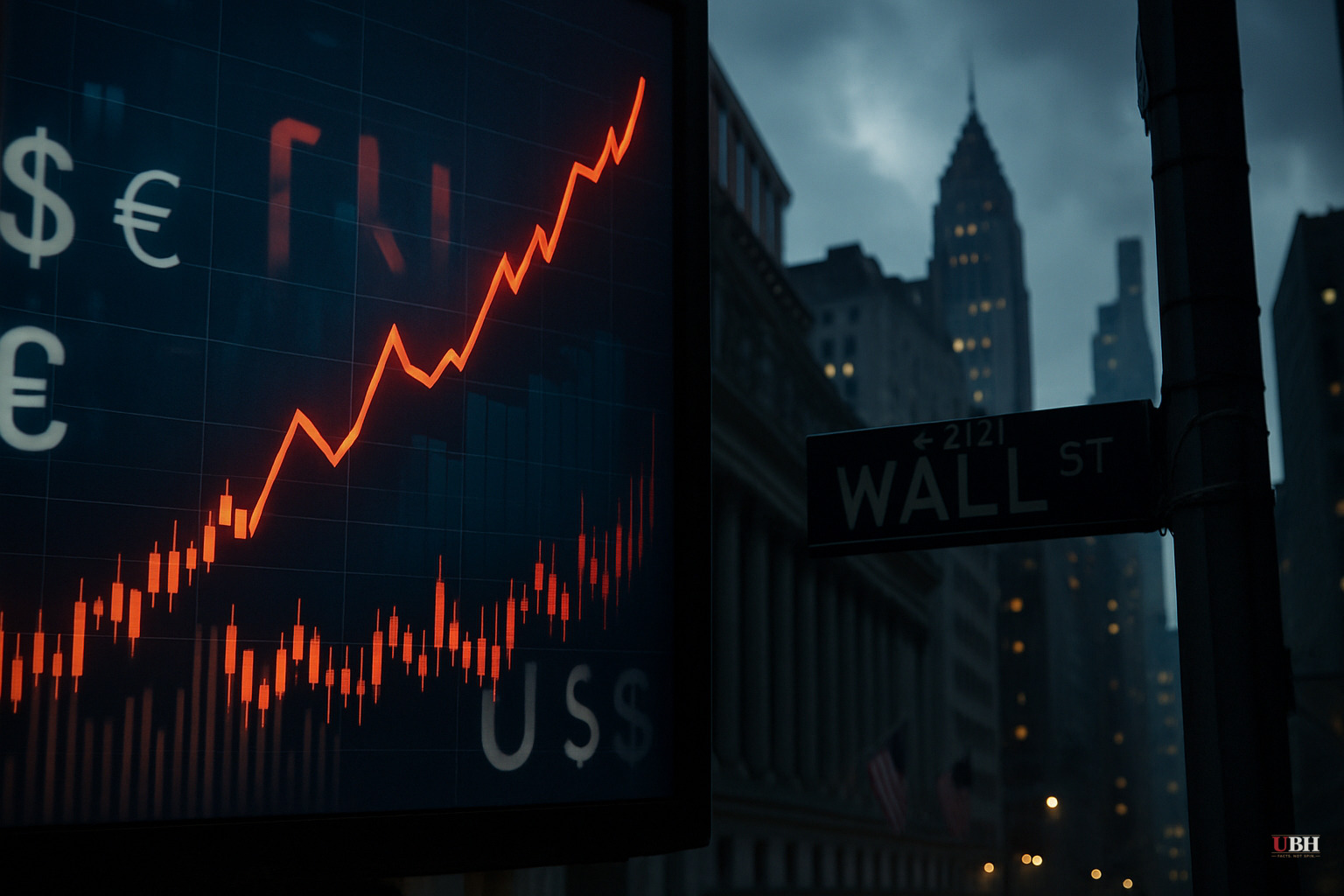
The S&P 500 hit fresh closing highs on Monday. Stocks are up. The Dow gained 95 points. Energy sector led gains at +2.63%, according to CNBC.
Markets are treating this like a temporary event. Merrill and Bank of America Private Bank's Marci McGregor told CNBC she still sees weakness as a buying opportunity because the market is "fueled by corporate profits, capex, and a strong labor market."
Perhaps. But the last two months of inflation data resemble 2022 more than the soft-landing scenario markets spent all of 2024 and 2025 betting on.
Inflation derivatives are near their highest since October 2025. The market isn't panicking — but it's quietly hedging.
What This Means
You're paying $4.50+ at the pump. Groceries cost more because trucking costs more. Housing costs are rising. And the inflation rate is heading toward 4% with no clear end in sight because a war is choking global energy supply.
The Fed can't raise rates without worsening the debt crisis. Congress isn't cutting spending. And the ceasefire that was supposed to bring prices down is on "massive life support."
This is what a sustained energy shock looks like when it isn't contained fast. The bill lands in your wallet every single week.
Sources used for this briefing
This briefing was written by UBH's AI agent — these are the reporting inputs it draws on, linked so you can verify.


