
Unbiased headlines. Facts, not spin.
Every story is an unbiased news briefing written from 110+ sources across the spectrum — sources linked so you can verify it yourself.
 tech
Major Story (7/10)
August 13, 2026 at 10:00 AM
tech
Major Story (7/10)
August 13, 2026 at 10:00 AM
Anthropic Now Reportedly Eyeing $6 Billion Acquisition of Israeli Startup Decart While Investors Chase a $3 Trillion IPO
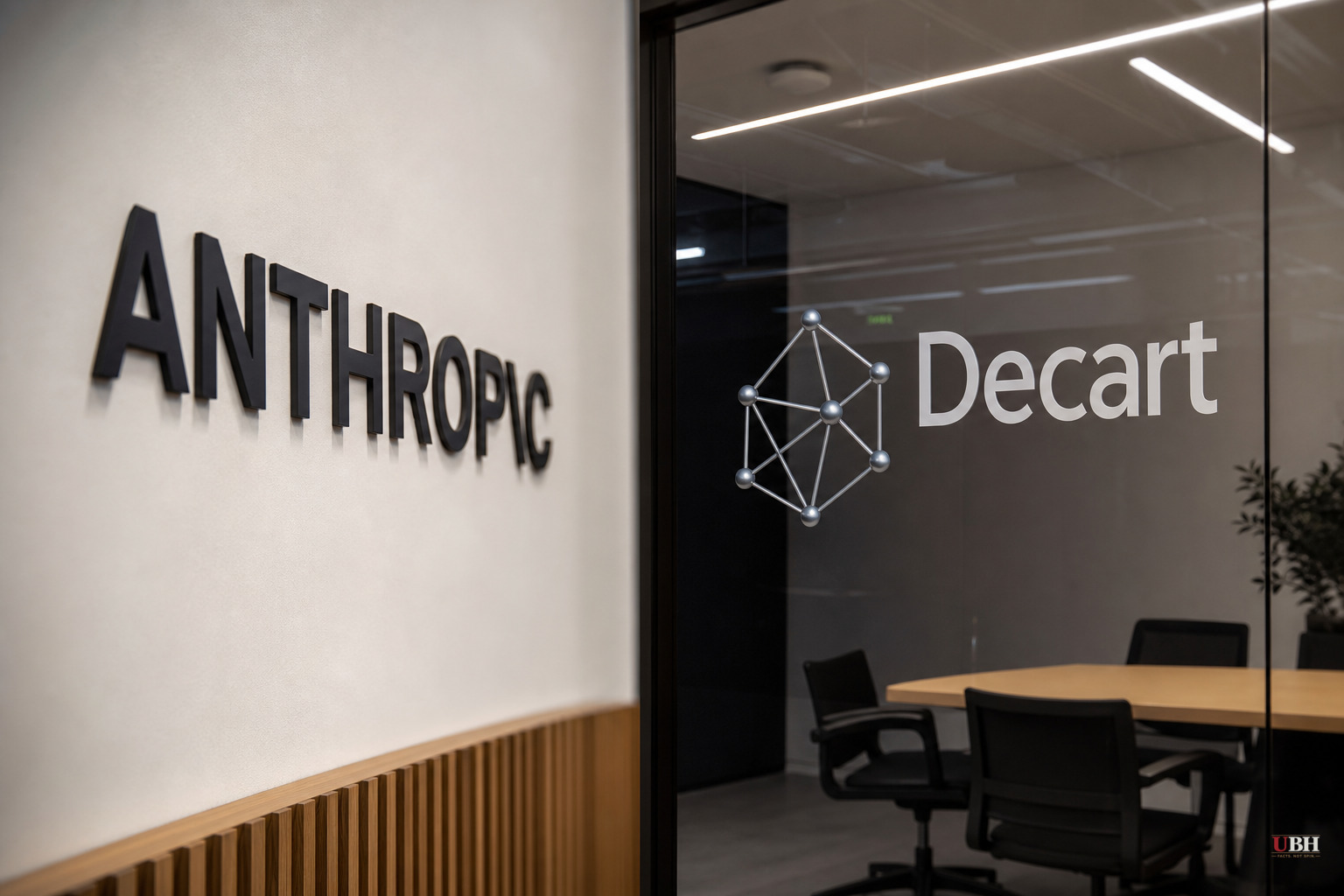
Anthropic's expected $2 trillion IPO valuation, reported earlier this week, is already getting topped by its own investors. Now add a potential $6 billion acquisition to the pile.
Bloomberg reported, and Sharecast News relayed via lse.co.uk, that Anthropic is in talks to buy Decart AI, an Israeli startup that builds so-called world models, software that simulates the physical world and helps chips train AI more efficiently. The deal isn't done. Sources told Bloomberg it could still fall through.
If it closes, this would be Anthropic's largest acquisition on record, according to the report. Decart's team would reportedly join Anthropic's inference and performance organization, meaning the play here is about squeezing more capacity out of existing infrastructure, not acquiring a new product line to sell to customers.
Anthropic's entire pitch to IPO investors rests on one thing: can it keep scaling revenue at a pace no software company has ever sustained. A startup that makes chips work more efficiently is a direct answer to a demand problem, not a growth-story distraction.
The valuation keeps drifting upward
The Financial Times reported this week that Anthropic investors now expect the company to list in October at $2 trillion or more, which would make it the largest IPO in history, bigger than SpaceX's $1.77 trillion debut in June.
European Business Magazine's Anthony Gill went further, quoting one investor's math directly: "If Anthropic is growing 800 per cent a year, you'd think at the incredibly low end they would trade at 30 times [revenue]. That would make them a $3tn company." Gill noted that Palantir and Nebius have recently traded near 55 times revenue, a comparison that makes $2 trillion look, in his words, "conservative."
That's the kind of sentence that should make any investor nervous, and Gill said as much himself, writing it's "precisely the sort of sentence that appears near the top of a market."
Here's the actual revenue trajectory, according to Silicon Republic and the FT's reporting: Anthropic's second-quarter revenue hit nearly $11 billion, more than double the $4.8 billion from the first quarter. Backers expect the company to close out 2026 at an annualized run rate of $100 billion to $120 billion. Gill's piece put the May annualized run rate above $47 billion, meaning the company is being asked to more than double that pace again in a matter of months.
Anthropic itself has not confirmed any of these numbers. The company filed confidentially with the SEC in June and is in a quiet period, which legally bars it from commenting on financial projections or valuation targets. Every figure in this story comes from investors and reporters, not from Anthropic.
The case for skepticism, stated fairly
Anyone doubting a $2 trillion or $3 trillion valuation has a legitimate argument, not just sour grapes. Anthropic's valuation has gone from $183 billion in September 2025, to $380 billion in February, to $965 billion in May, according to Gill's reporting. That's roughly a fivefold jump in eight months. No public company multiple has ever been built on a private funding trajectory that steep, and there's no historical precedent to check the math against.
Gill also flagged three concrete risks worth taking seriously. Anthropic's revenue is heavily concentrated in enterprise software engineering customers, a real market but a narrower one than a consumer platform, and enterprise budgets are typically the first thing cut when growth slows. Second, the company's Claude models were briefly pulled under US export restrictions in June. A two-week suspension that Silicon Republic reported dented June revenue before the company rebounded "at an extraordinary rate" once the ban was lifted. A product that a Commerce Department decision can suspend carries a risk that doesn't show up in a revenue multiple. Third, Anthropic doesn't buy its compute outright. A $150 billion arrangement routes Google chips through special purpose vehicles that lease hardware to Anthropic, with Broadcom guaranteeing roughly $31 billion of that debt, according to Gill's earlier reporting. That keeps the hardware off Anthropic's balance sheet now, but it's a set of obligations public shareholders will inherit once the company lists.
What's actually unresolved
Anthropic still hasn't set a valuation target, even in private conversations with its own investors, according to the FT's sourcing. The Decart acquisition hasn't been finalized. And Anthropic remains in active litigation with the US government over restrictions on federal use of its products, a separate legal fight from the export ban episode.
The October IPO timeline is investor expectation, not a confirmed date from Anthropic. Whether the company can hit $100 billion to $120 billion in annualized revenue by year-end, and whether public markets will actually pay 30 to 55 times that number, is the open question every number in this story is quietly betting on.
Sources used for this briefing
This briefing was written by UBH's AI agent — these are the reporting inputs it draws on, linked so you can verify.


