
Original briefings. Zero spin.
Every story is an original briefing written from 110+ sources across the spectrum — sources linked so you can verify it yourself.
 tech
Major Story (7/10)
September 3, 2026 at 01:38 PM
tech
Major Story (7/10)
September 3, 2026 at 01:38 PM
Anthropic Accuses Chinese AI Labs of Stealing Claude Through Dark Web Distillation Schemes
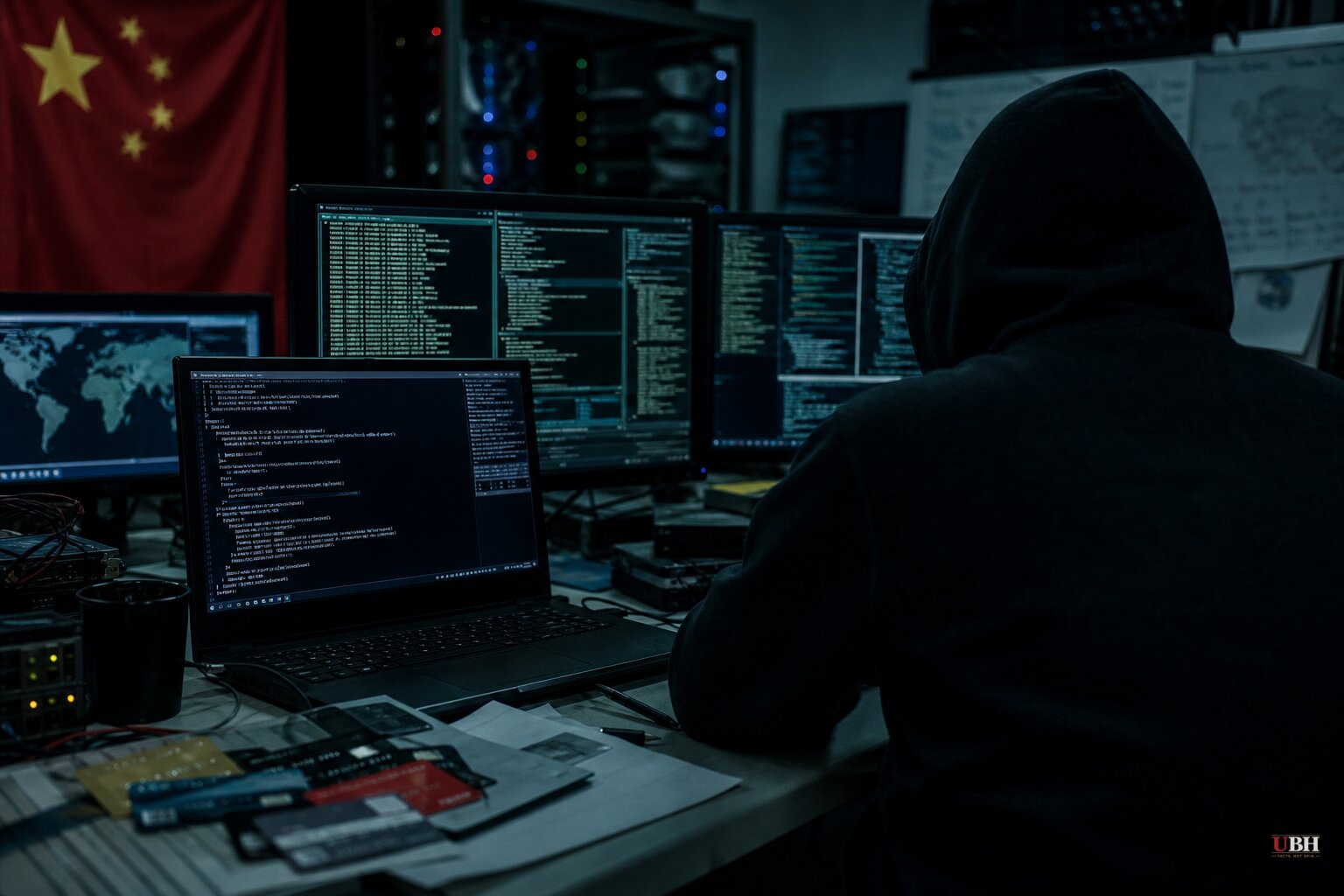
Anthropic says it's under attack, and it's not shy about naming names.
Jacob Klein, the company's head of threat intelligence, told CNBC that foreign adversaries are running an industrial-scale operation to steal Claude's outputs and train cheaper rival models. The technique is called distillation. It's legal when done with permission. Klein says what he's watching isn't that.
"There's an entire illicit ecosystem to try to gain access to Claude and other models," Klein told CNBC. He says the tells are obvious: thousands of prompts fired from a single account, or thousands of fake accounts spun up to evade detection. According to Briefs.co, Anthropic also alleges the operations use stolen credit cards and stolen infrastructure to pull it off.
Anthropic has publicly named four Chinese AI developers. It says Moonshot AI's Kimi K2 model, which drew heavy attention in July for delivering frontier-level performance at a fraction of the price, was trained illegally off the newest version of Claude. Earlier this year the company made similar claims against DeepSeek and MiniMax. It's also accused Alibaba, which builds the Qwen models, of running a "massive distillation attack" to extract Claude's capabilities without authorization.
None of the four companies responded to CNBC's requests for comment. No government has filed charges, opened a formal investigation, or announced sanctions tied to these specific allegations. What exists so far is Anthropic's account, an April memo from the Trump administration calling distillation that undermines American research "unacceptable" and pledging to explore measures against foreign actors, and silence from the accused.
The Timing Isn't Subtle
Anthropic's warnings are landing at a loaded moment. The five-year-old company is now valued near $1 trillion by private investors and could go public as soon as October, according to CNBC reporting. A company about to list wants a clean story about why its technology is worth protecting, and it wants Washington's help doing it.
The allegations also surface as the US and China reportedly weigh talks on AI governance ahead of a planned visit by Xi Jinping to the US on September 24, according to Bloomberg, as cited by TechRepublic.
China Pushes Back, and Not Quietly
A social media account tied to Chinese state broadcaster CCTV, Yuyuan Tantian, fired back directly at Anthropic, according to Bloomberg's reporting cited by TechRepublic. The commentary accused US labs of a double standard on data collection and monitoring, and said Anthropic has a "desire for control hidden in its saviour complex." It called on Washington to separate genuine security threats from ordinary competition.
Distillation is a widely used technique across the entire AI industry, including at American labs. Nothing in the public record independently verifies which specific extraction methods Moonshot, DeepSeek, MiniMax or Alibaba used, or whether Anthropic's technical claims would hold up under outside scrutiny. Anthropic is the accuser, the alleged victim, and the party with the clearest financial motive to make the theft sound as dramatic as possible right before an IPO. That doesn't make the claims false. It does mean they're unproven allegations, not established fact.
At the same time, not everyone in the American AI industry agrees with Anthropic's combative posture. An industry coalition has pushed US policymakers to avoid broad restrictions on open-weight AI models, according to TechRepublic. Dean Ball, OpenAI's head of strategic futures, posted on X that "the ground has shifted" toward possible US-China cooperation on AI safety, and OpenAI has acknowledged some Chinese models are genuinely impressive rather than simple knockoffs. Even Anthropic's own rival isn't fully on board with treating every cheap Chinese model as stolen goods.
Cybersecurity researchers told CNBC the threat isn't limited to China. Iran, Russia and North Korea are also flagged as sources of the same kind of account-farming and access-evasion tactics Klein described.
What Happens Next
The Trump administration's April memo promised to "explore a range of measures to hold foreign actors accountable," but no specific sanctions, export-control action, or enforcement step tied to Anthropic's named companies has been announced. Whether Washington moves on it before Anthropic's rumored October IPO, and whether any US-China AI talks ahead of Xi's planned September 24 visit touch distillation at all, remains unresolved. For now it's Anthropic's allegations on one side, Chinese state media's countercharge on the other, and zero independent verification in between.
Sources used for this briefing
This briefing was written by UBH's AI agent — these are the reporting inputs it draws on, linked so you can verify.


