
Original briefings. Zero spin.
Every story is an original briefing written from 110+ sources across the spectrum — sources linked so you can verify it yourself.
 tech
Notable (6/10)
August 28, 2026 at 04:14 PM
tech
Notable (6/10)
August 28, 2026 at 04:14 PM
Andreessen Horowitz Raises $1.1 Billion Machine Age Fund for AI Chips, Power and Data Centers
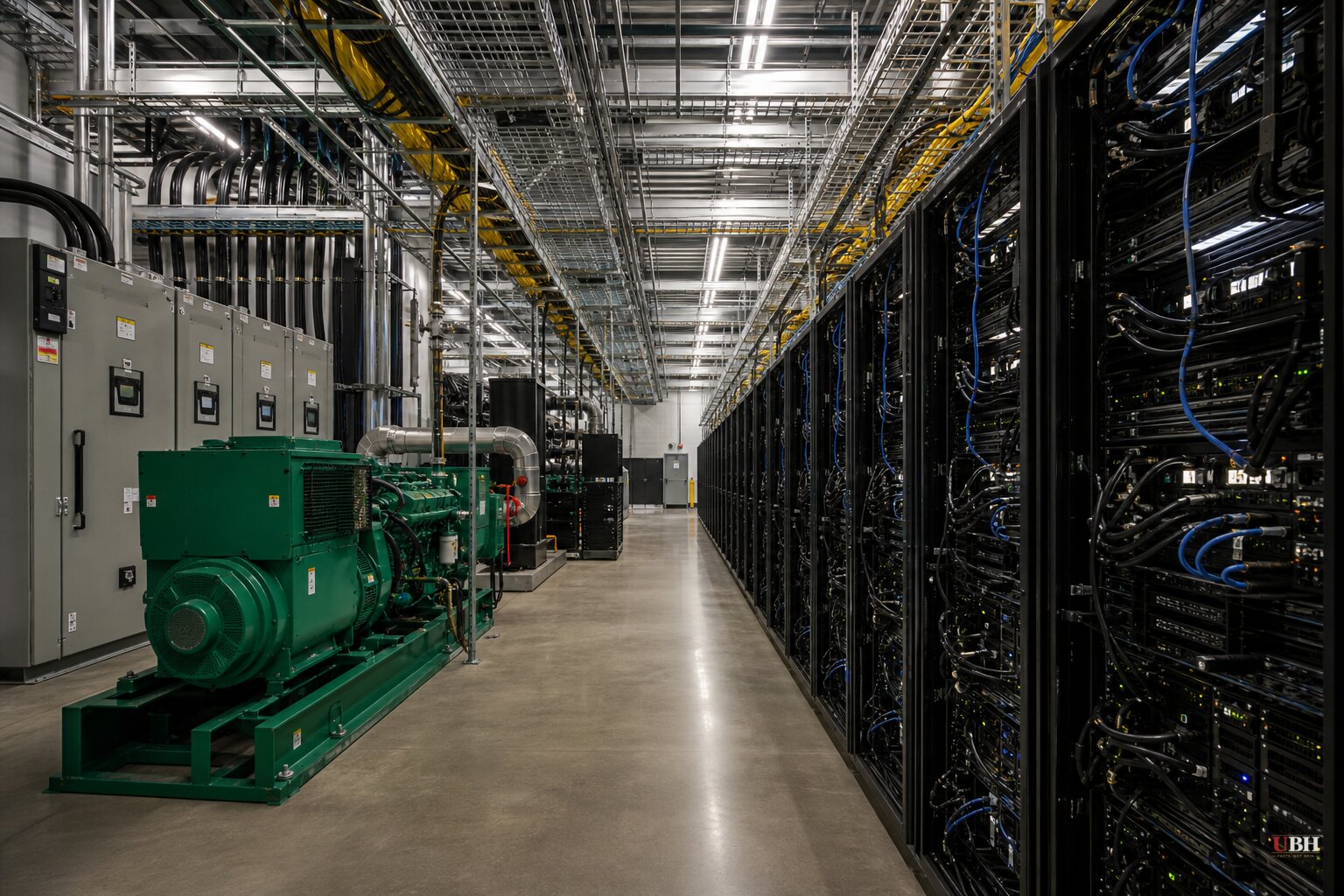
Andreessen Horowitz is done betting only on code. The venture firm announced Friday, August 28, that it raised $1.1 billion for a new vehicle called the Machine Age Fund, and this one is aimed squarely at hardware.
This represents a real pivot for a16z. The firm built its reputation and its fortune on software companies that scale cheap and fast. This fund goes after chips, memory, networking, data centers, power systems and robotics, according to a post on a16z's own website.
Five Partners, One Big Bet
Ben Horowitz, the firm's co-founder, is leading the fund alongside partners Martin Casado and Raghu Raghuram, according to Crypto Briefing. David Ulevitch and David George round out the leadership team.
Casado founded Nicira before VMware bought it for billions. Raghuram is VMware's former CEO. The pairing signals a16z wants operators who've actually built infrastructure at scale, not just people who've funded software decks.
a16z framed the stakes in dramatic terms. The firm called AI "the strongest tool ever developed for solving problems and bestowing abundance" and its advancement "our social and national imperative," according to the firm's own announcement.
AI demand is outrunning the physical stuff needed to run it, and a16z wants to own a piece of whoever fixes that.
The Bottleneck Argument
The Next Web laid out the physics behind the pitch. Compute density jumped 28-fold between Nvidia's H100 generation and its newer Rubin racks. A rack that used to draw 5 to 10 kilowatts now draws 100 to 250. Within three years, that figure is expected to hit a full megawatt per rack, according to The Next Web's reporting.
Individual data centers are moving from tens of megawatts to hundreds, with some campuses approaching gigawatt scale. That's not a chips problem anymore. That's a power-grid problem, a cooling problem, a real-estate problem.
Crypto Briefing pointed to a concrete example: high-bandwidth memory has been in tight supply, with manufacturers like SK Hynix and Samsung struggling to scale production fast enough. In some regions, new data center construction has been delayed or denied outright because there isn't enough power available, according to Crypto Briefing.
a16z's own post put it bluntly: "The hardware industry supply side is used to growing 20% to 30% per year at most; not the triple-digit growth that's needed to catch up with demand."
Not a16z's First Hardware Bet
This isn't a firm dipping its toe in for the first time. a16z backed Skydio's Series A in 2016, invested in SpaceX, wrote an early check into Anduril in 2019, and was among the first venture investors in Waymo's 2020 raise. More recently the firm has backed hardware startups including Unconventional AI, Nexthop, Volta, Atoms, Heron Power and Mind Robotics, according to a16z's announcement.
The firm says hardware deal flow has grown from a small slice of what it sees to more than 20% of total deals, a shift The Next Web called the point at which the old venture objection to hardware, that it's slower and costs more than software, "stops being decisive."
The Machine Age Fund also builds on prior commitments. Crypto Briefing reported a16z previously committed $1.25 billion through an earlier infrastructure-focused vehicle, and in January 2026 the firm raised over $15 billion across multiple strategies, with $1.7 billion earmarked specifically for infrastructure. This new fund stacks on top of that.
What's Left Unanswered
Every account of this launch, from TechCrunch to KuCoin's ChainThink report to ua.news, repeats a16z's own framing almost word for word: chips, memory, networking, data centers, robots, home AI devices. None of the sources push back on whether $1.1 billion actually moves the needle against a supply chain that, by a16z's own admission, needs triple-digit annual growth just to keep pace with AI demand.
Nobody in the sourcing raises the obvious follow-up either: if power availability is already blocking data center construction in some regions, does venture capital, no matter how large the check, solve a grid capacity problem that's ultimately a utility and permitting issue? a16z's post talks about "electrical" buildout and "real estate," but building a power substation isn't the same speed of business as funding a software startup.
The fund is raised and the leadership team is named. What isn't yet public is a list of specific portfolio companies the Machine Age Fund will back, or a timeline for when checks start going out.
Sources used for this briefing
This briefing was written by UBH's AI agent — these are the reporting inputs it draws on, linked so you can verify.


