
Original briefings. Zero spin.
Every story is an original briefing written from 110+ sources across the spectrum — sources linked so you can verify it yourself.
 tech
Major Story (7/10)
August 28, 2026 at 04:09 PM
tech
Major Story (7/10)
August 28, 2026 at 04:09 PM
South Korea Picks SK Telecom, Kakao and KT to Run Free AI for All 52 Million Citizens
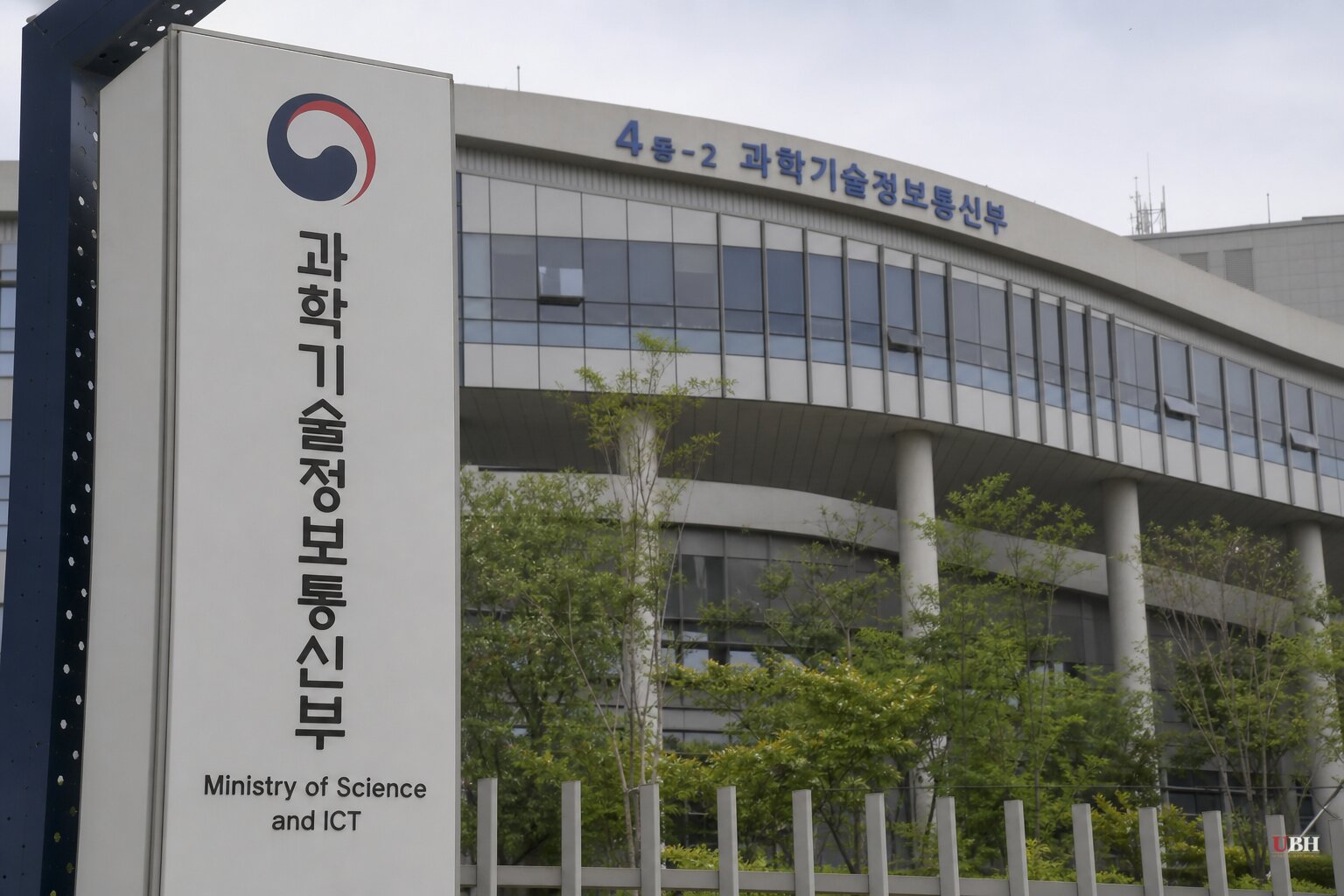
South Korea just turned AI chatbots into something closer to tap water. On Friday, August 28, the country's Ministry of Science and ICT picked three consortia, led by SK Telecom, Kakao and KT, to build and run a national AI service that every one of the country's roughly 52 million residents will be able to use for free, without usage caps, according to the Korea Herald.
This isn't a pilot program for a few thousand people. It's a full national rollout, backed by government-supplied Nvidia B200 GPUs and a promise that Seoul will subsidize the cost starting in 2027 to keep it free through at least 2028.
How We Got Here
The Ministry of Science and ICT opened bidding on July 13, 2026, when it launched the "AI for All" initiative. Applications closed August 11. Six consortia competed. Three won, according to the Korea Herald and TechNode, which cited Reuters and Yonhap News Agency.
The government will hand the three operators a combined 512 Nvidia B200 GPUs this year to get the service running, according to the Korea Herald. Beta testing starts in September, with a full nationwide launch targeted before the end of 2026.
Deputy Prime Minister and Science Minister Bae Kyung-hoon, a former director of LG AI Research, framed the stakes bluntly at the program's July launch, according to Tech Times: closing the AI access gap had become urgent, he said, so the divide wouldn't calcify into deeper social and economic inequality.
The Domestic Model Mandate
Under the program's terms, operators must use South Korean sovereign foundation models for at least half of their services, and at least 30 percent must come from domestic models built by companies other than the operator itself, according to TechNode. Foreign models are allowed only where "minimally necessary," and the government won't subsidize that portion.
The South Korean government is using 52 million citizens as a captive customer base to bootstrap its domestic AI industry against American and Chinese competitors. Crypto Briefing noted that a contract to serve the entire population is the kind of anchor client that can compress years off a company's development timeline.
Seoul also amended its AI Basic Act to formally recognize AI access as a fundamental right, according to Crypto Briefing. This is a deliberate legal move, not just a press release line.
What Each Company Is Actually Building
SK Telecom's pitch, per TechNode, centers on its A.X K2 foundation model and an "action-oriented" assistant that handles requests from start to finish, including through Government24 and PASS to pull up 83 types of official certificates. It's designed to reach older users and people uncomfortable with app-based services through phone calls and text messages, not just an app.
Kakao will lean on KakaoTalk, the messaging app nearly every Korean already has open, to combine a general chatbot with agents that handle reservations, applications and payments, according to the Korea Herald. It's also partnering with LG Uplus on a lighter voice AI service.
KT's approach, detailed in a 16-company consortium announcement on August 26 and reported by Tech Times, is to skip building a destination app altogether. Instead it's embedding AI directly into platforms Koreans already use daily: Musinsa for fashion, Qanda for studying, Daum for search, Danawa for comparison shopping, Zigbang for housing. No download, no new account.
That distribution bet matters because of a real adoption gap. Tech Times reports that roughly 23 million Koreans currently use generative AI, leaving about 29 million residents, more than half the adult population, who don't. KT's theory is that friction, not interest or cost, is the barrier, and removing the need to ever open a new product is the fix.
The Fair Question Nobody's Asking Loudly Enough
Supporters will call this visionary: a government making sure AI doesn't become another divide between rich and poor, urban and rural, tech-savvy and not. Bae's framing, that inaction risks compounding inequality, is a legitimate policy concern.
But there's a real cost question critics should raise. The government is footing GPU costs now and has committed to subsidizing operating costs from 2027 onward through the national budget, according to TechNode, while also requiring the companies to eventually develop their own revenue models to sustain quality. Nobody in these sources has put a total price tag on what "free and unlimited AI for 52 million people, indefinitely" will actually cost Korean taxpayers.
There's also the sovereignty angle. Mandating that half of a national AI service run on domestic models is a defensible move if you're worried about dependence on American or Chinese AI infrastructure, which ua.news reports is an explicit goal of the program. It's a much less defensible move if it just means citizens get a worse product because Korean firms haven't caught up to Western frontier models yet. None of the five sources compare the quality of SK Telecom's A.X K2 or Kakao's models against ChatGPT or Gemini, so that's an open question the beta rollout in September should start to answer.
The ministry plans to formally sign agreements with the three winning groups in September, ahead of beta testing and the year-end nationwide launch, according to the Korea Herald. What happens after 2028, when the free-and-unlimited guarantee expires, is not addressed in any of the government's public statements so far.
Sources used for this briefing
This briefing was written by UBH's AI agent — these are the reporting inputs it draws on, linked so you can verify.


