
Original briefings. Zero spin.
Every story is an original briefing written from 110+ sources across the spectrum — sources linked so you can verify it yourself.
 tech
Notable (6/10)
August 28, 2026 at 05:01 PM
tech
Notable (6/10)
August 28, 2026 at 05:01 PM
Meta Is Testing Robots to Replace Data Center Workers, and One Bot Could Cut Jobs by 80 Percent
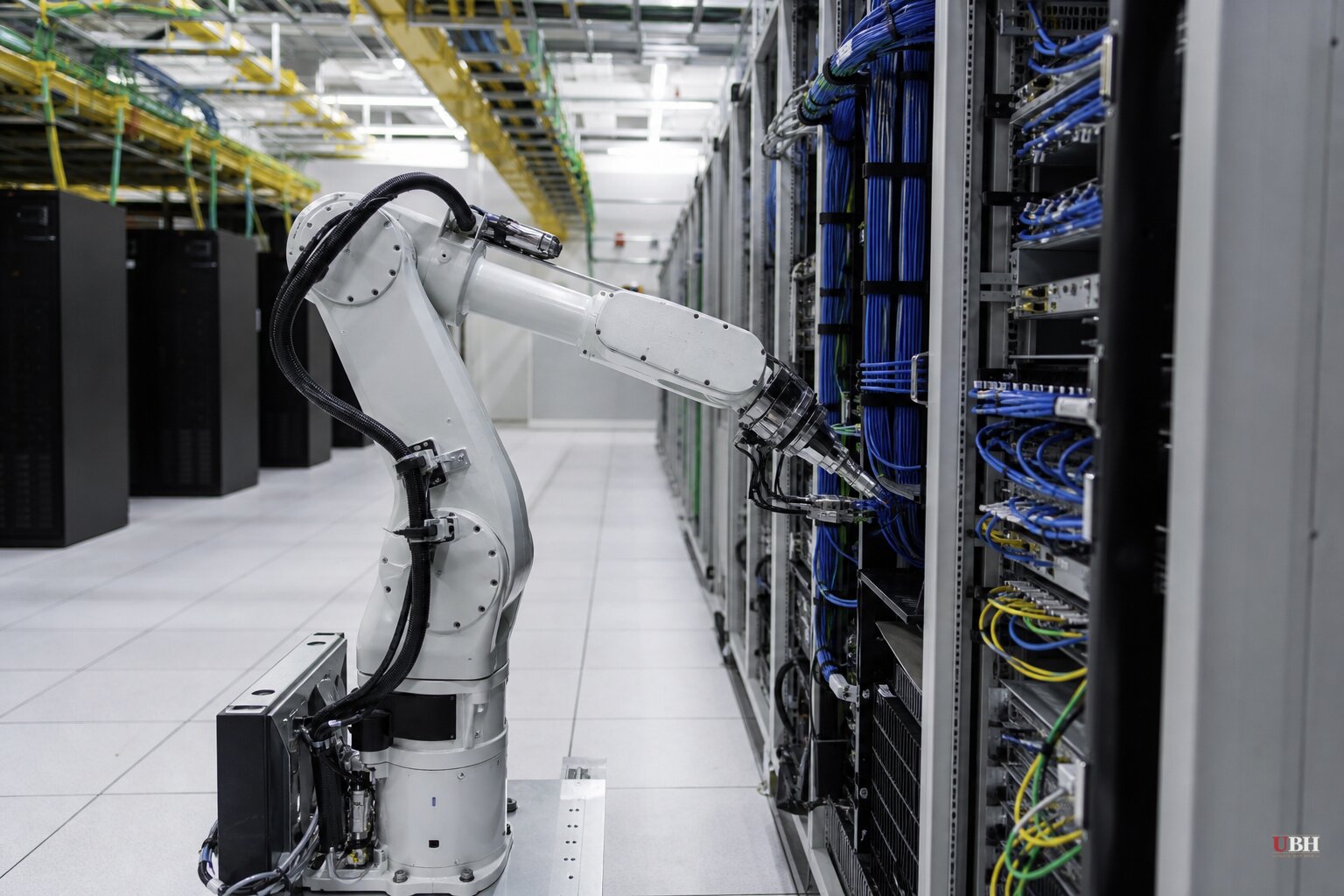
Meta is testing robots inside its data centers that can plug in cables, power-cycle servers, and handle other physical tasks once done exclusively by humans, according to Wired, which cited several current and former Meta workers speaking anonymously because they weren't authorized to talk to the press.
The hardware comes from multiple vendors, including Watney Robotics, Kinova, and ABB. In one test, Meta is evaluating whether a Kinova Gen3 robotic arm can power-cycle or cut electricity to servers. A separate robot is being tested to swap networking cables. One Meta worker told Wired that if the cable-swapping bot works, it could replace up to 80 percent of some people's workloads.
"We thought those of us performing the physical tasks were safe for a while, but not anymore," the worker said. "It's coming for us all, unfortunately."
At some facilities, Meta has already rolled out a simpler device: a finger-like mechanism that presses the power button on a Mac Mini or similar device to remotely restart it. Kinova and ABB declined to comment to Wired. Watney didn't respond.
Meta itself declined to comment on the specific testing Wired described. Spokesperson Francis Brennan told Wired the company is investing heavily in training and hiring workers to build and operate its data centers. "America is in the middle of its biggest infrastructure boom since World War II, and there's a major shortage of skilled workers to fill the roles; we need more workers, not fewer," Brennan said.
The Robots Are Already Building the Buildings, Too
Wired's reporting on internal server-room robotics aligns with a much bigger automation push at Meta's construction sites. According to Crypto Briefing, Meta deployed ten 72-ton autonomous pile drivers, built by Built Robotics, in July 2026 at a solar site tied to its Hyperion AI data center campus in Richland Parish, Louisiana.
Those machines drive nearly 1,000 steel beams a day, cutting the need for manual labor by three to four times compared to traditional crews, Crypto Briefing reported. They run more than 12 hours a day, including in knee-deep mud that would slow down a human crew. Workers on-site have shifted from swinging hammers to what Crypto Briefing called "robot foremen," supervising machines instead of operating them directly.
Hyperion itself is enormous. The campus is targeting up to 5 gigawatts of compute capacity, up from an initial 2 GW projection when it was announced in 2024, at an estimated cost exceeding $50 billion, according to Crypto Briefing.
Beyond construction, Meta's Site Engineering Robotics Team, which Crypto Briefing says has been developing mobile robots for operational tasks since at least 2016, has introduced autonomous guided vehicles for moving heavy server racks and robots for scanning and inventorying data center assets. The pace is accelerating alongside the company's AI spending.
Why Now
Robots historically weren't reliable enough for delicate data center work. Earlier industry trials sometimes ended with robots crushing servers on simple tasks, according to a person briefed on the experimentation. Hardware has since gotten cheaper, and the AI models controlling robotic arms have improved sharply in the last few years.
Eric Xu, Meta's senior manager for robotics, said at a conference last year that the company's "long-term goals" include putting robots in data centers to speed up incident response, monitor conditions, and handle preventative maintenance. "We believe more collaboration and research will be needed, but we have to start, otherwise we don't have a chance to do this," Xu said.
Meta isn't the only one doing this. Crypto Briefing reports that Microsoft, Google, and other hyperscale operators are all exploring similar automation for data center construction and operations. Several startups are racing to build commercial robots that can assemble servers and swap parts industry-wide, per Wired.
The Governance Problem Nobody's Solved Yet
As AI systems take on more autonomous work, companies are struggling to track what those systems are actually doing. Danish startup Velatir, founded by former Danish defense intelligence officer Michael Blicher Sørensen, raised €5 million in seed funding led by Spintop Ventures and Ugly Duckling Ventures to build a monitoring layer for AI tools and autonomous agents, according to Tech Funding News.
Sørensen told Tech Funding News that the average company now uses over 100 AI-connected services, and keeping track of what data flows where, especially once autonomous agents are involved, has become its own management crisis. That's a software governance problem, not a robotics one, but it points to the same underlying reality: companies are deploying autonomous systems faster than they're building the oversight to match.
What's Actually Unresolved
Meta won't say how many workers might eventually be displaced if these tests succeed, and it won't confirm timelines for wider rollout. Brennan's statement to Wired about needing "more workers, not fewer" describes the current hiring push, not what happens once the cable-swapping robot or the power-cycling arm clears testing.
The worker who spoke to Wired put the stakes plainly: an 80 percent reduction in some job categories, if the robot performs as hoped. Whether Meta scales that technology company-wide, and what it does with the affected workforce if it does, remains an open question the company has not addressed on the record.
Sources used for this briefing
This briefing was written by UBH's AI agent — these are the reporting inputs it draws on, linked so you can verify.


