
Unbiased headlines. Facts, not spin.
Unbiased Headlines is an independently owned news organization. We bring you the facts, not opinions, written fresh from 110+ named sources. Sources linked so you can verify it yourself.
 tech
Major Story (8/10)
Event date: June 29, 2026 ·
Judge Rules Pentagon Illegally Blacklisted Anthropic Over AI Weapons Dispute
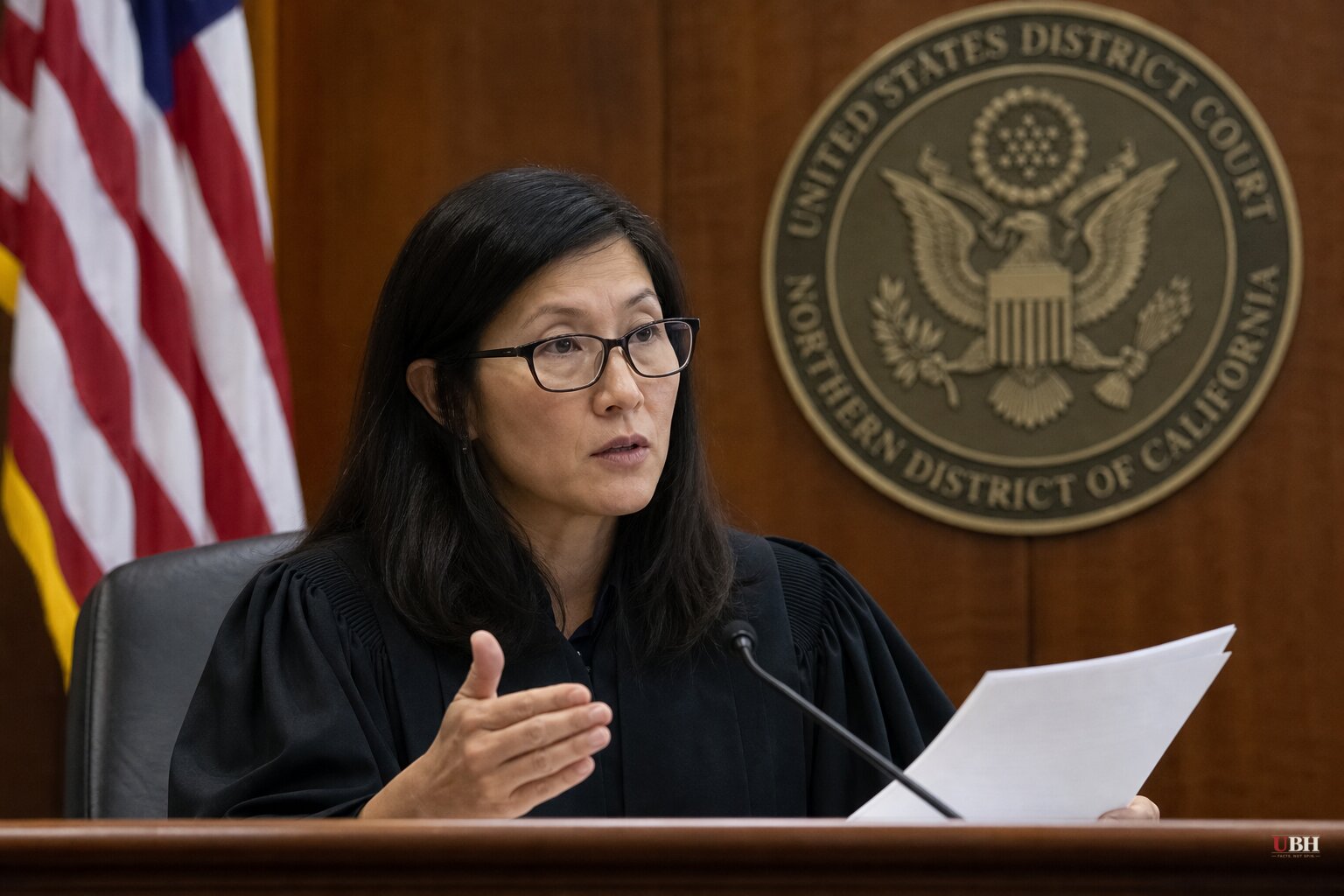
A federal judge on Thursday permanently blocked the Trump administration from enforcing sanctions it imposed against AI company Anthropic earlier this year, ruling the Pentagon punished the firm for refusing to let its Claude models be used for mass surveillance or autonomous weapons.
U.S. District Judge Rita Lin of the Northern District of California called the government's actions "unlawful retaliation in violation of the First Amendment" in a 59-page ruling. "The empty invocation of national security is not a blank check to punish and retaliate against government critics," she wrote.
The fight traces back to earlier this year, when Anthropic and the Pentagon failed to reach a deal on a $200 million contract to supply AI technology for classified systems, according to voz.us. Defense Secretary Pete Hegseth pushed to renegotiate AI labs' military contracts to allow the Pentagon to use their models for "any lawful use," according to The Verge. Most AI companies signed on. Anthropic refused, insisting on two limits: no use of Claude for mass surveillance of Americans and no use in lethal autonomous weapons systems that could kill without human oversight.
When talks broke down, President Trump ordered federal agencies to stop using Claude, and Hegseth designated Anthropic a "supply chain risk," a classification normally reserved for companies tied to foreign adversaries, according to CBS News. It was the first time the designation had been publicly applied to an American company. The move barred defense contractors from doing business with Anthropic, which the company said could cost it billions of dollars in lost business and reputational damage, according to The Guardian.
Trump called Anthropic "a radical left, woke company" and "out-of-control" in a February social media post, according to The Guardian. The White House argued the military answers to the Constitution, "not any woke AI company's terms of service," according to the BBC. The Pentagon separately argued that Anthropic's refusal to accept the new terms raised its own concerns about what the company might do with its technology, including fears that Anthropic could build in some capacity for "future sabotage" of its models mid-operation, according to CBS News.
Judge Lin found no evidence to support that claim. She wrote she found no basis for allegations that Anthropic had built a mechanism to deactivate or alter its AI models during an armed conflict, and called the government's suggestion that criticism alone justified exclusion from federal contracts "truly concerning," according to voz.us.
Lin was direct about what she believed was actually happening. The government's own words and actions, she wrote, showed the sanctions were "based on a desire to make a public example out of Anthropic for its 'arrogance' in criticizing the government," not on any real evidence the company would sabotage its own model. She called Hegseth's designation "arbitrary and capricious" and said the measures imposed on Anthropic were "illegal and baseless."
The ruling also found Anthropic's due process rights were violated, since the company wasn't given a chance to formally dispute the designation before it was applied, according to The Guardian.
Lin was careful to note the ruling doesn't force the Pentagon to use Anthropic's products or bar it from choosing a different AI vendor. "The government is certainly owed deference on weighty issues of national security," she wrote, "so long as those actions are consistent with applicable regulations, statutes, and constitutional provisions."
The Pentagon's argument in court filings wasn't that it wanted surveillance powers for the sake of surveillance. It argued a private vendor imposing unilateral restrictions on how the military can use a technology creates real operational risk, uncertainty in the field, and precedent that other contractors could invoke to limit government leverage during a crisis. Judge Lin's ruling didn't reject that concern as illegitimate in principle. She rejected it because the government offered no actual evidence to back the specific sabotage claims it used to justify blacklisting Anthropic, and because Hegseth's own statements suggested punishment for public criticism, not a genuine security assessment.
Anthropic, for its part, said it welcomed the ruling and remains "focused on working productively with the government to harness AI for our national security so all Americans benefit from this technology," according to a company statement carried by the BBC, CBS News, The Guardian and Axios.
Anthropic filed two lawsuits on March 9. The one decided Thursday was in California; a second case is still pending before the U.S. Court of Appeals for the District of Columbia Circuit, according to voz.us. The Trump administration is expected to appeal Thursday's ruling, according to Axios, and may also wait to see how the D.C. Circuit case plays out before deciding its next move. Neither the Pentagon nor the White House had responded to requests for comment from the BBC or CBS News as of Thursday night.
Sources used for this briefing
6 links from 6 independent newsrooms (syndicated copies of the same report count once)
These are the sources it draws on, linked so you can verify.


