
Original briefings. Zero spin.
Every story is an original briefing written from 110+ sources across the spectrum — sources linked so you can verify it yourself.
 health
Notable (5/10)
August 21, 2026 at 07:24 PM
health
Notable (5/10)
August 21, 2026 at 07:24 PM
Alfalfa Sprouts From Minnesota Grower Tied to 40 Illnesses, Four Different Germs Found in One Product
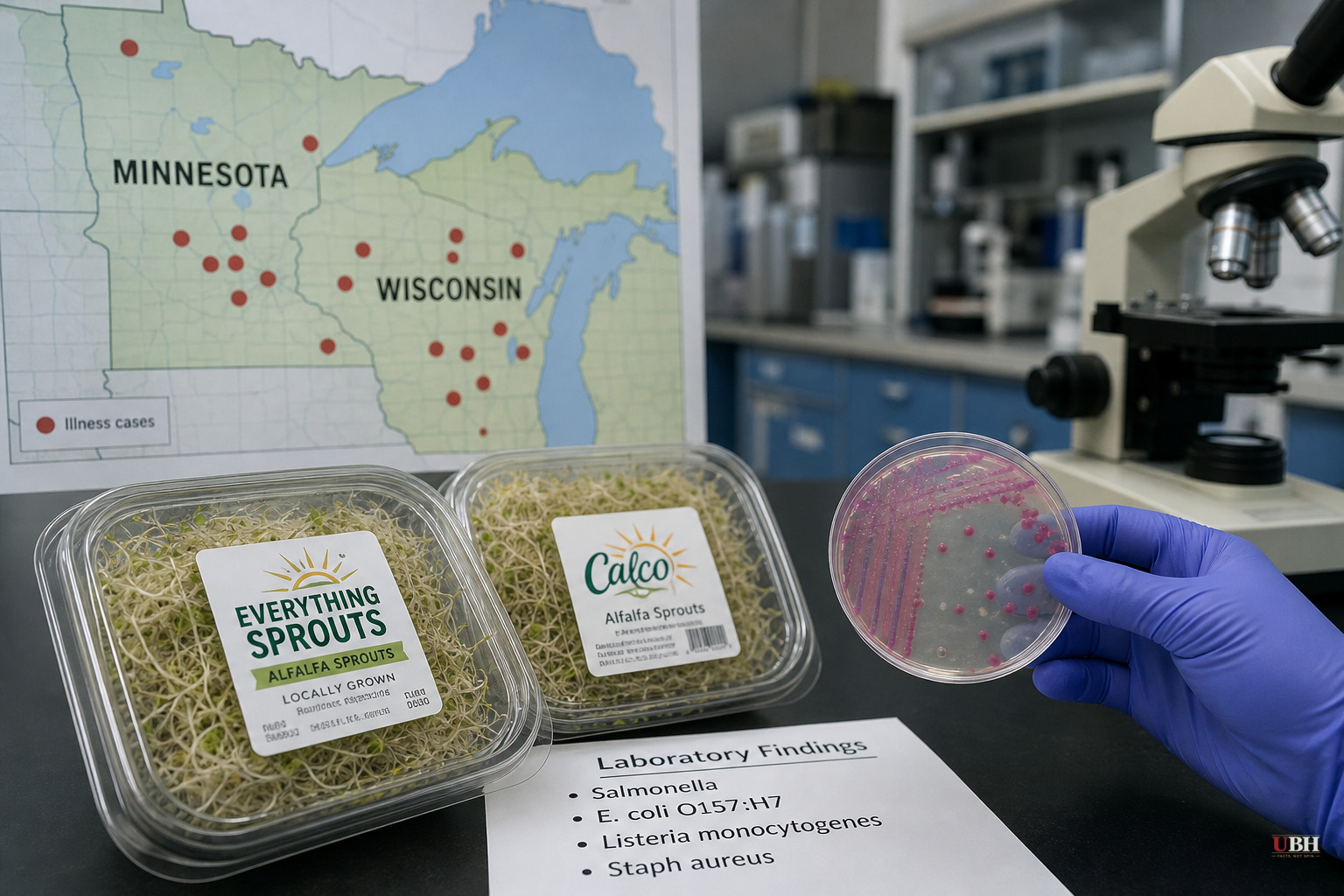
Health officials in Minnesota and Wisconsin say alfalfa sprouts from a Minneapolis grower have sickened at least 40 people since early July. No deaths have been reported.
The Minnesota Department of Health says 23 people in that state fell ill between July 8 and August 8, carrying Salmonella and three different strains of Shiga toxin-producing E. coli, known as STEC. Wisconsin's Department of Health Services counted 17 cases as of the same reporting window, though Minnesota's own release credits Wisconsin with 18. Neither state's numbers perfectly match, according to marlerblog, which tracks foodborne illness litigation and outbreak data.
Hospitalization counts also vary depending on which agency is reporting. Food Safety News reported that Minnesota counted two hospitalizations among its patients. Fox 9 reported that Wisconsin counted one hospitalization, while the FDA separately reported four hospitalizations tied to the outbreak. Marlerblog's own tally, drawn from both states' releases, puts the combined hospitalization count at three. The discrepancies underscore how fluid the case data still is as more lab results come in.
The product is alfalfa sprouts grown by Everything Sprouts of Minneapolis and sold to restaurants and grocery stores under the Everything Sprouts and Calco brand names. Both states are telling consumers to check their fridges and throw the sprouts out.
The FDA separately traced illness onsets as far back as May 31, 2026, running through August 8, according to Fox 9. Of 34 people the agency interviewed, 26 said they'd eaten alfalfa sprouts. That's a wider window than either state has published, which suggests the outbreak started earlier and spread further than the state case counts alone would indicate.
No recall has been issued yet. Food Safety News reported that a Minnesota health department spokesperson confirmed no recall has started as of their reporting, and a state agriculture department spokesperson said the FDA would be the one to coordinate any recall with the company. The FDA did not respond to questions from Food Safety News about the timeline.
What makes this outbreak unusual isn't just the case count. It's the pathogen mix. Minnesota's own breakdown shows one product carrying Salmonella and three unrelated STEC serogroups, with at least one patient infected by two organisms simultaneously, according to marlerblog's review of state data and AP reporting. Carlota Medus, a supervisor with the Minnesota health department's foodborne diseases unit, told news outlets the outbreak is unusual precisely because it involves multiple bacteria types at once.
That pattern points toward contamination at the seed level rather than a single kitchen mistake, according to marlerblog's analysis: alfalfa seed is field-grown, then soaked and germinated for days in warm, wet tanks before being sold raw, with no cooking step to kill bacteria anywhere in that process. That's an inference from the outbreak's pathogen pattern, not a confirmed FDA finding on contamination source.
Marlerblog also flagged that the FDA's own outbreak-tracking table, updated August 19, lists two active STEC investigations matching the serogroups Minnesota named, but with the product still marked "Not Yet Identified" and no listing at all for the Salmonella strain. That's a gap between what state health departments have already named publicly and what federal tracking pages show. The FDA's public data should be watched to see whether it catches up.
A Salmonella outbreak tied to jalapeño peppers sickened more than 431 people nationwide, including over 118 in Minnesota, according to the Minneapolis Star Tribune. Separately, more than 15,000 cases of cyclosporiasis have been reported in 45 states this year, according to a CDC update cited by NPR, with roughly two-thirds tied to contaminated iceberg lettuce. Michigan alone has logged more than 10,000 of those cases.
CNN's reporting connects that lettuce outbreak to Taylor Farms, a major produce processor whose Mexican facility has now been linked to at least five cyclospora or E. coli outbreaks over more than a decade, according to CNN's review of health department records. CNN reported that FDA inspectors hadn't visited that Mexico plant since 2019, and that in the first half of 2026 the agency physically inspected only five of the company's more than 168,000 produce shipments from Mexico. Taylor Farms has pointed to its own internal testing showing no contamination, but Bill Marler, an attorney who has sued the company repeatedly, told CNN that testing after the fact rarely catches pathogens because, in his words, "people eat the evidence." Taylor Farms is not linked to the current sprout outbreak; the two events are separate and involve different companies, growers, and pathogens.
The sprout outbreak is smaller in scale than the lettuce and jalapeño cases, but the unresolved questions are similar: how contamination entered a raw agricultural product, why federal inspection frequency has been so low, and whether a formal recall will follow before more people get sick. Minnesota and Wisconsin health officials say they expect the case count to rise as lab results continue coming in and word of the outbreak spreads to people who got sick but haven't yet been tested.
Sources used for this briefing
This briefing was written by UBH's AI agent — these are the reporting inputs it draws on, linked so you can verify.


