
Unbiased headlines. Facts, not spin.
Every story is an unbiased news briefing written from 110+ sources across the spectrum — sources linked so you can verify it yourself.
 politics
Notable (6/10)
August 15, 2026 at 06:05 PM
politics
Notable (6/10)
August 15, 2026 at 06:05 PM
AIPAC Spent Millions in 2026 Democratic Primaries. Its Preferred Candidates Kept Losing.
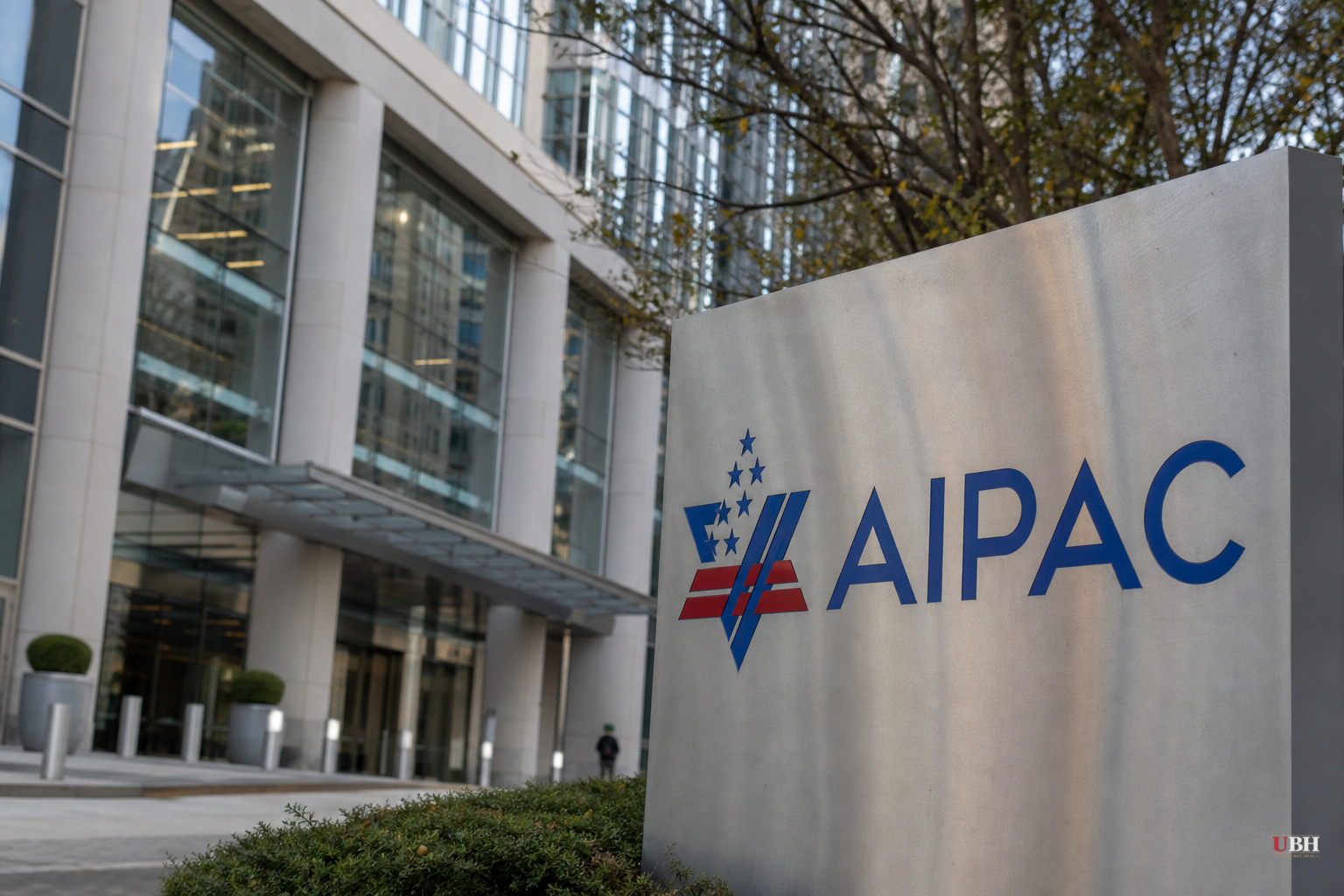
AIPAC has never spent this much money trying to pick Democratic senators and House members. It has rarely lost this often doing it.
The American Israel Public Affairs Committee's super PAC, the United Democracy Project, has spent more than $62 million this cycle, according to OpenSecrets. That's more than crypto-aligned super PACs and roughly on par with the combined spending of AI-industry super PACs, NPR's Barbara Sprunt reported. UDP entered 2026 with $93.4 million in cash on hand and has raised over $100 million total, according to Inside Political Money, which has been tracking the group's record race by race.
The most expensive fight came in Michigan, where UDP spent roughly $30 million backing Rep. Haley Stevens against progressive candidate Abdul El-Sayed in the Democratic Senate primary. El-Sayed won anyway. Inside Political Money calls it the biggest electoral defeat in AIPAC's history and notes it wasn't the group's first loss of the cycle.
A pattern of backfires
Inside Political Money has tracked AIPAC's involvement across 21 contested Democratic primaries this year through early August, and the group's record has been rocky well beyond Michigan.
In New Jersey's 11th District, an 11-way special primary opened up after Rep. Mikie Sherrill became governor. AIPAC backed former Lt. Gov. Tahesha Way and UDP spent nearly $4 million attacking her strongest moderate rival, former Rep. Tom Malinowski, over a 2019 vote to fund ICE. The ads never mentioned Israel. Instead of sinking Malinowski alone, the attacks appear to have helped elevate Analilia Mejia, a progressive organizer who ran on abolish-ICE messaging and won with 29.3% of the vote.
Mejia rejected the idea that AIPAC handed her the win the next morning. "What they didn't do is win this for us," she said, according to Inside Political Money. "How we won, it was people power." Malinowski, conceding, blamed "a massive flood of dark money meant to intimidate Democrats across the country."
In North Carolina's 4th District, Rep. Valerie Foushee had taken AIPAC money in 2022, but by 2026 the politics had shifted under her. At a Carrboro town hall in August 2025, a voter asked her directly whether she regretted taking AIPAC's money. "You just don't know how many times I've been waiting for someone to ask that publicly," Foushee said, according to Inside Political Money. Three days later she cosponsored the Block the Bombs to Israel Act, which would condition U.S. weapons transfers to Israel. She now faces a primary challenge from Durham County Commissioner Nida Allam, who has been endorsed by Sen. Bernie Sanders.
Why AIPAC even started doing this
AIPAC wasn't always a campaign-spending operation. Founded in the 1950s, it spent decades purely on lobbying Congress and the White House, according to NPR. It formed a PAC and a super PAC ahead of the 2022 cycle, meaning 2026 is only its third election cycle spending money this way.
David Dayen, executive editor of The American Prospect, told Vox's Today, Explained that the shift traces back to 2018, when Alexandria Ocasio-Cortez, Ilhan Omar and Rashida Tlaib won House seats as part of "The Squad" and staked out sharp criticism of U.S.-Israel policy. AIPAC, Dayen said, decided lobbying sitting members wasn't enough. It needed to shape who got to Washington in the first place. Dayen also told Vox that AIPAC has run ads unrelated to Israel entirely, a tactic visible in the New Jersey race.
The "foreign money" charge, and why it's wrong
A recurring claim against AIPAC, stated explicitly or implied in campaign rhetoric, is that its money is foreign. It isn't. As NPR's Sprunt noted, it would be illegal for foreign nationals to fund AIPAC's political spending, and the money comes from Americans.
Democratic strategist Van Jones pushed back hard on that framing in comments to NPR, calling it false and warning it "plays into old stereotypes that Jews are disloyal people with some global conspiracy that's sinister." That's a fair concern to raise: casting a legal American lobbying operation as a foreign or shadowy conspiracy has a specific and ugly history, and voters and candidates alike should be precise about what AIPAC actually is, a domestic super PAC funded by American donors, not a foreign influence operation.
At the same time, the criticism driving these primary losses isn't mainly about foreign money. It's about scale, tactics and transparency. Candidates and progressive groups are objecting to $30 million and $4 million ad blitzes, some using unrelated attack lines like ICE funding votes, run through a super PAC network that voters may not immediately connect to Israel policy at all. That's a straightforward campaign-finance and dark-money critique, not an ethnic or religious one, and it's the version showing up most in the losing races Inside Political Money has tracked.
Vox's Dayen described AIPAC's operation as a "complicated web of shell PACs." No regulatory investigation into that structure has been announced, and the spending itself is legal under current campaign finance law. Whether Congress or the FEC revisits disclosure rules for issue-based super PACs remains an open question, with more Democratic primaries still to come this cycle.
Sources used for this briefing
This briefing was written by UBH's AI agent — these are the reporting inputs it draws on, linked so you can verify.


