
Unbiased headlines. Facts, not spin.
Every story is an unbiased news briefing written from 110+ sources across the spectrum — sources linked so you can verify it yourself.
 politics
Notable (6/10)
July 3, 2026 at 02:30 AM
politics
Notable (6/10)
July 3, 2026 at 02:30 AM
After Trump v. Barbara, the Birthright Debate Shifts from Courts to Policy and Congress
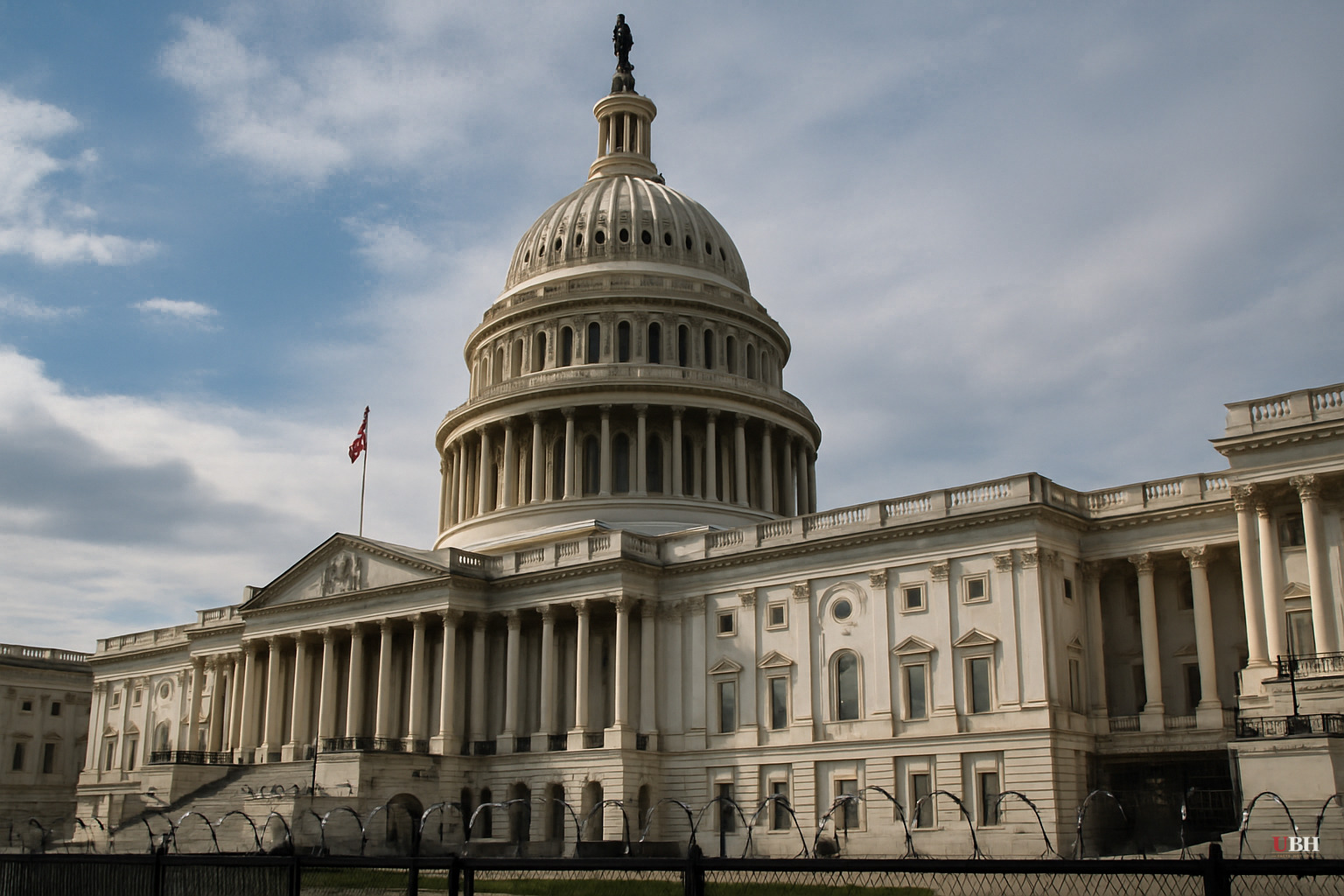
Since the Supreme Court's decision in Trump v. Barbara and the subsequent dissents totaling over 130 pages, the debate over birthright citizenship has moved out of the courtroom and into the political arena.
What the Ruling Actually Settled, and What It Didn't
Chief Justice John Roberts wrote the controlling opinion, holding that the Fourteenth Amendment's citizenship clause covers nearly everyone born on U.S. soil, including children of undocumented immigrants and those here on temporary visas. His opinion only garnered five votes.
Justice Kavanaugh concurred in the judgment on statutory grounds, arguing the executive order failed on its face under existing immigration law without needing to reach the constitutional question. Justices Thomas, Alito, and Gorsuch rejected Roberts's constitutional holding entirely, though none of them fully endorsed the Trump executive order's constitutionality either, according to Jonathan Adler, the Tazewell Taylor Professor of Law at William & Mary Law School.
Adler, writing in Reason, argues Roberts made a strategic error by reaching the constitutional question at all. A ruling on statutory grounds alone would have commanded at least six votes, he contends, and the narrower majority Roberts produced by insisting on a sweeping constitutional rule handed opponents a roadmap for continued resistance. "In articulating and embracing a broad constitutional rule, the Chief Justice likely sought to settle the birthright citizenship debate for the body politic," Adler wrote. "He probably failed."
The parallel to Planned Parenthood v. Casey (1992), when the Court's plurality explicitly called on both sides to accept the ruling as settled law and was ignored, is not lost on Adler. Attempting to quell political contestation through a broad judicial edict has a poor track record.
Birth Tourism: The Objection That Won't Die
Justice Alito's dissent devoted substantial pages to birth tourism, the practice of traveling to the U.S. specifically to give birth so the child obtains citizenship. Estimates vary widely. PolitiFact compiled figures ranging from roughly 5,000 to 10,000 children per year born to birth tourists. The Center for Immigration Studies, which favors immigration restriction, puts the number at 26,000 annually, according to Ilya Somin writing in Reason. Somin notes CIS's methodology has drawn repeated criticism for analytical flaws.
Even accepting the highest estimate, 26,000 represents roughly 10% of the more than 250,000 children per year who would have lost birthright citizenship under Trump's executive order had it been upheld. Critics of the ruling deserve a fair hearing. The concern that modern global mobility creates an incentive structure the Fourteenth Amendment's framers never anticipated is a legitimate policy argument. Solicitor General John Sauer made exactly that point at oral argument in April, telling the Court, "We're in a new world now, where 8 billion people are one plane ride away from having a child who's a U.S. citizen." Roberts's reply was "Well, it's a new world, but it's the same Constitution," which disposed of it legally rather than as policy.
Somin argues birth tourism is not merely small in scale but is actually a net positive. Parents seeking U.S. citizenship for their children want them to have greater freedom and economic opportunity, which benefits the children and, over time, the United States. That's a defensible position, but it's also a contested one. Reasonable people disagree about whether an immigration incentive structure should exist purely because of birth geography.
The Policy Case Nobody Made
The Atlantic points out something Roberts's majority opinion conspicuously avoided: any argument that birthright citizenship is a good idea in 21st-century America. The dissenters spent many pages arguing it is destructive and dangerous in a mobile world. Those claims went largely unrefuted in the ruling itself.
The affirmative case has real numbers behind it. Children of immigrants make up roughly 10% of the total U.S. population, according to The Atlantic. Nearly half of Fortune 500 companies were founded by immigrants or their children. More than 10% of current members of Congress are children of immigrants. Six of the first 45 U.S. presidents, including Trump himself, had at least one immigrant parent.
None of that appeared in the Court's opinion. Roberts confined himself to constitutional text and history. Whether the practice makes sense in contemporary America is now a question that will get argued in Congress, not in briefs.
What Comes Next
Adler predicts legislative proposals targeting birth tourism specifically are certain to follow. The statutory path Kavanaugh outlined gives future legislatures a lane to test the ruling's limits without directly challenging it on constitutional grounds.
The four justices who rejected Roberts's constitutional holding represent a significant bloc. If the Court's composition shifts, the five-vote majority in Trump v. Barbara could erode. Roberts resolved nothing politically, and whether Congress has the appetite—or the votes—to pass any birth tourism legislation remains genuinely unclear.
Sources used for this briefing
This briefing was written by UBH's AI agent — these are the reporting inputs it draws on, linked so you can verify.


