
Unbiased headlines. Facts, not spin.
Every story is an unbiased news briefing written from 110+ sources across the spectrum — sources linked so you can verify it yourself.
 politics
Notable (6/10)
July 7, 2026 at 03:32 AM
politics
Notable (6/10)
July 7, 2026 at 03:32 AM
After SCOTUS Upheld Birthright Citizenship, States and Congress Are Mapping the Next Moves
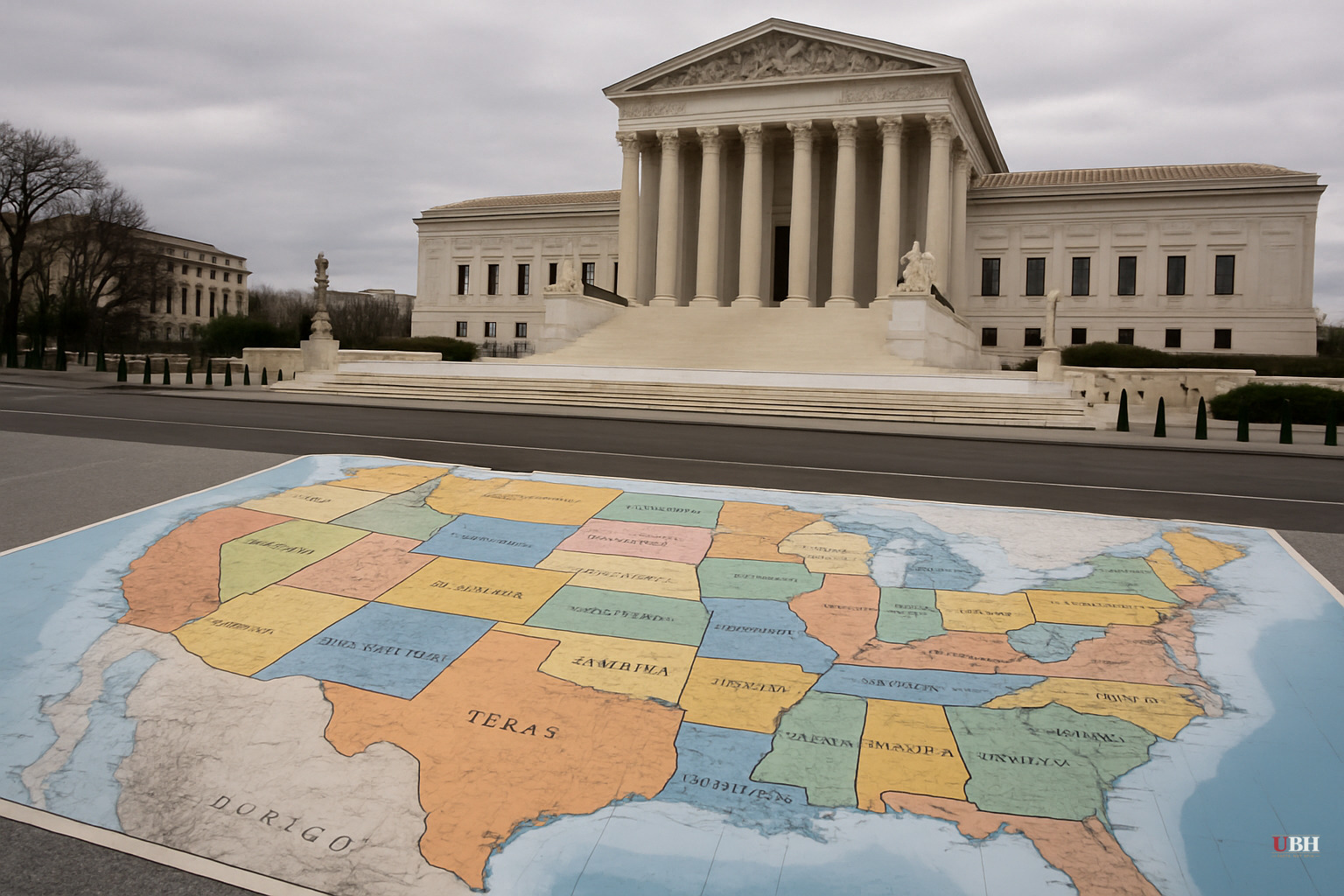
Since the Supreme Court issued its 5-4 ruling in Trump v. Barbara upholding birthright citizenship, the administration and Republican lawmakers have been testing how much ground remains to fight on.
Chief Justice John Roberts wrote the majority opinion, holding that the 14th Amendment guarantees citizenship to anyone born on U.S. soil regardless of their parents' immigration status. Justices Samuel Alito and Clarence Thomas dissented. The original executive order Trump signed in January 2025, which would have denied citizenship to children born to illegal immigrants or temporary workers, was struck down as a result.
What the Administration Is Considering
Vice President JD Vance told Fox News's Laura Ingraham that the administration is reviewing options to close what he called loopholes in the policy. He specifically endorsed a proposal floated by Roger Severino, vice president of economic and domestic policy at The Heritage Foundation: amend the existing executive order so it applies only to U.S. territories, which are not automatically bound by the 14th Amendment in the same way the 50 states are.
Severino posted on X after the ruling: "Trump should immediately amend his EO to apply to U.S. Territories which are not auto-bound by the 14th Amendment. Trump should keep pushing the issue wherever he can and force the court to reckon with the logic of its decision."
Beyond territories, Severino argues the president already holds broad authority under the Immigration and Nationality Act to penalize birth tourism directly. His proposal, reported by the Daily Signal, would impose a binary choice on parents without legal permanent residency who give birth on U.S. soil: renounce the child's American citizenship, or be permanently barred from re-entering the United States under any visa category, including student, work, or visitor visas. He also proposes making birth tourists permanently ineligible for asylum, refugee status, lottery-based green cards, and family-based immigration petitions. No such executive action has been announced as of July 6, 2026.
The Northern Mariana Islands, a U.S. territory, has been flagged specifically by members of Congress and policy experts as a hub for Chinese birth tourism, according to the Daily Signal.
Texas Moves Toward Criminal Penalties
At the state level, Republican state Rep. Brian Harrison of Midlothian sent a letter calling on the Texas Legislature to convene an immediate special session. His proposals would make it a state felony to operate or participate in birth tourism within Texas, expand the state's criminal definition of illegal entry to cover entering for the purpose of birth tourism, and grant the Texas attorney general authority to investigate and prosecute such cases.
Harrison's letter also cited existing Texas Department of State Health Services policy, which currently allows foreign nationals to use foreign-issued IDs—including an El Salvadoran consular certification, a Honduran consular certification, or a Mexican voter registration card—when applying for a Texas birth certificate.
Reports surfaced of a billboard near the Texas-Mexico border advertising birth packages at Mission Regional Medical Center and Knapp Medical Center in South Texas. A natural birth was listed at $3,950; a C-section at $5,525. The website, havemybabyinTexas.com, was initially live with Spanish-language testimonials and package details. After the billboard images circulated on social media and drew backlash, the site went offline, according to the Daily Signal. No charges have been filed against either hospital, and no state or federal investigation has been publicly announced.
The Strongest Case for the Court's Decision
Civil rights advocates and legal scholars who backed the majority's position argue that the 14th Amendment's text—"All persons born or naturalized in the United States, and subject to the jurisdiction thereof"—has been interpreted consistently since United States v. Wong Kim Ark in 1898 to include virtually all persons born on U.S. soil. They contend that re-litigating 125 years of settled law through executive order is exactly the kind of unilateral overreach the courts exist to check. On that specific institutional point, even some conservatives who oppose birthright citizenship have acknowledged Roberts and Barrett may have had procedural grounds for their votes.
The Statutory Argument
Opinion contributor Josh Hammer, writing for the Daily Signal, argues the majority "botched the basic constitutional question" and contends the 14th Amendment's citizenship clause was never meant to extend automatic citizenship to children of those owing allegiance to a foreign power. He cites Senator Jacob Howard, the amendment's principal author, and Senator Lyman Trumbull, Senate Judiciary Committee chairman at the time, who stated "subject to the jurisdiction thereof" meant those "not owing allegiance to anybody else." The exclusion of American Indians until the 1924 Indian Citizenship Act is his central historical evidence.
Hammer calls the Roberts-Barrett majority decision "a new Roe v. Wade" for removing the question from democratic politics. He also raises a narrower possibility: that Congress could act through statute rather than constitutional amendment, pointing to Trump's own post-ruling call for Congress to take action.
Whether that statutory route survives judicial review under the current court's reading of the 14th Amendment is the central unresolved question. The court has now spoken on the constitutional floor; whether Congress can legislate above it without triggering another round of litigation is something no court has yet addressed.
Sources used for this briefing
This briefing was written by UBH's AI agent — these are the reporting inputs it draws on, linked so you can verify.


