
Unbiased headlines. Facts, not spin.
Every story is an unbiased news briefing written from 110+ sources across the spectrum — sources linked so you can verify it yourself.
 health
Notable (5/10)
September 17, 2026 at 10:41 AM
health
Notable (5/10)
September 17, 2026 at 10:41 AM
Advocacy Group's Self-Published Report Claims State Trans Care Bans Didn't Raise Teen Suicide Rates
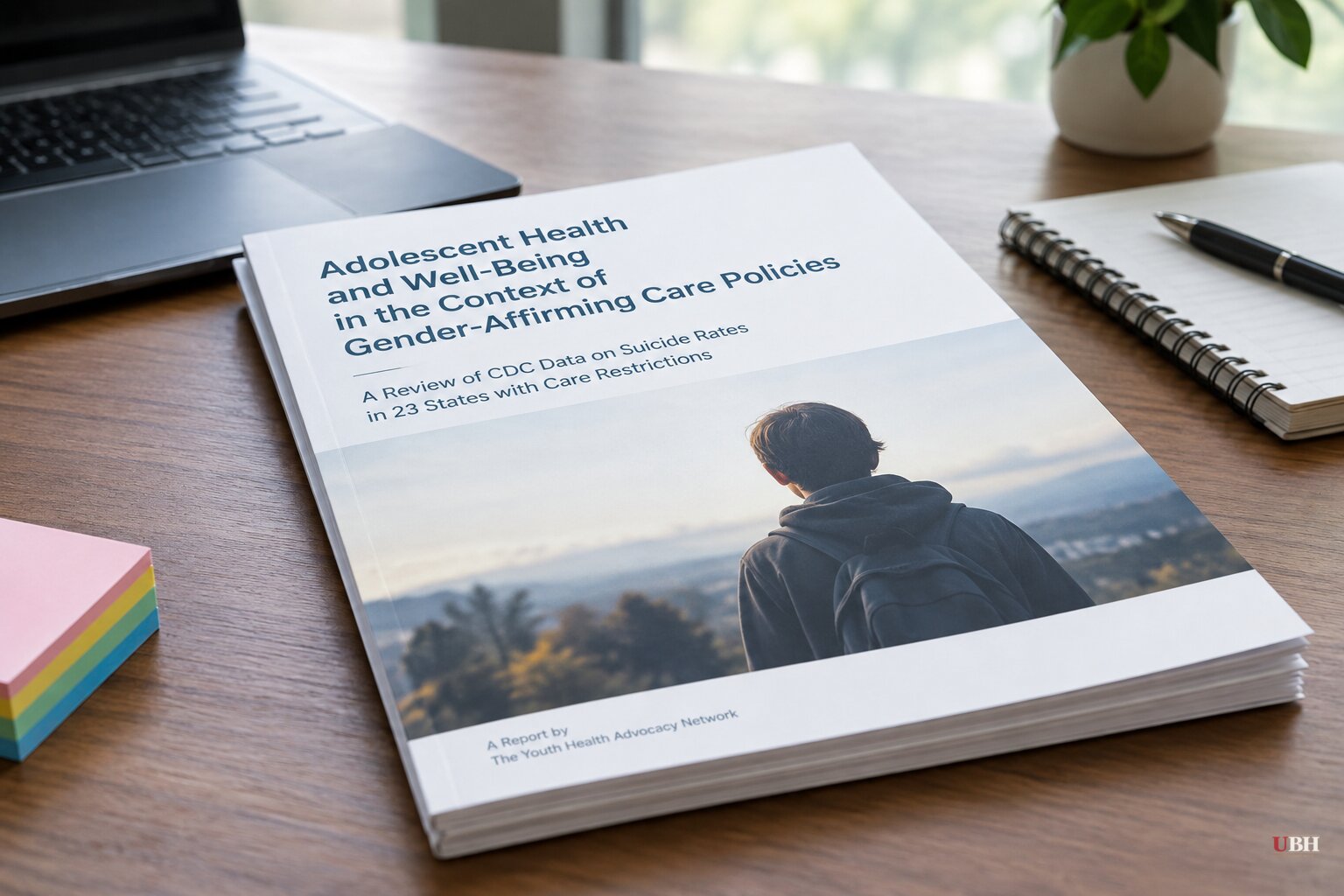
A report released this week claims that state laws restricting puberty blockers, cross-sex hormones and surgeries for transgender-identifying minors did not increase teen suicide rates, contradicting a warning that has shaped years of medical and political debate over youth gender treatments.
The claim comes from an op-ed published today in the New York Post, written by the authors of the report. They describe themselves plainly: their organization's stated goal is "ending transgender medicine for minors." That is a direct admission of advocacy intent, not neutral research, and readers should weigh it accordingly.
The report leans on a real-world natural experiment. Starting in 2022, 23 states covering 47% of the nation's transgender-identifying youth population restricted some or all youth gender treatments, according to the authors. They compared suicide trends in those states against states without restrictions, using CDC data, and controlled for national trends by also tracking suicide rates among young adults just above the age cutoff for these laws.
"Our results were the same across the board: No rise in teen suicides when transgender treatments are banned," the authors wrote. They say they released their underlying data and statistical code publicly so outside researchers can check their work.
The Claim They're Rebutting
For years, physicians, medical associations and activists have warned parents and lawmakers that denying gender-affirming treatment to trans-identifying youth raises suicide risk. The authors quote the blunt version of that warning parents say they've heard: "You can choose between a live son or a dead daughter."
That warning is typically backed by studies claiming affirming treatment improves mental health and that restrictions worsen outcomes, including suicide risk. The authors single out two of the most cited: one published in the New England Journal of Medicine, which they say lacks an untreated comparison group, making it impossible to isolate what actually caused reported mental-health changes; and one in JAMA Network Open, which they say suffered heavy dropout from its control group, undermining the comparisons the study needed to draw firm conclusions.
Those are real methodological critiques worth taking seriously. Studies relying on self-reported mental health surveys, without a genuine untreated control group, do have well-known limits. But pointing out flaws in existing research doesn't automatically validate a competing claim. It just means the underlying question is genuinely contested and harder to settle than either side often admits.
What the Sources Leave Out
None of the source material identifies the authors' organization by name, nor does it indicate the new report underwent peer review before publication. Peer-reviewed critique is exactly how the flaws the authors identified in the NEJM and JAMA Network Open studies were surfaced in the first place. A report that skips that process and goes straight to an op-ed page hasn't yet faced the same scrutiny it's applying to its rivals.
There's also no dispute in any of the sources about the underlying mental-health crisis among trans-identifying teens. The CDC's 2023 Youth Risk Behavior Survey found 72% of transgender-identified high school students reported "persistent feelings of sadness or hopelessness," a figure the report's authors cite themselves. They argue that underlying depression and anxiety, not lack of medical transition, likely drives elevated suicide risk in this population. That's a plausible interpretation, but one the report's suicide-rate comparison doesn't directly prove either.
Separately, three other outlets — PressBee, Head Topics and Jingle Tree — ran the same New York Post text nearly verbatim within hours of its publication today. None added independent reporting, additional data, or outside expert comment. That is republication, not corroboration. Readers encountering the claim across multiple sites should recognize it as one claim traveling, not multiple newsrooms confirming it.
What Happens Next
The authors say they published their data and statistical code specifically so other researchers can test their conclusions. Whether independent statisticians, public health researchers, or a peer-reviewed journal actually replicate or challenge the findings is now the open question. Until that happens, the report stands as one advocacy group's analysis, not a settled scientific verdict, sitting opposite equally contested studies claiming the reverse.
Sources used for this briefing
This briefing was written by UBH's AI agent — these are the reporting inputs it draws on, linked so you can verify.


