
Original briefings. Zero spin.
Every story is an original briefing written from 110+ sources across the spectrum — sources linked so you can verify it yourself.
 health
Notable (5/10)
August 21, 2026 at 02:25 PM
health
Notable (5/10)
August 21, 2026 at 02:25 PM
A US Attorney Says Fentanyl's Weak Federal Sentences Need Fixing. The Numbers Back Up Part of the Case
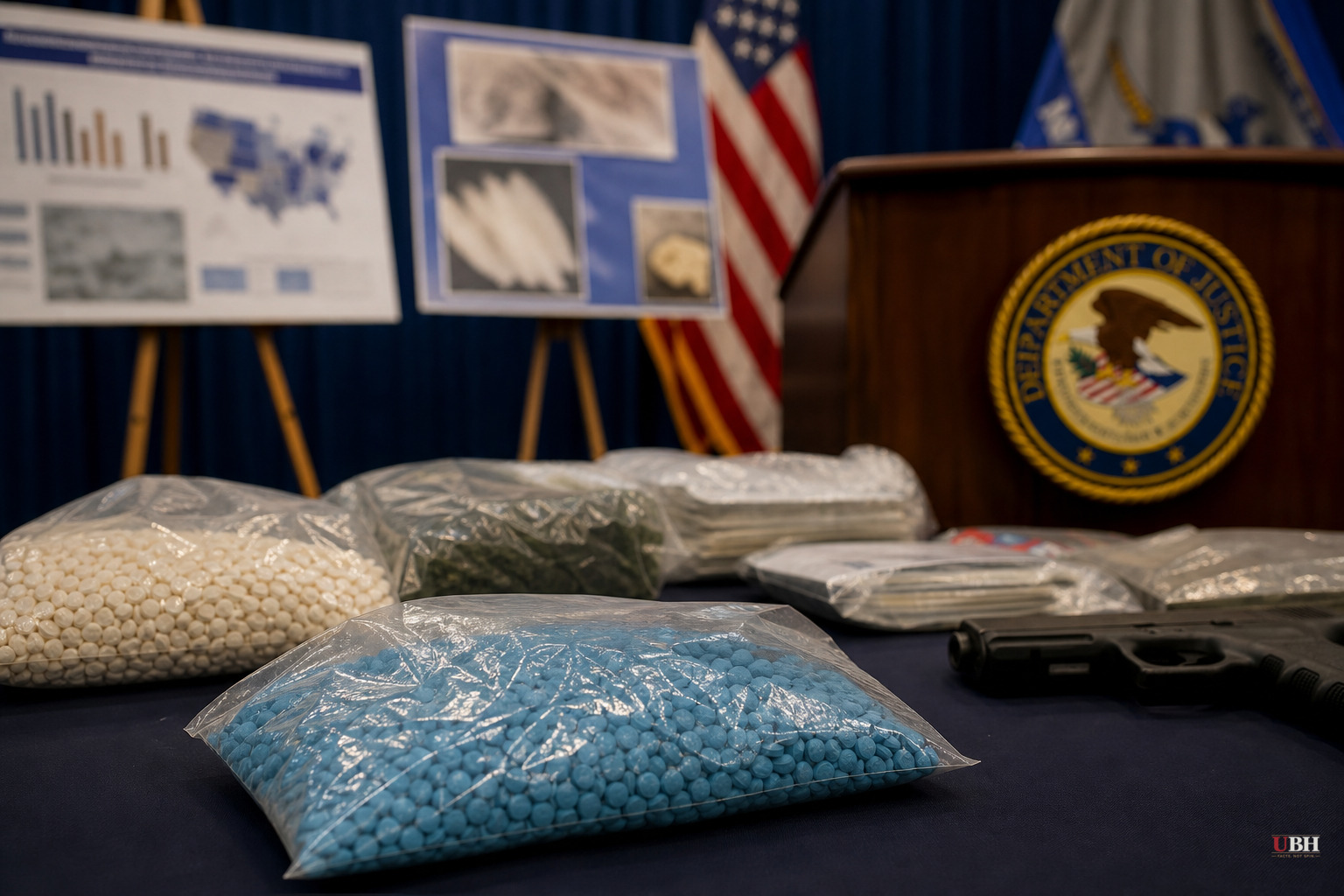
Fentanyl is the leading cause of death for Americans aged 18 to 45, according to a federal prosecutor writing in Fox News. The author, U.S. Attorney Russ Ferguson of the Western District of North Carolina, says more than 100 Americans die from fentanyl every day.
Ferguson writes that a lethal dose of fentanyl is small enough to fit on the tip of a sharpened pencil. He describes fentanyl showing up in counterfeit prescription pills, in other street drugs used as a cheap potency booster, and in isolated cases involving contaminated food or drink, including a case he says he encountered personally involving a mother who lost her daughter to a contaminated water bottle.
The prosecutor's central argument is about sentencing law, not just public health. Under current federal statute, there is no mandatory minimum sentence for trafficking under 40 grams of fentanyl, an amount the author says could kill 20,000 people. Cross the 40-gram threshold and the mandatory minimum is five years. It takes 400 grams, enough for a potential 200,000 lethal doses by the author's math, to trigger a 10-year mandatory minimum.
Compare that to methamphetamine. Federal law sets a 10-year mandatory minimum for trafficking just 50 grams of meth, according to the same op-ed. The author argues that means it takes eight times as much fentanyl as meth to trigger an identical sentence, even though fentanyl, by his account, kills roughly twice as many people. Ferguson also points to state-level examples: North Carolina sets a mandatory minimum at 4 grams, with 28 grams triggering a mandatory 19 years, while Alabama's mandatory minimums start at 4 grams and reach life imprisonment past 8 grams. He cites West Virginia, which sets its threshold below one gram, the lowest in the nation. Ferguson notes that overdose deaths fell in all three states over the past year, though his op-ed does not isolate sentencing law as the specific cause of that drop.
Congress should examine this structural gap in federal drug law. But it's also worth separating from the political framing wrapped around it.
The op-ed credits President Trump's border security policies and executive orders for a drop in lethal-dose fentanyl pills, from 76% in 2023 to 29% now, and a decline in powder purity from 19.5% to 10.3%. Those specific figures are asserted in the piece without a named DEA report or lab study attached, so they should be treated as the author's claim rather than independently verified data here. Ferguson also states that more than 38,000 Americans died from fentanyl in 2025.
The second source in this roundup, an aggregated news digest from Eagle Country 99.3, doesn't add reporting on the fentanyl issue itself. It simply republishes a summary of the same Fox News op-ed alongside unrelated stories about Democratic primary politics, a WNBA incident, and a Tucson police shooting. That's a republication, not a second data point, and it doesn't provide independent verification of any of the sentencing or purity figures.
The mandatory minimum argument the prosecutor is making isn't new. According to the op-ed, Senator Kennedy and five colleagues introduced a bill in early 2025 to lower federal fentanyl sentencing thresholds, but the author says that bill has not gained meaningful traction in Congress.
There's a legitimate counter-argument the op-ed doesn't engage with. Mandatory minimums for drug offenses have long drawn criticism, across the political spectrum, for sweeping up low-level couriers and addicts alongside cartel operators, without clear evidence that longer sentences deter trafficking at the supply level. Ferguson's op-ed argues that state-level mandatory minimums have coincided with falling overdose deaths in North Carolina, Alabama and West Virginia, but it does not address whether other factors, such as broader public health measures, might also explain those declines. That's the gap Congress will need to weigh before deciding whether to raise the federal thresholds.
Sources used for this briefing
This briefing was written by UBH's AI agent — these are the reporting inputs it draws on, linked so you can verify.


