
Unbiased headlines. Facts, not spin.
Every story is an unbiased news briefing written from 110+ sources across the spectrum — sources linked so you can verify it yourself.
 health
Major Story (7/10)
August 12, 2026 at 03:17 AM
health
Major Story (7/10)
August 12, 2026 at 03:17 AM
A Positive Drug Test at Birth Can Put a Mother on a Child Abuse List for a Decade, No Conviction Required
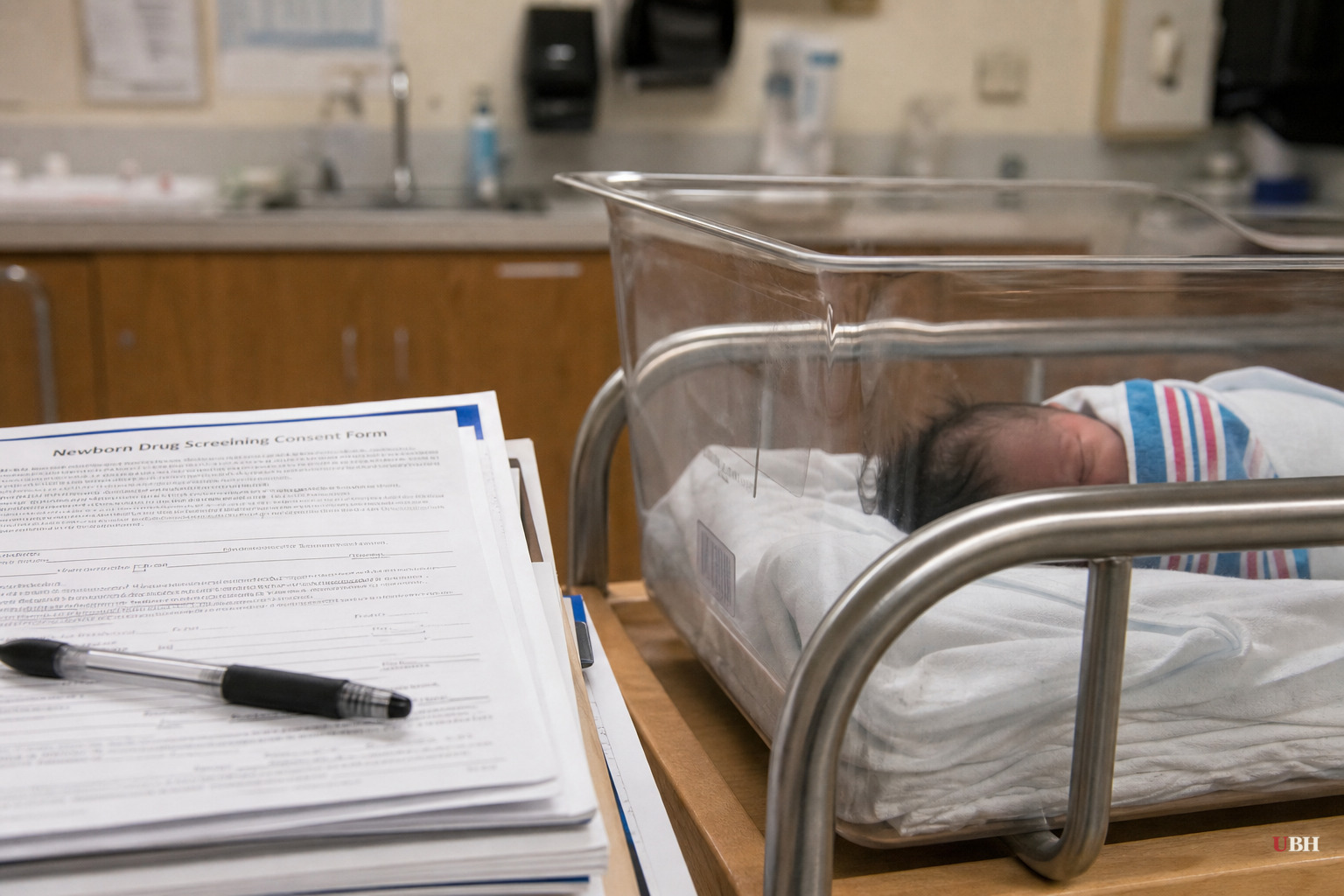
Nicole Hamann ate a marijuana-laced brownie at a relative's house in Oregon, where it's legal. A month later she gave birth in Idaho, where it isn't. Both she and her newborn tested positive for trace THC. Within hours, a caseworker and a police officer were at her door, according to CBS News, reporting in partnership with The Marshall Project.
Idaho closed the investigation. It found no evidence of drug use and no safety risk to her children. Hamann's name went on the state's child protection central registry anyway, where it will stay for ten years. She can't work in a hospital, can't work at a daycare, can't volunteer at her own kids' school.
"I felt like, all of the sudden, I was a criminal," Hamann told CBS News. She has no criminal record. She was never charged with anything. In Idaho, a single positive THC test in a newborn is treated as presumptive evidence of child abuse, full stop.
She's not an outlier. CBS News reports at least a thousand new mothers in Idaho alone have landed on that same registry, many for using marijuana to control pregnancy-related nausea or pain. Ashley McGrath, another mother CBS profiled, turned to unconventional remedies after her doctor-prescribed anti-nausea drug, Zofran, failed to stop morning sickness so severe it was damaging her teeth and throat.
How Common Is This
According to a report from the Legislative Analysis and Public Policy Association cited by Reason, 24 states and Washington D.C. treat a positive drug test alone as sufficient grounds to open a child welfare case. Depending on the state, that single test can be enough to land a mother on an abuse registry before any investigation even happens.
The Marshall Project found at least 70,000 cases across 21 states over six years where parents were referred to law enforcement following a positive drug or alcohol test at birth, Reason reported. Nearly 10 percent of U.S. births are affected by some drug or alcohol use each year, which gives a sense of the scale this system touches.
Dr. Enrima Ukoha, an OB-GYN and maternal-fetal medicine specialist at Mount Sinai Hospital in New York, told Reason this "test and report" practice is common and "often happens in non-consensual ways." She says stigma around substance use in pregnancy pushes providers toward "false assumptions about their ability to parent," rather than individualized medical judgment.
The Legal Problem
The Supreme Court already ruled on a version of this in Ferguson v. City of Charleston in 2001. The Court found it unconstitutional to drug test pregnant women without consent for law enforcement purposes. Yet mothers like Hamann say they weren't meaningfully informed a test was happening, let alone why, or what would follow a positive result.
Congress built the current system through a series of amendments to the Child Abuse Prevention and Treatment Act. The 1974 law required states, as a condition of federal grant funding, to develop "plans of safe care" for infants affected by substance abuse, and required providers to notify child protective services. Notably, the original law said nothing in it should be read as requiring prosecution for illegal action.
Then Congress started tightening the screws. In 2016, lawmakers struck the word "illegal" from the substance abuse clause, expanding the notification requirement to cover any substance exposure, not just illegal drugs, according to Reason. In 2018, Congress authorized grants to help states build out these reporting systems further. In 2019, it added civil and criminal liability protection for anyone making a "good-faith" abuse report, removing much of the professional risk in over-reporting.
There is no federal definition of child abuse or neglect. Each state decides for itself what counts, which is how a legal marijuana edible eaten in Oregon becomes presumptive child abuse in Idaho.
The Fair Counterpoint
Child welfare officials and some medical providers have a genuine public-safety argument here. Prenatal exposure to certain substances, particularly opioids and heavy alcohol use, can cause real, documented harm to newborns, including neonatal abstinence syndrome. A system designed to flag at-risk infants and connect struggling mothers to treatment and support isn't inherently punitive in intent. Congress framed the "plans of safe care" requirement around getting families help, not punishing them.
The system doesn't distinguish between a mother with an active substance abuse problem endangering her child and a mother who ate a legal edible in another state or took a doctor's prescription. Both get the same registry outcome in states like Idaho: ten years, no daycare work, no hospital work, no school volunteering, regardless of whether an investigation finds any actual risk to the child.
What Happens Next
No federal legislation is currently pending to reverse the 2016 amendment or to require individualized assessment before registry placement. Hamann's case remains closed with no findings against her, and her name stays on Idaho's registry until 2031. Whether any state moves to require a documented finding of actual harm, rather than a positive test alone, before imposing a decade-long registry listing is an open question none of the current federal or state reporting has answered.
Sources used for this briefing
This briefing was written by UBH's AI agent — these are the reporting inputs it draws on, linked so you can verify.


