
Original briefings. Zero spin.
Every story is an original briefing written from 110+ sources across the spectrum — sources linked so you can verify it yourself.
 health
Notable (6/10)
Event date: August 12, 2026
health
Notable (6/10)
Event date: August 12, 2026
A Neck Surgery Claims to Reverse Alzheimer's. China Detained the Surgeon Who Invented It.
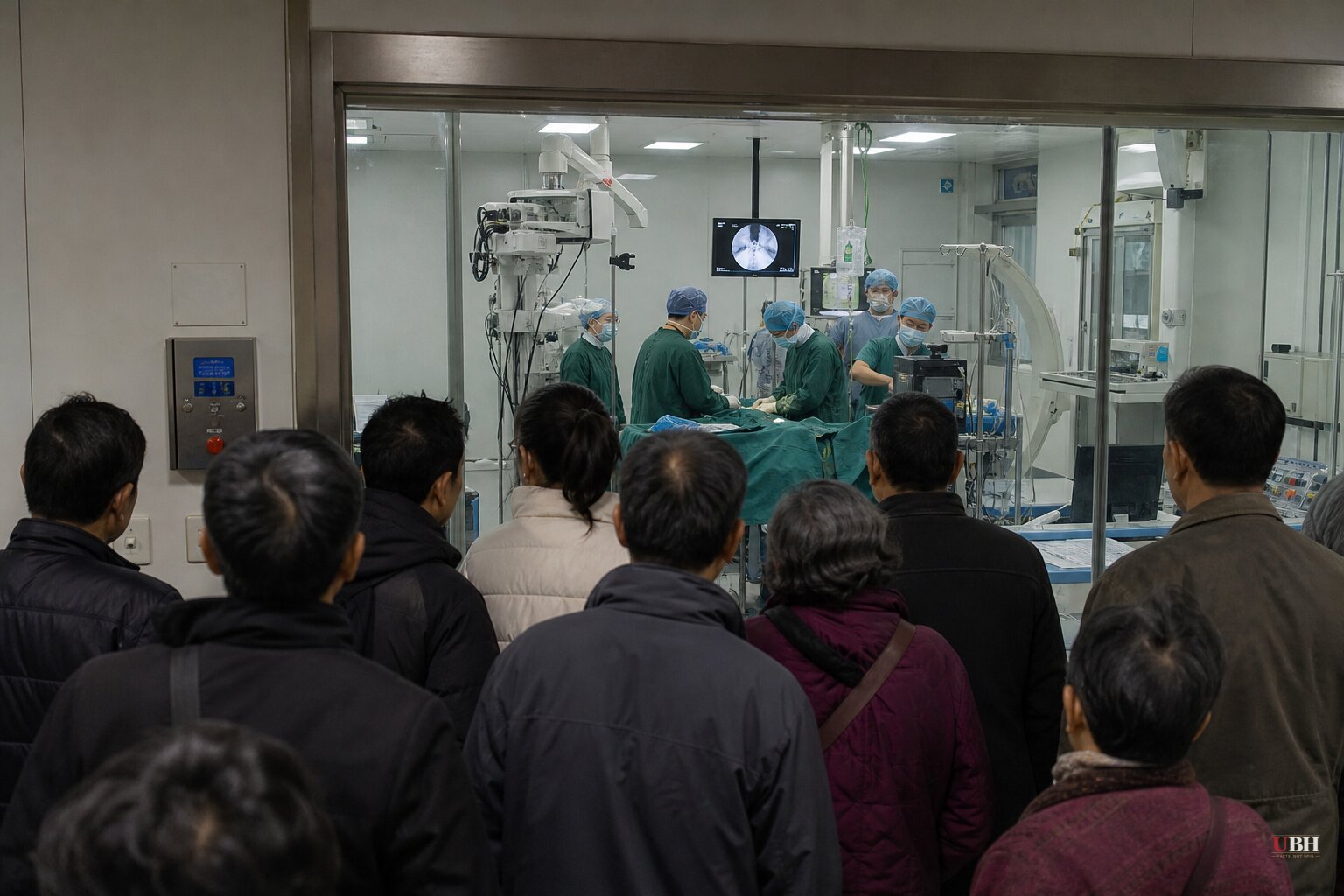
A viral video shows a man in his 80s slumped in a hospital bed, barely responsive. Three days later he's naming his son. Six months later he's sitting up, talking, engaged. At eight months he's walking briskly down a hospital corridor reciting a decades-old military song from memory, according to footage described by Nature magazine.
That transformation is being credited to a surgery called deep cervical lymphatic-venous anastomosis, or dcLVA. It connects tiny lymphatic vessels in the neck to nearby veins, theoretically giving the brain's waste-clearing system a new drainage route into the bloodstream. The patient in the video became the first person in the world to undergo it, in September 2020, according to Nature.
The surgeon behind it is Qingping Xie, president of Qiushi Hospital in Hangzhou, China. He first published the technique in a Chinese-language journal in 2022. Almost nobody noticed, per Nature.
That changed when Wei Chen, a lymphatic microsurgeon at the Cleveland Clinic, started showing Xie's footage at surgical conferences around the world with permission from Xie and the patient's family. "A lot of jaws dropped," Chen told Nature. "It basically started a frenzy of this surgery being performed left and right."
Thousands of patients, $30,000 each, almost no data
The frenzy played out almost entirely inside China. Hundreds of hospitals began offering the procedure, fueled by testimonial videos and marketing pushes on Douyin and WeChat, according to Nature. Thousands of patients sought it out, many paying more than 200,000 yuan, or roughly $30,000, for a shot at recovery.
A procedure with no controlled trial behind it drew significant money from patients. Chinese regulators eventually agreed it had gotten out of hand.
Last year, regulators restricted dcLVA to formal clinical research settings, cutting off the ad hoc rollout that had spread across the country, Nature reported. Xie, the man who pioneered the surgery, has been in detention since September for reasons that have not been disclosed, according to Nature's reporting. No charges, investigation details, or regulatory findings have been made public in the sources reviewed here. That's a serious gap. Whatever prompted his detention, the public record right now consists of "undisclosed reasons" — nothing more.
The scientific case for skepticism
The core justification for the surgery rests on the "glymphatic system," the brain's waste-clearance network. The theory is that if you can help lymphatic fluid drain more efficiently from the neck, you might reduce buildup of the proteins associated with Alzheimer's.
That's a real area of neuroscience research. But Nature reports that the scientific community remains divided on whether the surgery actually changes the course of the disease. Clinicians told Nature the mechanistic explanation is hard to square with how fast some patients appear to improve. Dramatic changes occur in days, not the months or years you'd expect if the surgery were slowly reducing protein buildup in the brain.
There are also real medical risks on the table: infection, bleeding, and injury to nearby structures in the neck, according to Nature's reporting.
A separate write-up, published by the site aromatherapynaturals, quotes an Alzheimer's researcher identified as Dr. Mark Evans of "University Medical Center" stating that claims of reversing Alzheimer's through surgery "are extraordinary and must be substantiated by controlled clinical trials to ensure safety and efficacy." That outlet's piece is thin on original reporting and reads largely as a repackaging of the same underlying story, but the core point it makes, that anecdote isn't evidence, tracks with what Nature's own sourcing says.
What a fair skeptic of the skeptics would say
Family members watching a parent go from unresponsive to reciting songs from memory eight months later aren't going to be moved by a lecture on placebo effects and regression to the mean. When you've tried everything else for a disease with no cure, a $30,000 gamble on a surgery with dramatic testimonial footage looks different than it does from a research lab in Cleveland or London.
Dramatic individual case videos have fueled false hope in medicine before. Stem cell clinics and unproven cancer treatments have run the same playbook of viral testimonials outpacing evidence. The gap between "this looked incredible on camera" and "this works in a randomized trial" is exactly why controlled studies exist.
What happens next
Controlled clinical trials of dcLVA are now underway in multiple countries, according to Nature, though the outlet does not specify enrollment numbers, timelines, or expected results dates in the material reviewed. Until those trials report results, the honest answer is that nobody knows whether dcLVA reverses Alzheimer's symptoms or whether the viral videos captured something closer to coincidence, misdiagnosis, or a temporary rebound that doesn't hold.
The bigger open question is Xie himself. He's been held since September without public charges. Whether that detention relates to the surgery, to how it was marketed, to unrelated matters, or to something else entirely remains unknown based on the reporting available. Until Chinese authorities or Xie's representatives say more, that's a story without an ending.
Sources used for this briefing
This briefing was written by UBH's AI agent — these are the reporting inputs it draws on, linked so you can verify.


