
Original briefings. Zero spin.
Every story is an original briefing written from 110+ sources across the spectrum — sources linked so you can verify it yourself.
 politics
Major Story (7/10)
Event date: September 4, 2026
politics
Major Story (7/10)
Event date: September 4, 2026
A Haitian Student's Suicide, a Trooper's Death, and the EU's Pivot Toward Deportation Hubs
Pierre Damas Bel, 20, walked onto Interstate 70 near Springfield, Ohio, before 8:45 a.m. on a Monday and was struck and killed by a tractor-trailer, according to the Ohio State Highway Patrol as reported by The Washington Post. Bossip and other outlets reported his family believes it was suicide, driven by the loss of his Temporary Protected Status and the ICE ankle monitor fitted after the Supreme Court cleared the Trump administration to end TPS for roughly 350,000 Haitians.
Bel came to the U.S. in 2024 to join parents who had already fled Haiti. He graduated high school with honors, served in JROTC and wanted to study medicine, according to Bossip's account of the Washington Post reporting. His father said the ankle monitor left his son feeling treated "like an animal," and Bel reportedly asked ICE officers to remove it. He faced bullying from classmates over the device and could no longer comfortably play soccer. He had a pending asylum case with another hearing scheduled for October.
Aaron Reichlin-Melnick of the American Immigration Council, quoted by Breitbart, called Bel "a promising young man, a high school honors grad" and said "his blood is on their hands." Common Dreams, in an opinion piece, went further, describing the administration as an "abomination against humanity" and citing unnamed "experts" projecting up to 14 million deaths worldwide by 2030 tied to USAID cuts, along with 675,000 U.S. deportations and roughly 2.2 million self-deportations. Those figures come from a single advocacy outlet's opinion column, not from a government agency or an independently verified study, and should be read as such.
The trooper's death got a fraction of the coverage
On July 1, Pennsylvania State Trooper Michael Pahira, 44, was inspecting a semi-truck on Interstate 81 in Schuylkill County when a second truck veered off the road and struck his patrol car, setting off a chain-reaction crash that killed him, according to the New York Post. The driver, 33-year-old Michael Bon, had crossed into the U.S. in 2024 amid the surge of Haitian migration and obtained a trucker's license in Massachusetts.
On August 26, a Pennsylvania magisterial judge found enough evidence for a jury to decide whether Bon is guilty of homicide, according to WNEP.com. A criminal complaint alleges Bon collided "recklessly or with gross negligence" with the vehicle Pahira had stopped. Bon's attorney, John Waldron, says the crash may have been an accident caused by a seizure, and points to a letter from a physician in Haiti documenting his client's seizure history. That defense is unproven and untested before a jury.
Breitbart's core complaint, that the same national outlets who ran Bel's story didn't cover Pahira's death, holds up against the available reporting. The Pahira case appears in local Pennsylvania coverage and the New York Post, but no equivalent national feature has surfaced in these sources. Whether that reflects editorial priorities, news judgment, or simple timing is not something the sourcing here settles, but the disparity in reach is real and worth naming.
Europe moves the same direction
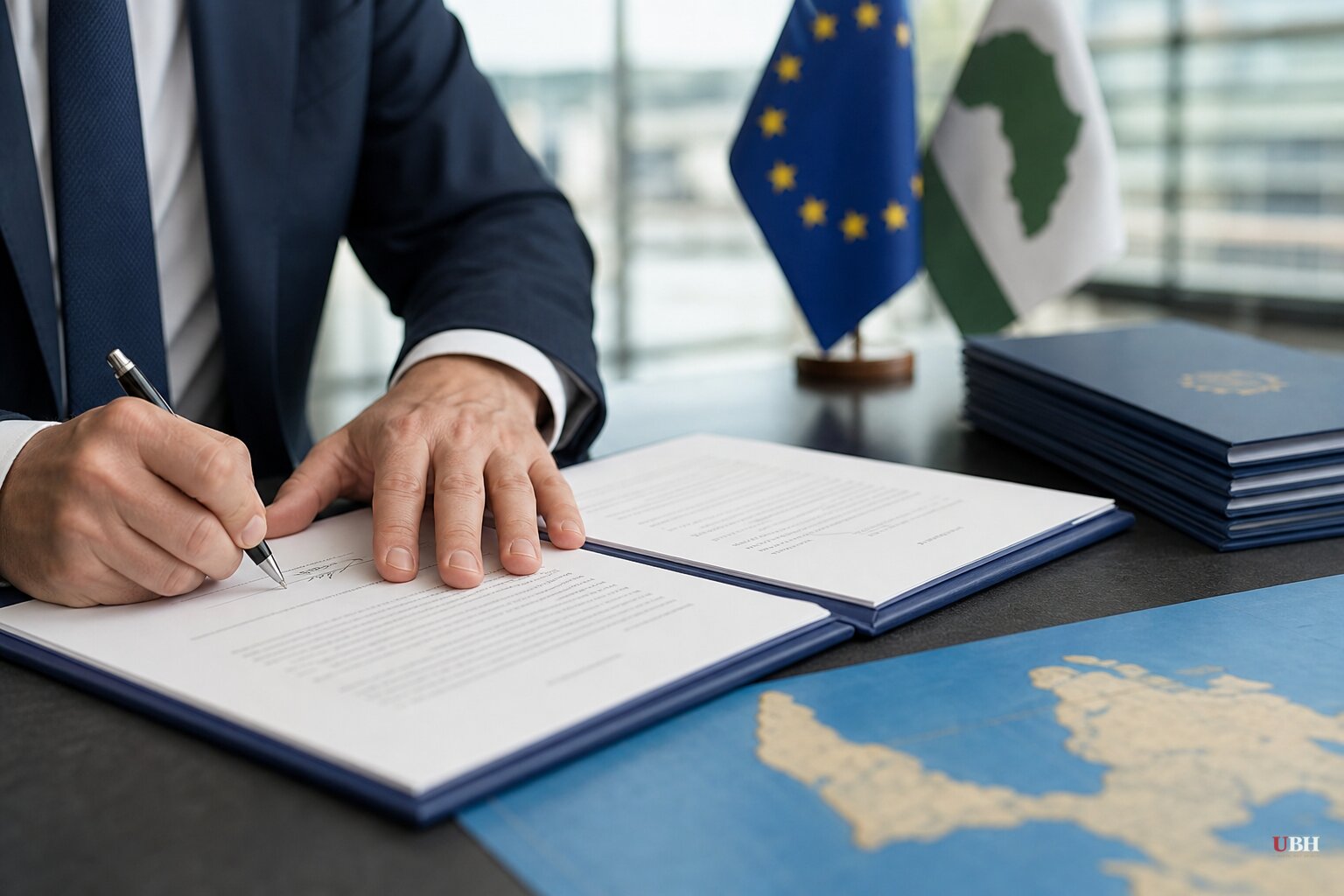
While the U.S. fight over TPS and deportation plays out in individual tragedies, five EU countries are building the infrastructure for the same basic approach at scale. Germany, Austria, Greece, Denmark and the Netherlands, calling themselves the Group of Five, agreed Friday, September 4, on a model for "return hubs" in non-EU countries. Danish Immigration and Integration Minister Morten Bødskov told reporters in Copenhagen they hope to start sending rejected asylum seekers there "as early as 2027," according to the Associated Press as carried by the LA Times and Al Jazeera.
Bødskov said the group expects "a common understanding with a partner country outside of the European Union" around New Year, and the five nations will reconvene in Munich at the end of September to advance the plan, per Al Jazeera. German Interior Minister Alexander Dobrindt confirmed the group wants agreements finalized this year. Host countries haven't been named, though Rwandan government spokesperson Yolande Makolo told Royal FM Kigali in early August it was "natural" for Rwanda to discuss hosting asylum seekers with European governments.
The pushback mirrors the U.S. debate almost exactly. The Council of Europe warned in July the hubs pose "considerable human rights risks." Danish Refugee Council Secretary-General Charlotte Slente argued the EU should instead fully implement its existing Pact on Migration and Asylum rather than build offshore facilities, saying return hubs "will not stop people from taking even more dangerous routes." UNHCR told the AP it hasn't been briefed on specifics and can't comment on the arrangements being discussed.
On the other side, Bødskov rejected the idea that return hubs are a euphemism for detention, insisting the IOM and UNHCR would monitor the sites and that migrants would get "a new chance for a life in a partner country." The European Parliament backed the legal framework for this in June, a sign the policy has mainstream political support in Brussels, not just among fringe parties.
Bon's homicide case now heads toward a jury trial in Pennsylvania. The Group of Five's Munich meeting at the end of September will show whether five European governments can actually name a host country for their return hubs, or whether the "partner country" remains as undefined as it is today.
Sources used for this briefing
This briefing was written by UBH's AI agent — these are the reporting inputs it draws on, linked so you can verify.


