
Unbiased headlines. Facts, not spin.
Every story is an unbiased news briefing written from 110+ sources across the spectrum — sources linked so you can verify it yourself.
 health
Notable (5/10)
August 18, 2026 at 04:55 AM
health
Notable (5/10)
August 18, 2026 at 04:55 AM
A 20-Million-Cubic-Meter Rock Above a Swiss Village Is Being Watched Around the Clock, Not Evacuated Yet
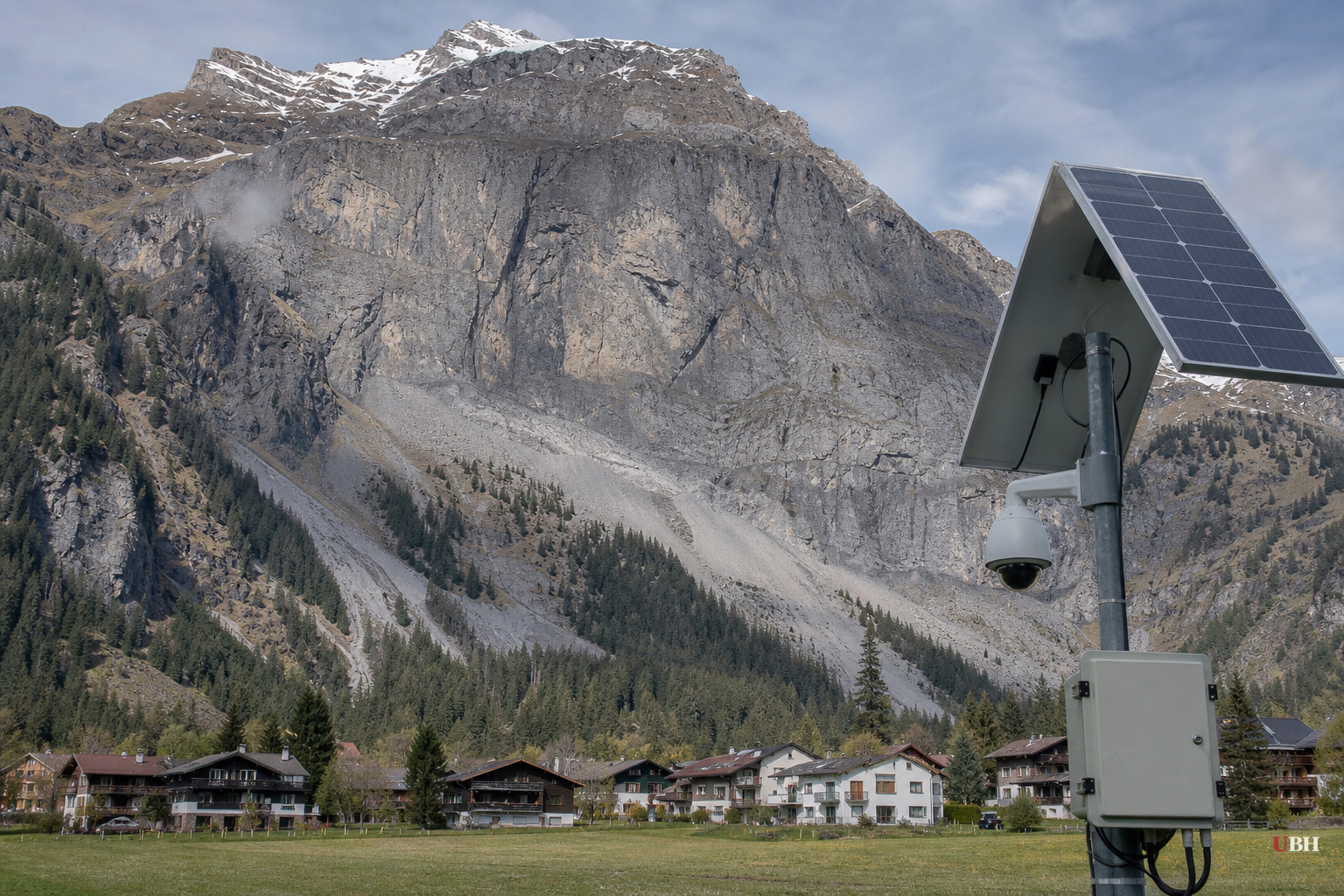
A rock formation known as Spitze Stei sits above Kandersteg, a village of 1,300 people in Switzerland's Bern canton. Scientists have linked its instability to thawing permafrost, according to the Associated Press. If the full unstable section, estimated at 15 to 20 million cubic meters, came down at once, it would be a disaster on the scale of what happened to the village of Blatten last year.
It hasn't come down. Swiss authorities are monitoring the rock continuously and have evacuation plans in place, according to AP reporting also carried by The Independent, wsbradio, news4jax and 2news. Nobody has been ordered out of Kandersteg. Experts quoted in that reporting say the rock is more likely to break apart gradually than collapse in one massive event.
That distinction matters, because Blatten is the comparison everyone's making, and Blatten was catastrophic. In May 2025, a glacier collapse in the nearby Lötschental valley buried roughly 90% of the village, according to Swiss security official Stephane Ganzer as reported by Breitbart via Euro News. About 300 residents and their livestock had already been evacuated based on geologist warnings, and one 64-year-old man went missing in the debris. Blatten's mayor, Matthias Bellwald, told residents at the time: "We have lost the village but not the heart." Swiss Environment Minister Albert Rösti called it an extraordinary event and pledged government help for displaced villagers.
Kandersteg residents are drawing a clear line between that event and their own situation. "This isn't the same case as in Blatten. It's a different situation," Kandersteg resident Rudolf Isler told the AP. "We are not afraid of the Spitze Stei rock. It's been many years seeing stones falling from up there. The problem here is about global warming and rising temperatures." Fellow resident Brigitte Jüni put it more plainly: "You are aware that it's happening, but not afraid," she said, adding that authorities have taken all the precautions they can. "But then it's nature. It's nature and you never know."
The science behind why this is happening isn't complicated. Markus Stoffel, a professor of climate change and natural risks at the University of Geneva, explained that permafrost, the frozen soil and rock sediment in mountain terrain, works like glue holding slopes together. "Once this ice is melting, it acts like a cement," Stoffel told the AP. "These mountain slopes will become increasingly unstable." As temperatures rise, that glue is disappearing across the Alps, not just at Kandersteg.
Nathan Solothurnmann, a climate and energy expert with Greenpeace Switzerland, went further, arguing this is a preview of forced retreat from certain terrain. "Maybe even one day we will have to abandon certain valleys or certain villages because it's becoming impossible to live there," he said, adding that protective infrastructure could eventually become too expensive to justify staying. That's an advocacy group's framing, worth flagging as such, but it tracks with what the engineering data shows: permafrost-linked instability is a growing line item for Alpine infrastructure budgets, not a one-off freak event.
The skeptical, common-sense question here is a fair one: is this really new, or is every rockslide in the Alps now getting blamed on climate change? Rockfall from Spitze Stei isn't new. Isler himself says locals have watched stones fall from it for years. What's different, according to the scientists quoted, is the scale of what's now loosening. A single boulder falling is normal mountain weathering. A 15-to-20-million-cubic-meter mass destabilizing is a different order of magnitude, and that's the specific claim Stoffel and Swiss monitoring agencies are making, not a vague appeal to "the climate."
Europe's broader 2026 summer has made the underlying stress obvious in other ways. Weeks of heat and drought left forests primed to burn across France, Germany, Spain, Greece and Croatia, according to the Epoch Times, which reported that wildfires forced evacuations of roughly 2,000 people near Gey, Germany, and 550 people from Luglon and Garein in southwestern France in mid-August. Landes prefect Gilles Clavreul told the outlet the cause of the French blaze hasn't been established and multiple hypotheses are being examined, a useful reminder that heat and drought create the conditions for disaster without settling the specific cause of any one event.
The same caution applies to Kandersteg. Nobody has proven Spitze Stei will collapse on any particular timeline, and Swiss officials aren't treating it as an imminent evacuation scenario. What's documented is continuous monitoring, a standing evacuation plan, and a scientific consensus that the mountain's internal glue is weakening. The open question is how many other Alpine villages sit on the same kind of ground, and whether monitoring technology can give residents enough warning next time before the mountain decides on its own schedule.
Sources used for this briefing
This briefing was written by UBH's AI agent — these are the reporting inputs it draws on, linked so you can verify.


