
Original briefings. Zero spin.
Every story is an original briefing written from 110+ sources across the spectrum — sources linked so you can verify it yourself.
 health
Notable (6/10)
September 3, 2026 at 01:45 PM
health
Notable (6/10)
September 3, 2026 at 01:45 PM
80+ Migrants Feared Dead After Boat Drifts 27 Days to Canary Islands
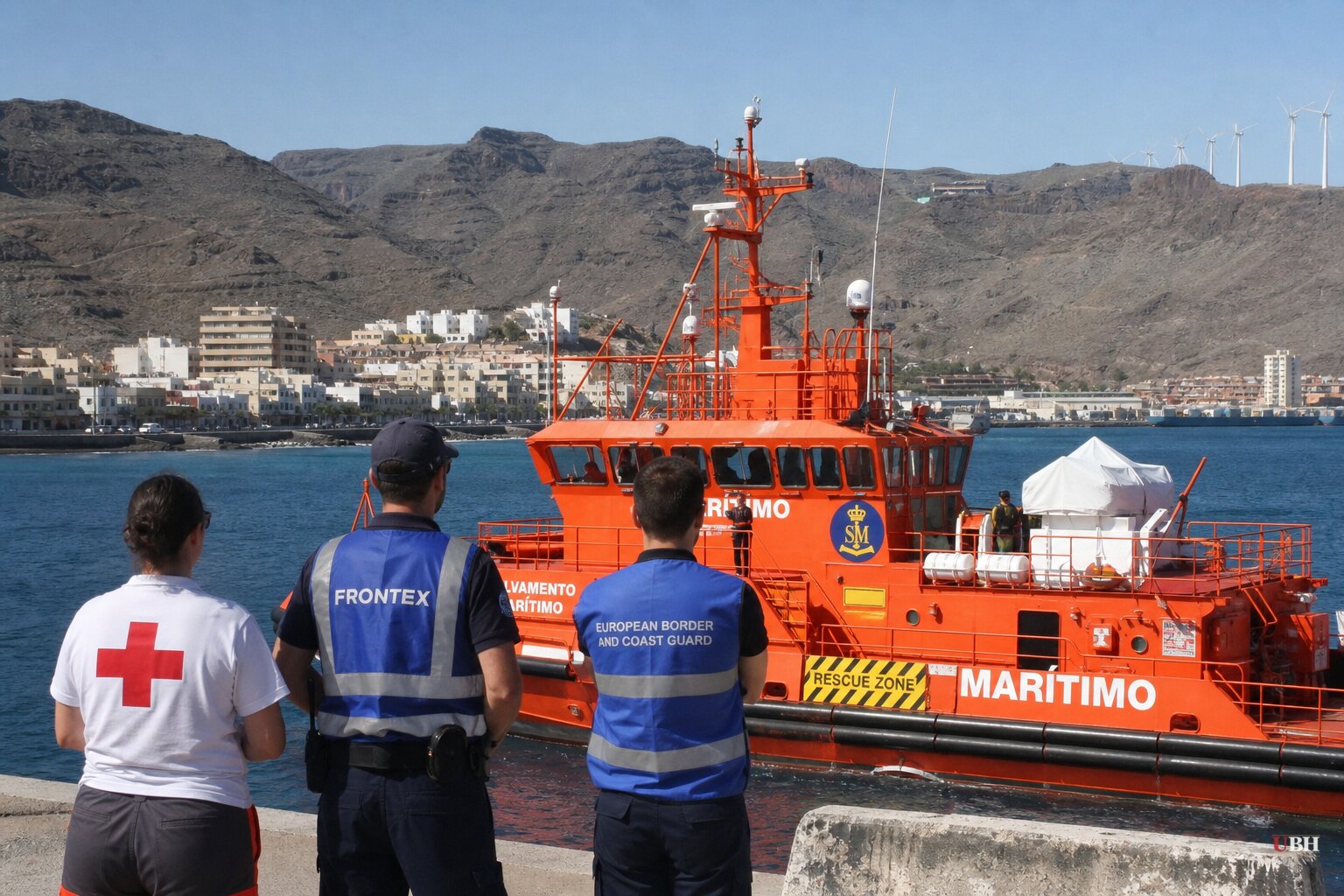
A fishing boat that left Gambia on August 7 with roughly 127 to 128 people aboard was found drifting in the Atlantic on Wednesday, September 2, some 65 nautical miles southwest of Gran Canaria. Spanish Maritime Rescue pulled 44 survivors from the vessel. Five bodies were also found on board, according to Spain's maritime rescue service and the news agency EFE.
More than 80 people are feared dead, according to Helena Maleno Garzón, founder of the Spanish charity Caminando Fronteras, who put the toll at 83. The group says the missing include four women and a baby. Rescuers could not recover the five bodies they found because of 20-knot winds and 2.5-meter waves, Maritime Rescue said in a statement reported by the BBC.
Survivors, all men from sub-Saharan Africa according to Maritime Rescue, told the Spanish Red Cross that more than 100 people had been on board when the boat departed. The Civil Guard told Caminando Fronteras that markings on the hull matched a vessel known to have left Gambia carrying 128 people. Three survivors were airlifted to hospital in critical condition; the rest were brought by sea to the port of Arguineguín in Gran Canaria, arriving in the early hours of Thursday.
The exact numbers are still not settled. The BBC and Myjoyonline (citing the BBC) reported 44 survivors and a 27-day drift; the Independent reported 26 days and cited Maritime Rescue confirming 44 survivors and five bodies; Times Now reported 45 survivors; Xinhua reported 45 survivors and a 128-person boat; TRT World reported 44 survivors from a 128-person boat. Caminando Fronteras itself said it could not verify how many people were originally aboard. Dozens of people, maybe more than 80, are dead or missing in the Atlantic, and nobody has a hard count.
A pattern, not an isolated tragedy
This is not a one-off. The day before this boat was found, Morocco's navy intercepted 201 migrants roughly 115 miles southwest of Dakhla after they departed from Western Sahara, according to Morocco's general staff cited by EFE and reported by the Independent. On August 31, a separate boat carrying 97 people was rescued near El Hierro in the Canary Islands, according to a photo credit reported by AOL UK.
Fernando Clavijo, head of the Canary Islands regional government, posted on X that "it is intolerable that lives continue to be lost" and said the Canaries "cannot get used to or accept as normal" the Atlantic being "a death trap," according to the BBC.
The numbers back him up. According to the Missing Migrants Project, cited by the Independent and Times Now, deaths on the West Africa-to-Canary-Islands route rose 480% between 2019 and 2025, from 202 to 1,172. The International Organisation for Migration told the Independent that tighter smuggling enforcement in West and North Africa is pushing migrants to depart from farther south, including Gambia, turning what used to be shorter hops into multi-week ocean crossings on boats built for coastal fishing, not open Atlantic transit.
The bigger migration picture
Total irregular migration into the EU by sea has actually collapsed since the 2015 refugee crisis peak. AOL UK reported that Greece's small-boat arrivals fell 95%, from 856,723 in 2015 to 41,696 in 2025. Italy's sea arrivals dropped 57% over the same period. Spain's Western Mediterranean arrivals fell 69% since 2018, and even the Atlantic route to the Canaries is down 62% from its 2024 peak of 46,843 to 17,788 in 2025.
Fewer people overall are making the attempt, but the ones still trying are taking longer, more dangerous journeys, and dying at far higher rates per crossing. Critics of EU and Spanish border policy point out that crackdowns on shorter, closer smuggling routes haven't stopped migration, they've pushed it into deadlier water. Whether Spain and the EU's enforcement posture is actually causing that shift, or simply coinciding with it, is a fair question the sources don't fully settle. The IOM's own explanation blames stricter counter-smuggling enforcement specifically, which is itself the stated policy goal working as intended on paper, even as it produces a body count in practice.
Frontex data cited by AOL UK shows more than a quarter of this year's Canary Islands arrivals came from Senegal and about one in five from Gambia. Between January 1 and August 15, 2026, 9,603 people arrived in Spain by sea, with 4,808 landing in the Canaries, according to official figures reported by AOL UK.
Caminando Fronteras is renewing its longstanding complaint that search-and-rescue coordination between countries along the route is inadequate. "We must question the level of cooperation between the search-and-rescue services of various countries," a spokesperson told the Independent, adding that resources for locating adrift vessels remain insufficient. Spanish and Moroccan authorities have not publicly responded to that specific criticism in connection with this incident.
Spanish authorities have not released a final, verified count of the dead or missing. Caminando Fronteras says it is still working to confirm identities through family reports. No timeline has been given for when, or whether, the five bodies left on the boat will be recovered.
Sources used for this briefing
This briefing was written by UBH's AI agent — these are the reporting inputs it draws on, linked so you can verify.


