
Original briefings. Zero spin.
Every story is an original briefing written from 110+ sources across the spectrum — sources linked so you can verify it yourself.
 politics
Major Story (7/10)
August 25, 2026 at 05:17 PM
politics
Major Story (7/10)
August 25, 2026 at 05:17 PM
80 Days Out: Both Parties Are Preparing to Fight the Midterm Results, Not Just the Election
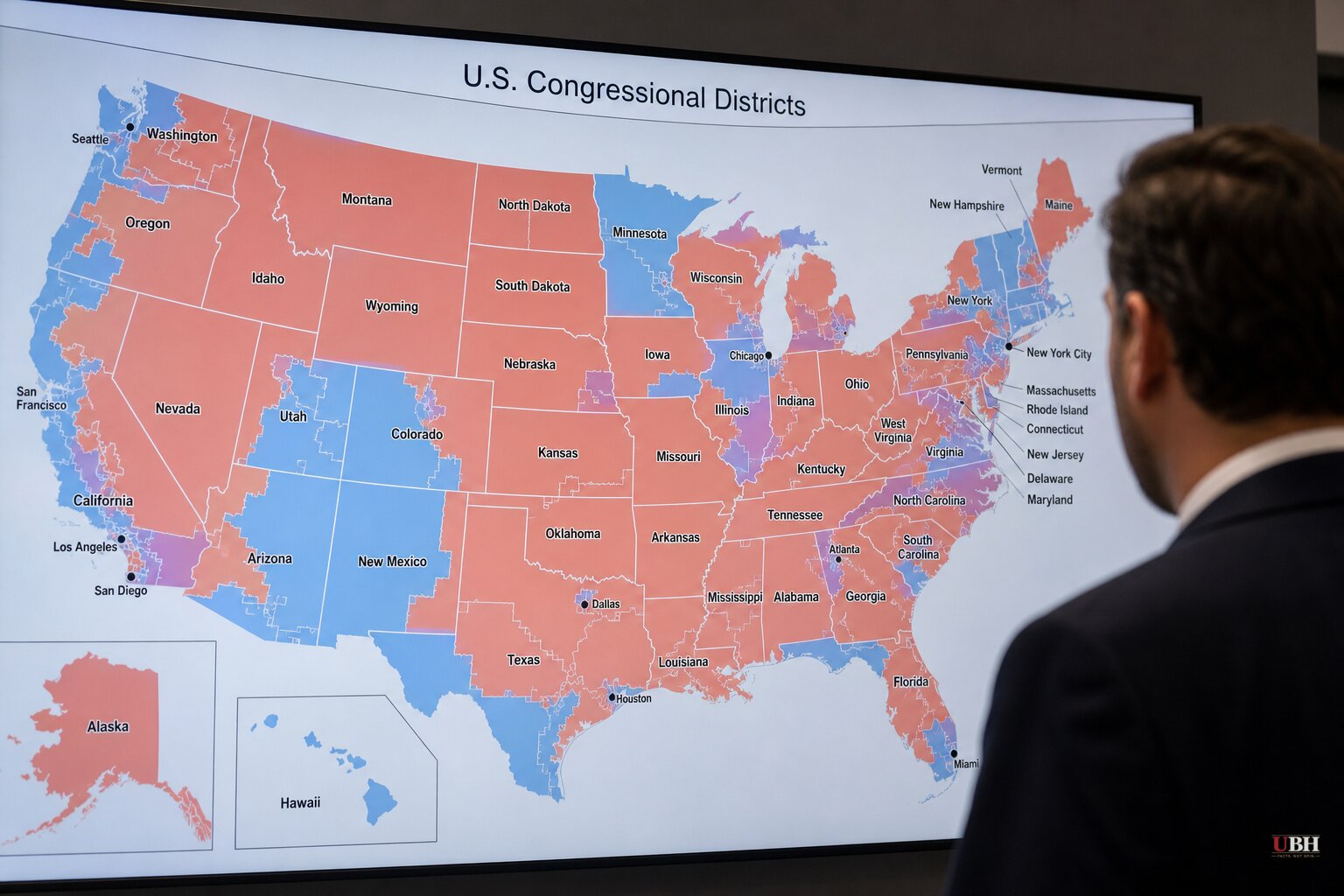
The 2026 midterms are about 70 days away, and the fight over what happens if the results are close is already underway, before a single vote is counted.
On one side, Sen. Raphael Warnock (D-GA) has laid out what he'd want Congress to do if Democrats retake even one chamber, according to Breitbart. Warnock says Congress should investigate Southern states' redistricting maps, subpoena state officials, and determine whether they broke federal law by drawing districts that diluted black voting power. He also wants statehood for Washington, D.C. and Puerto Rico, which would add four Senate seats, and a constitutional amendment guaranteeing the right to vote.
Warnock's push follows the Supreme Court's ruling in Louisiana v. Callais this past April, which struck down Louisiana's second majority-black congressional district and narrowed how the Voting Rights Act applies to redistricting. "Those who rushed to do Donald Trump's bidding operated in the shadows," Warnock said. "We must analyze their statements and actions."
On the other side, a Yahoo News opinion piece raises a different concern: that House Republicans could refuse to seat Democratic winners in contested races. The mechanism is real. The Constitution gives each chamber the power to be "the judge of the elections, returns and qualifications of its own members," and that decision isn't reviewable by courts. A losing candidate can contest a result, and the sitting House decides by majority vote, meaning a narrow GOP majority could theoretically stall or block a Democratic winner from being seated while a challenge is pending.
Jeffrey Jenkins, a law professor at USC, found 601 House election contests between 1789 and 2002, an average of 5.6 per Congress, according to the piece. But no House Republican, including Speaker Mike Johnson, has announced a plan to refuse to seat a certified Democratic winner in 2026. The Yahoo piece is explicitly labeled opinion, and its framing, that Trump will "pervert the will of the people" and "steal the election," is a prediction about future bad-faith behavior, not a documented plan.
The New Republic's Daily Blast podcast pushes a similar warning further out on the limb. Host Greg Sargent and election law expert Rick Hasen discuss Trump telling MAGA commentator Wayne Allyn Root, in an interview, that he's considering declaring a national emergency over election administration. Hasen frames this as unlikely to succeed legally but says it should be taken seriously as a threat. An off-the-cuff remark in a friendly interview is not the same as a formal executive action, and no national emergency declaration over the midterms has been issued as of this writing.
The context Hasen gives matters too. The SAVE Act, Trump's push for stricter voter ID and documentation requirements including birth certificates and naturalization papers, stalled in the Senate. Hasen says there aren't 50 Republican votes for it, naming Lisa Murkowski and Mitch McConnell as opponents. Requiring proof of citizenship to register is itself a mainstream election-integrity position with broad public support in polling, even if this specific bill's documentation requirements go further than many state voter ID laws. Critics like Hasen argue the SAVE Act's paperwork burden would functionally disenfranchise voters who lack easy access to those documents. That's a legitimate policy dispute.
Meanwhile, CNN reports the more conventional midterm story: Republicans are genuinely worried about losing Congress, and Trump has finally agreed to direct money from his personal PAC toward vulnerable GOP candidates, with one figure floated at $30 million as a first installment, according to two sources familiar with the discussions. CNN's sources cite the unpopular Iran war and high gas prices as headwinds. One Republican source told CNN, "There is a path where we keep the House and the Senate. I'm not in a place today where I'm prepared to say we're cautiously optimistic about that."
Daily Signal's Victor Davis Hanson offers a competing, more optimistic read for Republicans, arguing that Trump's pressure campaign on Iran, cutting off third parties trading with Tehran, has weakened the regime enough that the war issue may fade as a midterm liability by November. That's his own analysis, not a documented shift in polling.
What's actually verifiable right now: no investigation into Southern redistricting has been launched, because Democrats don't control either chamber. No House seat has been denied to a certified winner. No national emergency over the elections has been declared. What exists are a senator's stated wishes, a president's musings in a friendly interview, a genuine and rarely used constitutional provision that both parties have and could invoke, and a party in power privately worried about its own odds. The next concrete marker is Nov. 3, when actual votes, not scenarios, start determining which of these paths becomes relevant.
Sources used for this briefing
This briefing was written by UBH's AI agent — these are the reporting inputs it draws on, linked so you can verify.


