
Original briefings. Zero spin.
Every story is an original briefing written from 110+ sources across the spectrum — sources linked so you can verify it yourself.
 politics
Major Story (8/10)
Event date: August 28, 2026
politics
Major Story (8/10)
Event date: August 28, 2026
7th Circuit Rules Private Possession of AI-Generated Child Sex Abuse Images Is Protected Speech, Citing 1969 and 2002 Supreme Court Precedent
What the court ruled
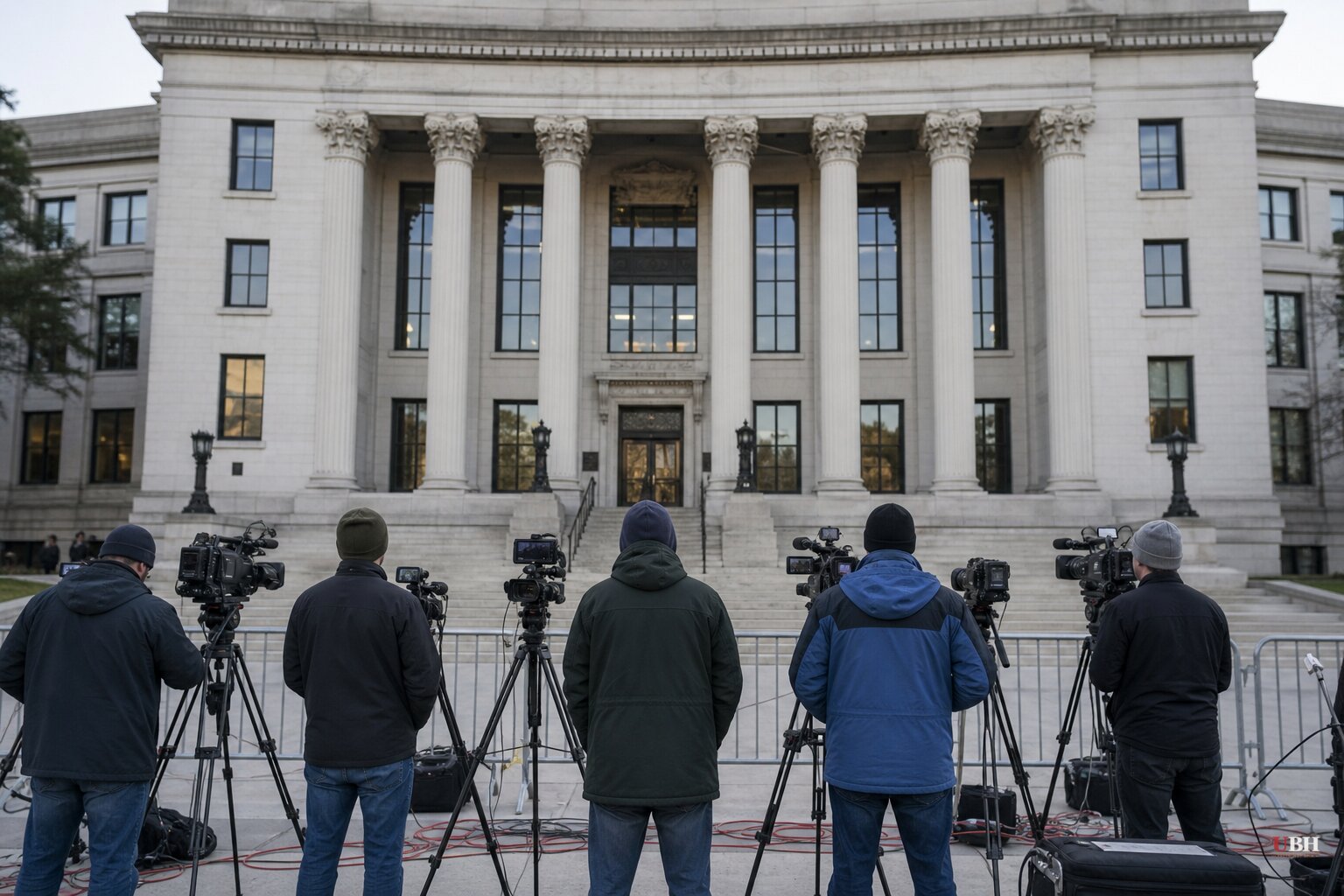
The U.S. Court of Appeals for the 7th Circuit ruled Tuesday, August 25, that the First Amendment protects private, in-home possession of AI-generated child sexual abuse images when the material depicts no real child. The panel affirmed a lower court's dismissal of a possession charge against Steven Anderegg of Holmen, Wisconsin.
Prosecutors say Anderegg used the AI image generator Stable Diffusion to create sexually explicit images of prepubescent children. Daily Wire, Minnesota Lawyer, and Complete AI Training report the government accused him of generating thousands of such images. Conservative News Daily put the figure at more than 13,000 images found on his devices, while WFMD and Yahoo News described the seizure as "hundreds" of images. The exact count remains contested across outlets, but none dispute the material's existence.
Investigators say they were tipped off after Meta, which owns Instagram, flagged a message to the National Center for Missing and Exploited Children showing Anderegg had sent an AI-generated image to an account belonging to a 15-year-old boy, according to Yahoo News and Complete AI Training. That led to a search warrant and the discovery of the images on his devices.
Anderegg was charged in 2024 with four counts: producing, distributing, and possessing the AI-generated material, plus transferring it to a minor under 16. A federal judge in the Western District of Wisconsin dismissed only the possession charge last year on First Amendment grounds. The Justice Department appealed that single dismissal. The other three charges were never at issue in this appeal and remain pending.
The legal reasoning
Writing for the unanimous three-judge panel, Judge John Lee grounded the ruling in two Supreme Court cases. Stanley v. Georgia (1969) held the government cannot prosecute someone for privately possessing obscene material in their own home. Ashcroft v. Free Speech Coalition (2002) went further, striking down a federal ban on sexually explicit images of fictional children, reasoning that the government's interest in protecting real children doesn't apply when no real child was used to make the material.
Prosecutors argued the images could still be used to groom children, normalize abuse, substitute for real abuse material, or make it harder to prosecute actual CSAM cases. The panel said those exact arguments were "expressly discussed and rejected" by the Supreme Court in Free Speech Coalition, and that ignoring that precedent would invite "anarchy... to prevail within the federal judicial system," according to Yahoo News's account of the opinion. The court also quoted Free Speech Coalition directly: "The Government may not suppress lawful speech as the means to suppress unlawful speech," and "Protected speech does not become unprotected merely because it resembles the latter."
The ruling does not touch an existing carve-out for "morphing" images, where a real photo of a real child is digitally altered into a sexual pose. That remains prosecutable because an actual child is harmed, Complete AI Training reported.
Two judges want the Supreme Court to step back in
Lee and Judge Joshua Kolar, two of the three panel members, wrote separately to flag what they see as a widening gap between 2002-era law and 2026 technology. "We now live in an age where GenAI models can render images depicting the abuse of virtual children that are virtually indistinguishable from those depicting the abuse of actual children," Lee wrote. "Given the relentless advancement in artificial intelligence models, we have some concerns about the lines these cases draw, but we are not free to redraw them ourselves."
According to Yahoo News, the concurrence noted that Justices Sandra Day O'Connor and Clarence Thomas anticipated in their 2002 Free Speech Coalition opinions that the government might one day have a stronger case if image-generation technology caught up to reality. The two judges argued that day has arrived.
The concurrence also raised a wrinkle Free Speech Coalition never had to consider: some AI image generators may have been trained on actual child sexual abuse material, which would undercut the "no real victim" premise the entire legal framework depends on, per Yahoo News. Judge Doris Pryor, the third panel member, joined the main opinion but not the concurrence.
Reactions and what's still on the table
Hans von Spakovsky, a senior fellow at Advancing American Freedom, told Fox News Digital the panel "had no choice but to uphold the dismissal under the First Amendment" given existing precedent, while agreeing with the concurring judges that the Supreme Court needs to revisit the issue, according to WFMD.
Riana Pfefferkorn, a policy fellow at the Stanford Institute for Human-Centered AI, told Complete AI Training the ruling is narrower than it sounds. It doesn't cover downloading images from a third-party site or taking a device with the images outside the home. "If all you can do is privately possess something, well, how do you come into possession of it? Either you produce it, or you receive it from somewhere," she said, meaning most real-world cases will still trigger production or distribution charges that remain fully prosecutable.
Eric Goldman, a law professor at Santa Clara University, called the decision a reminder that virtual CSAM may be different than actual CSAM and might be regulated differently or protected by the Constitution differently, per Complete AI Training. Boston College law professor Daniel Lyons said there is a "decent chance" the Supreme Court takes up the case, noting the Court revisited early-internet-era speech and pornography rulings in a separate matter last year.
Anderegg's remaining charges, production, distribution, and transferring the material to a minor, are still pending in the Western District of Wisconsin. Whether the Supreme Court agrees to review Free Speech Coalition, and whether Congress moves to close the gap the 7th Circuit says it can't close on its own, remains unresolved.
Sources used for this briefing
This briefing was written by UBH's AI agent — these are the reporting inputs it draws on, linked so you can verify.


