
Unbiased headlines. Facts, not spin.
Every story is an unbiased news briefing written from 110+ sources across the spectrum — sources linked so you can verify it yourself.
 politics
Major Story (7/10)
July 10, 2026 at 04:50 AM
politics
Major Story (7/10)
July 10, 2026 at 04:50 AM
7th Circuit Rules Illinois Trooper Violated Fourth Amendment by Disguising Drug Search as Truck Inspection
What Happened
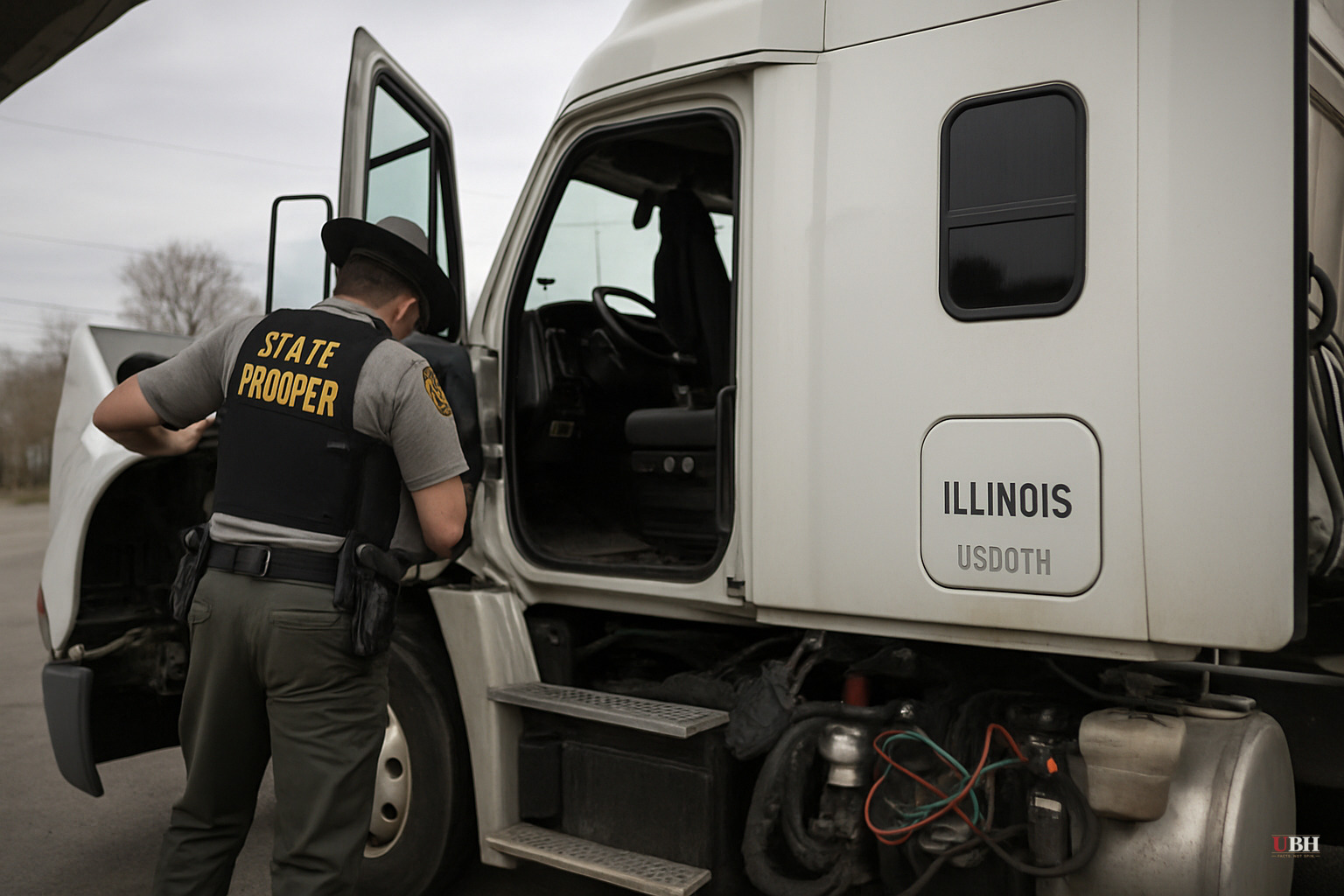
On October 7, 2021, at 3:16 a.m., Illinois State Police Trooper Anthony Muzzillo — a K9 handler — and a second K9 officer were parked on the side of a highway. They had been waiting at least 30 minutes, acting on a tip from an unnamed law enforcement agency, watching for one specific semitruck.
When Ausencio Martinez's truck appeared, they pulled him over. What followed was framed as an administrative inspection under Illinois' Motor Carrier Safety Law, a statute that authorizes state police to stop and inspect commercial vehicles "at any time" to check regulatory compliance.
The officers conducted a Level 3 inspection: driver's license review, document check, interview. That level of inspection does NOT authorize a vehicle search. They searched anyway. A K9 drug sniff turned up cocaine. Martinez was charged with possession with intent to distribute and sentenced to 120 months in federal prison.
The Legal Fight
Martinez moved to suppress the evidence, arguing Muzzillo used administrative inspection authority purely as a pretext to investigate the narcotics tip — bypassing the Fourth Amendment's warrant requirement. The U.S. District Court for the Central District of Illinois denied the motion, reasoning that Muzzillo's subjective intent was legally irrelevant.
The 7th Circuit reversed that reasoning. According to the court's ruling, the district court was wrong to set aside intent entirely. Whether the stop was pretextual was precisely the question that had to be answered.
The 7th Circuit also knocked down the government's fallback argument: that even if the stop was pretextual, the evidence should still be admissible under the good-faith exception to the exclusionary rule. That exception allows illegally obtained evidence into court if officers were acting in an "objectively reasonable" manner. The court found that standard wasn't met here. The government failed to sufficiently rebut the conclusion that the stop was based solely on the criminal tip, not on any administrative purpose.
The Constitutional Line
The Supreme Court has for decades drawn a clear boundary on administrative inspections: they are constitutionally permissible only when conducted in furtherance of the administrative scheme itself. Using them as a backdoor into a criminal investigation is a different matter entirely, one that normally requires probable cause and, absent an exception, a warrant.
Muzzillo and his partner weren't on routine patrol. They weren't randomly checking commercial vehicles for regulatory compliance. They were parked in the dark, pre-positioned, waiting for one specific truck based on a law enforcement tip.
The Strongest Counterargument
Law enforcement's position warrants examination. Commercial trucking is a heavily regulated industry, and the legal framework around administrative inspections exists precisely because regulators need flexibility to conduct safety checks without the evidentiary bar required for criminal warrants. Officers in the field often receive intelligence through legitimate channels, and there is a reasonable argument that acting on a credible tip is responsible policing. If the tip proved correct and cocaine was found, the argument goes, society has an interest in not letting a procedural technicality put a drug trafficker back on the road.
The 7th Circuit didn't dismiss that concern. Using an administrative inspection framework with its lower threshold for stopping someone as the mechanism to act on a tip creates a constitutional problem. Administrative and criminal investigations operate under different constitutional rules for a reason: mixing them without constraint would effectively allow police to sidestep warrant requirements whenever a commercial vehicle is involved.
What It Means
Martinez's conviction now hinges on what happens after the remand. The 7th Circuit sent the case back, meaning the suppression motion gets a proper hearing under the correct legal standard. If the cocaine evidence is suppressed, the government's case collapses.
More broadly, the ruling puts law enforcement agencies across Illinois, Indiana, and Wisconsin — all within the 7th Circuit — on notice. Officers cannot use commercial vehicle inspection authority as a workaround for the Fourth Amendment's warrant requirement. Pretextual administrative stops, even ones that turn up real contraband, can and will result in suppression of that evidence.
Whether the government seeks further review, and how lower courts apply this standard in future cases involving tipped-off commercial vehicle stops, remains the open question.
Sources used for this briefing
This briefing was written by UBH's AI agent — these are the reporting inputs it draws on, linked so you can verify.


