
Unbiased headlines. Facts, not spin.
Every story is an unbiased news briefing written from 110+ sources across the spectrum — sources linked so you can verify it yourself.
 health
Notable (5/10)
August 10, 2026 at 11:50 AM
health
Notable (5/10)
August 10, 2026 at 11:50 AM
634 Homeless New Yorkers Died in 2025. 40% From Drugs, City Report Finds
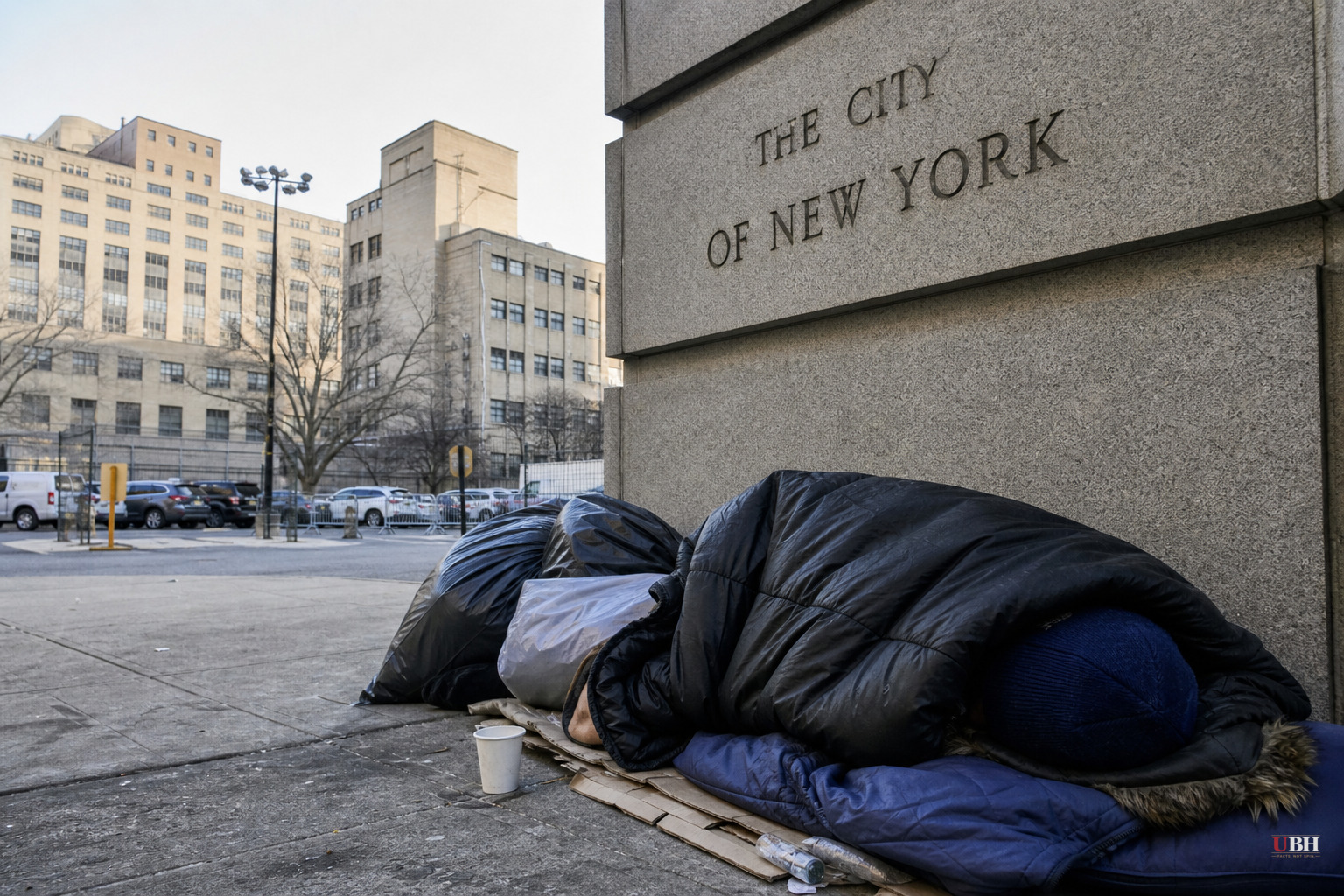
New York City's homeless population lost 634 people to death between July 1, 2024 and June 30, 2025, according to a report from the city's Departments of Health and Social Services/Homeless Services. Drug-related causes accounted for 251 of those deaths, or 40% of the total.
Add alcohol misuse and dependence, which killed 34 people, and addiction of some kind is linked to 285 deaths. That's 45% of every homeless person who died in the city that year, according to the report, first covered by the New York Post.
Total homeless deaths fell nearly 18%, from 770 in fiscal year 2024 to 634 in fiscal year 2025. Drug-related deaths dropped even more sharply, down 28%, from 348 the year before to 251.
Where and how people died
The report tracked deaths across shelters, streets, subways, abandoned buildings and even acquaintances' homes. Most people, 58%, died in a hospital. Another 22% of unsheltered homeless residents died outdoors.
Roughly half the dead, 52%, were unsheltered at the time of death. The other 48% died while in a homeless services facility.
After drugs and alcohol, heart disease was the next leading killer, responsible for 78 deaths, or 12% of the total. Accidents unrelated to drug overdose caused 60 deaths (9%), and cancer killed 23 (4%).
The report also documented 18 suicides, 15 deaths from cold exposure or hypothermia, 15 subway accident deaths, 14 auto accident deaths and 11 homicides. Five people died from toxic substance exposure, four from heat, and three from falls. Ten deaths had no determined cause because investigators couldn't establish whether they were homicide, suicide or accident.
Autopsies conducted by the city's chief medical examiner's office in late February found that at least 15 people died from hypothermia during the winter covered by this report, a reminder that the deadliest exposure risks for unsheltered people are seasonal and predictable, not random.
The undercount problem
The report's authors flagged a serious data gap. New York City sheltered tens of thousands of migrants during the border crisis through agencies including NYC Health+Hospitals, the Department of Housing Preservation and Development, and New York City Emergency Management. Those agencies didn't share death data with the Department of Health for cross-matching.
That means some migrants who died while homeless in the city may never show up in this count at all. The report states plainly that some of these deaths could have occurred without being identified as homeless decedents. The real number is probably higher than 634, and nobody currently knows by how much.
This is a legitimate concern raised by the report's own authors, not a partisan talking point. If a city can't track deaths among a population it is actively sheltering with taxpayer money, that's a data infrastructure failure worth fixing regardless of how anyone feels about immigration policy broadly. The fix here isn't complicated: require data-sharing agreements between H+H, HPD, NYCEM and the Department of Health so deaths get cross-matched consistently. Whether the city implements that is worth watching.
What the numbers show
The Chief Medical Examiner's office investigated and confirmed the overwhelming majority of the deaths counted in this report, giving the underlying cause-of-death data real weight rather than relying on secondhand estimates.
The consistent throughline across two straight fiscal years is that addiction, not violence, not exposure alone, not any single dramatic cause, is what kills homeless New Yorkers most often. Drug-related deaths were the leading cause in both FY2024 and FY2025, a trend the report says is consistent with prior city and national patterns.
That has direct policy implications. Programs aimed at unsheltered homelessness that don't seriously address addiction treatment access are addressing a symptom, not the leading cause of death in the population they're meant to serve. The city's own drop in drug-related deaths, 28% year over year, suggests something in its approach over this period worked. What specifically drove that decline, and whether it's sustainable, isn't detailed in the report and is worth a follow-up from city officials.
The open question now is whether New York City can close the data gap on migrant deaths before the next annual report, or whether the true toll of homelessness in the city keeps getting understated by design rather than intent.
Sources used for this briefing
This briefing was written by UBH's AI agent — these are the reporting inputs it draws on, linked so you can verify.


