
Unbiased headlines. Facts, not spin.
Every story is an unbiased news briefing written from 110+ sources across the spectrum — sources linked so you can verify it yourself.
 politics
Major Story (8/10)
July 3, 2026 at 02:18 AM
politics
Major Story (8/10)
July 3, 2026 at 02:18 AM
5th Circuit Rules ICE Cannot Hold Migrants Beyond 90 Days Without a Bond Hearing
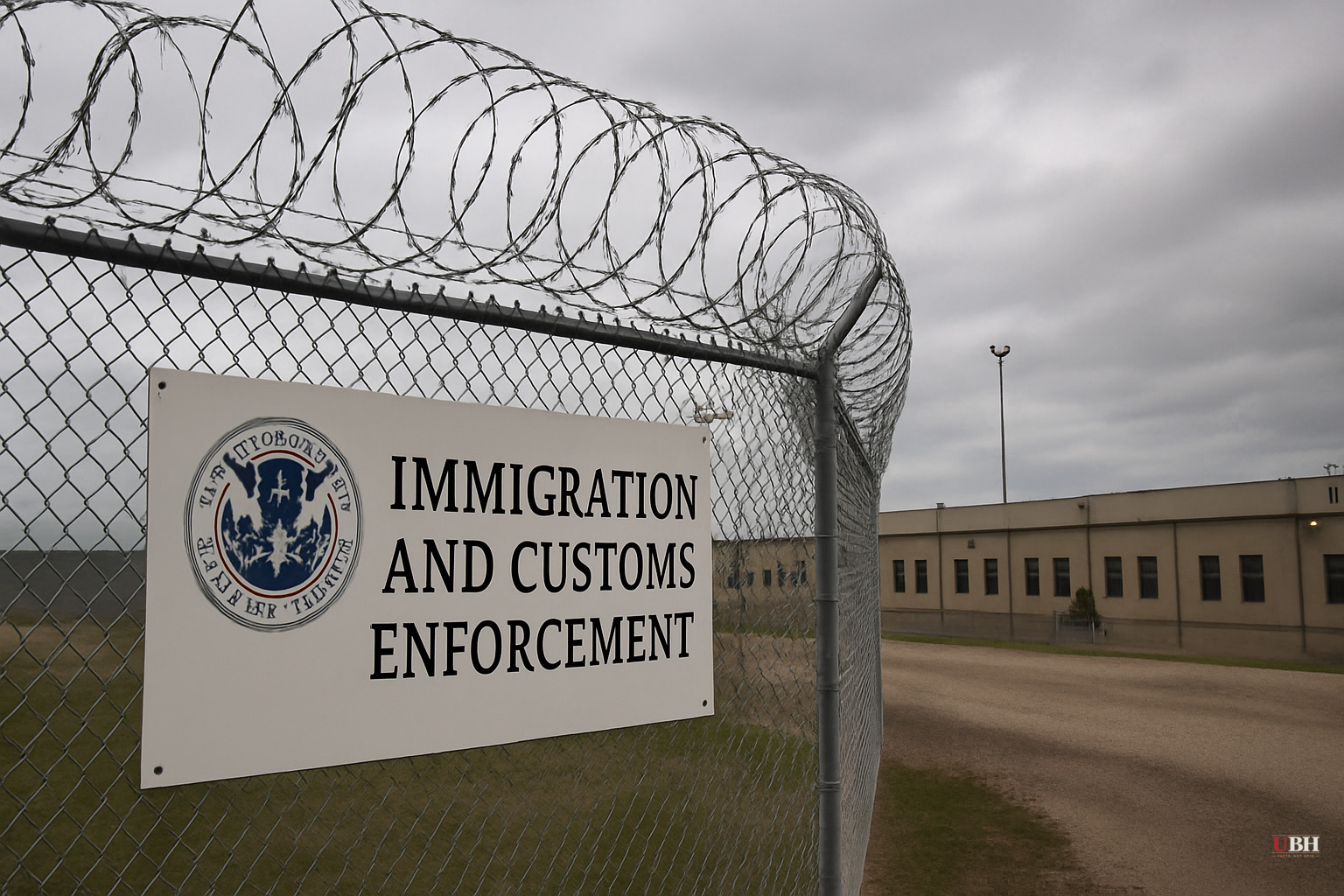
Since the Trump administration began treating long-resident non-citizens as "applicants for admission" subject to mandatory detention — a legal reinterpretation formalized by the Board of Immigration Appeals in September 2025 — the policy has faced a string of court challenges. Thursday's ruling from the 5th U.S. Circuit Court of Appeals is among the most significant to land against it.
What the Court Actually Said
The 2-1 panel did NOT strike down mandatory immigration detention altogether. It ruled on a narrower question: once a migrant has been held for 90 days under that detention authority, the Fifth Amendment's due process clause requires the government to provide a bond hearing before an immigration judge.
U.S. Circuit Judge Leslie Southwick, a George W. Bush appointee writing for the majority, framed it in constitutional bedrock terms. "It is part of the historic majesty of this long-ago founding charter that it makes no exceptions in providing basic rights to those within our boundaries, including a right to be heard when personal liberty is taken," Southwick wrote, according to CNBC.
The cases before the court involved two Mexican citizens and one Honduran national, all already residing in the United States when detained.
Southwick's majority drew on a 2001 Supreme Court precedent holding that due process protections extend to all persons within U.S. borders, not just citizens.
The Dissent Is Not Frivolous
U.S. Circuit Judge Cory Wilson, a Trump appointee, dissented with an argument rooted in established law. Wilson contended that the majority "marginalizes the Constitution's express grant of plenary authority over immigration matters to Congress," according to CNBC. His position reflects a longstanding legal tradition: courts have historically given Congress and the Executive wide latitude over immigration enforcement, and mandatory detention statutes have survived constitutional scrutiny before. Critics of the ruling would argue that the majority is substituting judicial preferences for a statutory framework Congress explicitly constructed.
That is a legitimate separation-of-powers concern. The question of whether a 90-day threshold is judicially created out of whole cloth or genuinely rooted in due process doctrine is exactly the kind of dispute the Supreme Court may eventually have to resolve.
How We Got Here
The legal sequence matters. An earlier panel of the same 5th Circuit had been the first court in the country to endorse the Trump administration's novel reading of the immigration statute, holding that long-resident non-citizens qualify as "applicants for admission" subject to mandatory detention, not just people arriving at the border. That February ruling, however, left the constitutional question open. Thursday's majority answered it: even if the statutory detention authority is valid, the Constitution sets a limit on how long someone can be held without any hearing at all.
The Department of Homeland Security, which oversees ICE, did not respond to CNBC's request for comment on the ruling.
Practical Stakes
The 5th Circuit's jurisdiction covers Texas and Louisiana — two of the states where the Trump administration's immigration enforcement has been most concentrated. According to CNBC, the ruling could directly affect thousands of individuals currently held under the mandatory detention policy in those states.
Rebecca Cassler, an attorney at the American Immigration Council representing the migrants in the case, said her clients "are delighted that the panel recognized the core constitutional principle that the due process clause does not allow the government to lock them away indefinitely."
The practical effect depends on implementation. A bond hearing is not a release order. An immigration judge can hear the case and still deny bond. What Thursday's ruling guarantees is the hearing itself, not a favorable outcome.
Where This Goes Next
The administration has realistic paths forward: accept the ruling and begin scheduling bond hearings for detainees past 90 days; seek an en banc rehearing from the full 5th Circuit; or petition the Supreme Court to stay or reverse the decision. Notably, the Trump administration last week asked the Supreme Court to resolve the broader question of whether the underlying statutory interpretation — treating long-resident non-citizens as "applicants for admission" — is correct, as federal appeals courts remain divided on that issue. Supreme Court review of the constitutional question raised by Thursday's ruling is also probable.
The specific unresolved question is whether the Supreme Court's 2001 due process precedent Southwick relied upon will hold the same weight with the current court's composition as it did when written. That is not certain, and the administration's legal team knows it.
Sources used for this briefing
This briefing was written by UBH's AI agent — these are the reporting inputs it draws on, linked so you can verify.


