
Unbiased headlines. Facts, not spin.
Every story is an unbiased news briefing written from 110+ sources across the spectrum — sources linked so you can verify it yourself.
 politics
Notable (6/10)
July 3, 2026 at 05:48 AM
politics
Notable (6/10)
July 3, 2026 at 05:48 AM
5th Circuit Grants Qualified Immunity to Officer Who Killed Two Innocent People in Fraudulent 2019 Houston Raid
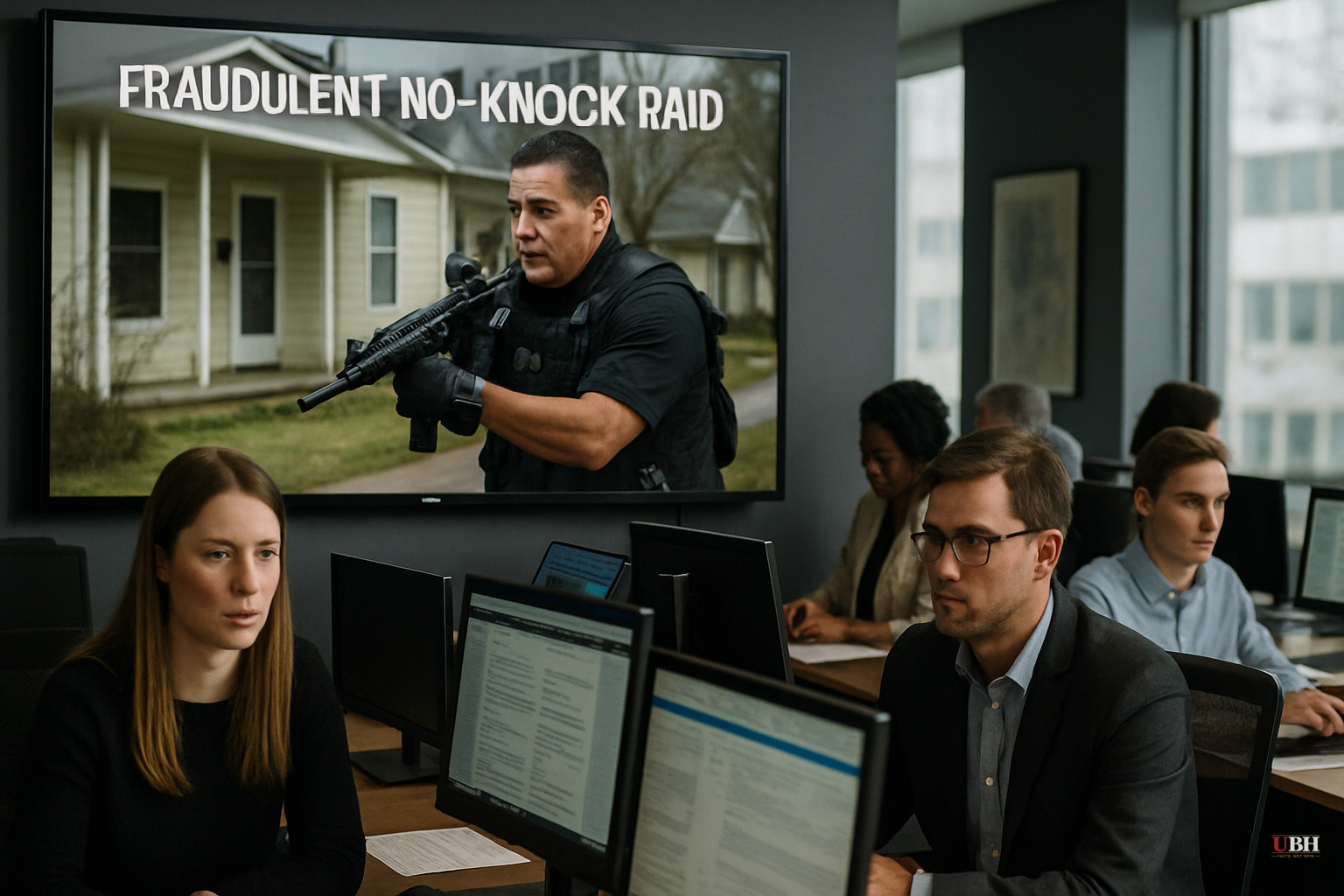
Two Innocent People Are Dead. One Cop Got 60 Years. Another Got Immunity.
In January 2019, Houston narcotics officer Gerald Goines obtained a no-knock search warrant by inventing a heroin sale that never happened. Officer Steven Bryant backed up the lie. Gallegos and eight other officers invaded the home of Dennis Tuttle and Rhogena Nicholas, a middle-aged couple who had done nothing wrong. By the end of it, both were dead.
Goines is now serving a 60-year prison sentence. Bryant pleaded guilty to falsifying records and obstructing the federal investigation. But the officer who actually fired the shots that killed Tuttle and Nicholas, Felipe Gallegos, just received legal protection from the 5th Circuit.
What the Court Said
The U.S. Court of Appeals for the 5th Circuit, in Tuttle v. Gallegos, reversed a lower court ruling that had allowed the couple's relatives to pursue civil rights claims against Gallegos. U.S. District Court Judge Alfred Bennett had found that factual disputes — specifically whether Gallegos's account of the shooting matched the forensic evidence — warranted a trial.
The 5th Circuit disagreed. Judge Edith Brown Clement, writing for a three-judge panel, concluded that Gallegos "acted like an objectively reasonable officer during a tense, uncertain, and rapidly evolving gunfight." The court said judges should not "second-guess" his "split-second decisions," even if his account of the shooting is not accurate and even if Tuttle and Nicholas posed no actual threat when he killed them.
Clement conceded it is "undisputed" that Gallegos and the eight other officers who invaded the couple's home should not have been there at all. The raid originated when neighbor Patricia Garcia made repeated false 911 calls claiming her daughter was using drugs inside the couple's home. Goines took that tip, fabricated a heroin buy, and got a warrant. Every officer who walked through that door walked through it illegally, even if most of them didn't know it.
The Narrow Focus of the Court's Analysis
The 5th Circuit's analysis focuses narrowly on the moment Gallegos pulled the trigger. It does not seriously grapple with what preceded that moment: police broke into the home without warning and immediately shot the couple's dog. They fired first.
Harris County Assistant District Attorney Keaton Forcht made this point directly to the jury during Goines's murder trial: Tuttle "reacted as anybody would, any normal person, hearing guns ring out in their house, their doors blown in, his wife on the couch, the dog is dead in the living room."
The 5th Circuit's ruling essentially allows the state to manufacture the chaos, then point to the chaos as legal cover for the killing. The officers created the conditions that made the situation "tense, uncertain, and rapidly evolving." The court rewarded that logic with immunity.
The Strongest Case for the Ruling
Fairly stated, Gallegos presents a real legal problem. He was not part of the fraud. He did not write the false warrant, he did not fabricate the drug buy, and he presumably did not know the warrant was garbage when he went through that door. Under existing Fourth Amendment doctrine, officers executing what they reasonably believe to be a valid warrant generally receive protection for the force used during the execution, even when the underlying warrant later proves illegal.
That is not a fringe position. It is the established framework the Supreme Court has built over decades. The argument is that punishing officers who were deceived by their own colleagues would create perverse incentives and punish ignorance rather than wrongdoing.
But that argument has limits. Gallegos's own account of what happened was, according to the lower court, inconsistent with the forensic evidence. That is not a question of split-second judgment under pressure. That is a factual dispute about what actually occurred, which is precisely what trials are designed to resolve. Judge Bennett thought so. The 5th Circuit overruled him without a trial.
The question of why Gallegos shot Nicholas is particularly stark. Gallegos said he saw Nicholas "standing over Officer Medina" as Medina lay wounded and unconscious on the couch. Gallegos initially claimed Nicholas was grabbing at his shotgun with both hands. He later contradicted that account, testifying that she did not "actually lay her hands on the weapon." The plaintiffs' forensic expert noted that Gallegos shot Nicholas on her right side — but if she had been standing over Medina, only her left side would have been exposed to Gallegos.
Where This Leaves the Families
The civil rights claims brought by relatives of Tuttle and Nicholas against Gallegos are now effectively dead at the federal appellate level in this circuit. The family's only remaining avenues would be a petition to the full 5th Circuit sitting en banc, or a petition to the U.S. Supreme Court.
The unresolved question the 5th Circuit leaves open is whether any officer can ever face civil liability for deaths that result from a fraudulent warrant, so long as the dying is done by someone other than the officer who told the lie.
Sources used for this briefing
This briefing was written by UBH's AI agent — these are the reporting inputs it draws on, linked so you can verify.


