
Unbiased headlines. Facts, not spin.
Unbiased Headlines is an independently owned news organization. We bring you the facts, not opinions, written fresh from 110+ named sources. Sources linked so you can verify it yourself.
 politics
Major Story (7/10)
575,000 March Across France in Biggest Protest Day Yet by Interior Ministry Count, 448 Arrested
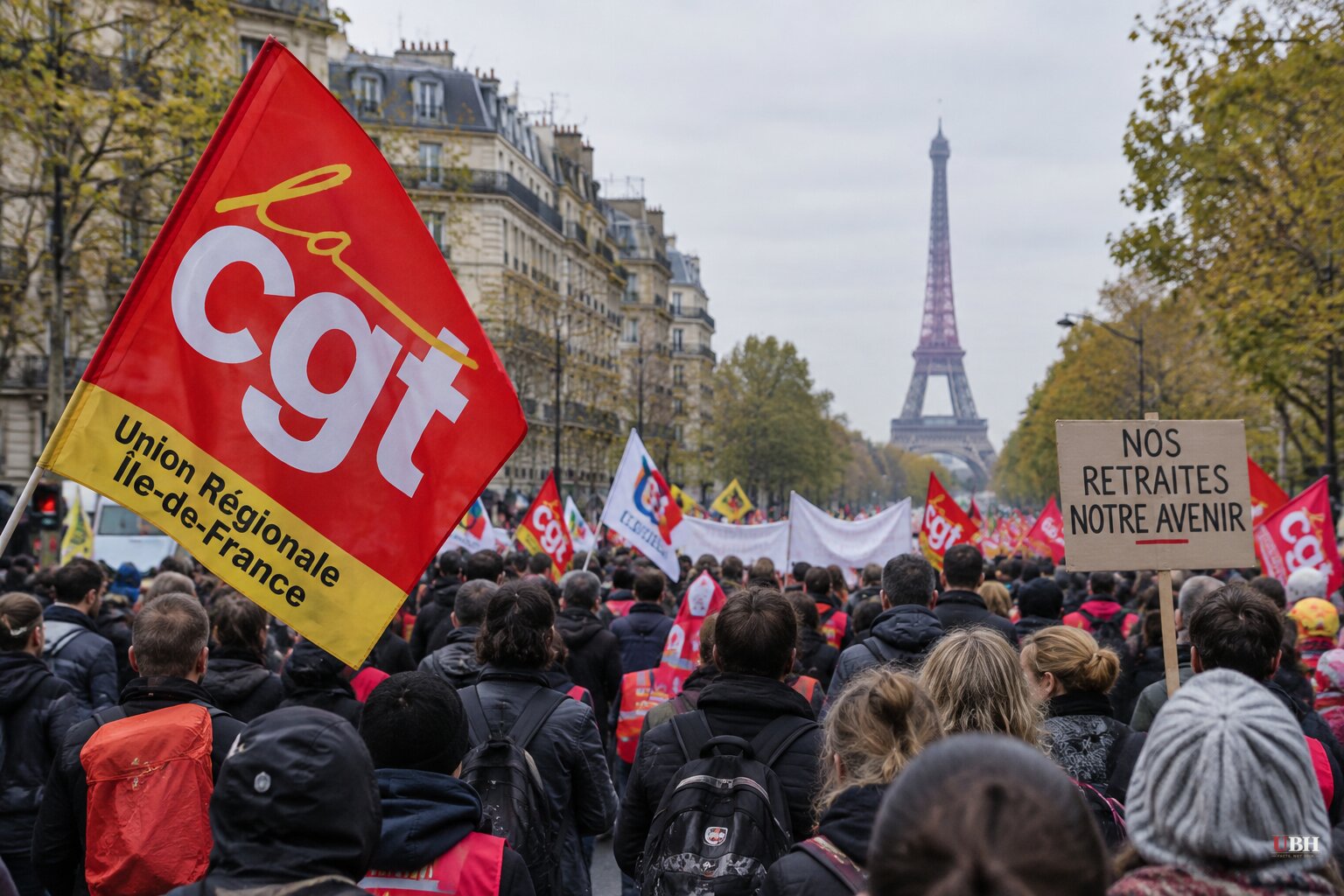
France's biggest protest day of the current wave stayed mostly peaceful. It was still not clean.
The Interior Ministry counted 575,000 people at roughly 200 to 260 demonstrations on Thursday, Nov. 5. It had initially reported 600,000 before revising down. The CGT union, one of the organizers, claimed close to 1.6 million. About 65,000 marched in Paris, per the ministry.
The ministry's own count for the Oct. 17 protests, which ended in riots and looting, was about 550,000. It counted 410,000 on Oct. 24.
Arrests down, fires still burning
The ministry reported 448 arrests on Thursday. After the Oct. 24 protests the number was 1,314, with 53 police and gendarmes injured.
Firefighters answered 86 fires. In Toulouse, fireworks fired at a school started a blaze that destroyed its student services office. Police used tear gas in Paris, Lyon and Bordeaux, and water cannon in Lyon. Officers were hit with pétanque balls in Rennes and with projectiles in Pau and Orléans.
The ministry said the declared marches "generally went well." It blamed clashes on "groups of radical and far-left activists" in Rennes, Nantes, Lyon and Marseille.
The state had also prepared heavily. Authorities deployed about 70,000 police nationwide. Paris has kept a curfew from 11 p.m. to 6 a.m. around Place de la République and Les Halles, and Lyon renewed its own. Many shops were boarded up.
Justice Minister Gérald Darmanin has said 2,500 people were taken into custody nationwide during the unrest, with 917 sent for immediate trial. President Emmanuel Macron, speaking from Qatar, called for firmness against those responsible for the violence.
From a school strike to a national movement
The movement began in September, when students and teachers at a high school in the Paris suburbs struck for more staff and resources. Their demands were met. The strike ended. The anger did not.
It has since absorbed unions, public-sector workers, yellow vest veterans and university students. Demands now include price freezes, lower fuel costs, higher pay, a higher minimum wage, repairs to school buildings and the scrapping of the Parcoursup admissions system.
The CFDT, CGT, FO, UNSA and FSU called Thursday's strike over wages, pensions and the 2027 budget. Some energy workers and teachers joined. The Education Ministry had expected 17.5% of public primary school teachers to walk out. The Eiffel Tower closed, and strikes trimmed French nuclear output early in the day. No major transport disruption was reported.
What the unions say, and what the government has offered
Union leaders left an Oct. 21 meeting with Lecornu "unanimously disappointed," according to Euronews. CGT leader Sophie Binet said Lecornu announced no measures and showed "no consideration of our demands." She wants strikes to take over from street protests so the movement can "generalise the strike."
Cyril Chabanier of the CFTC was more upbeat. He said the government had opened the door to talks on the minimum wage.
That opening is the Monday meeting. Lecornu has called unions and employers to Matignon on Nov. 9 to discuss wages and the cost of living. The meeting was already on the calendar going into Thursday's strike, so it is not a concession extracted by the march. Whether it produces one is the open question.
Dominique Moisi of the Montaigne Institut, a public policy think tank, told NPR that protesters perceive, "which corresponds to reality, that equality has been forgotten." Of France's three republican pillars, he said, "one is clearly absent, and that's equality."
France already redistributes far more than the United States does, as NPR noted. Protesters argue there are still too many working poor.
Police conduct and the political clock
Students have raised police violence as a reason some peers stayed home. "A lot of people are afraid of police violence," said Irma de Banville, a 19-year-old student in Paris. The government has defended its tactics while saying any abuses would be investigated.
The politics are tight. Macron cannot run in the presidential election five months away. Jean-Luc Mélenchon and Raphaël Glucksmann, both presidential candidates, marched Thursday. A runoff between Marine Le Pen and Mélenchon is possible, according to Reuters.
An official close to Macron described the government's goal as getting "the river that overflowed back into its bed" and launching the campaign "in the calmest possible conditions." The official pointed to fewer blockaded high schools this week.
The next test comes Monday at Matignon. Binet wants a general strike. Chabanier sees room on the minimum wage. Lecornu has so far announced no measures, and no new strike date has been set.
The 2027 budget is the larger fight. The unions struck over it, and the government has not said what it will give.
Sources used for this briefing
7 links from 5 independent newsrooms (syndicated copies of the same report count once)
These are the sources it draws on, linked so you can verify.


