
Unbiased headlines. Facts, not spin.
Every story is an unbiased news briefing written from 110+ sources across the spectrum — sources linked so you can verify it yourself.
 politics
Notable (6/10)
August 18, 2026 at 05:00 AM
politics
Notable (6/10)
August 18, 2026 at 05:00 AM
57 Trump Officials Are Worth $100 Million or More, Report Finds, Four Times the Last Three Presidents Combined
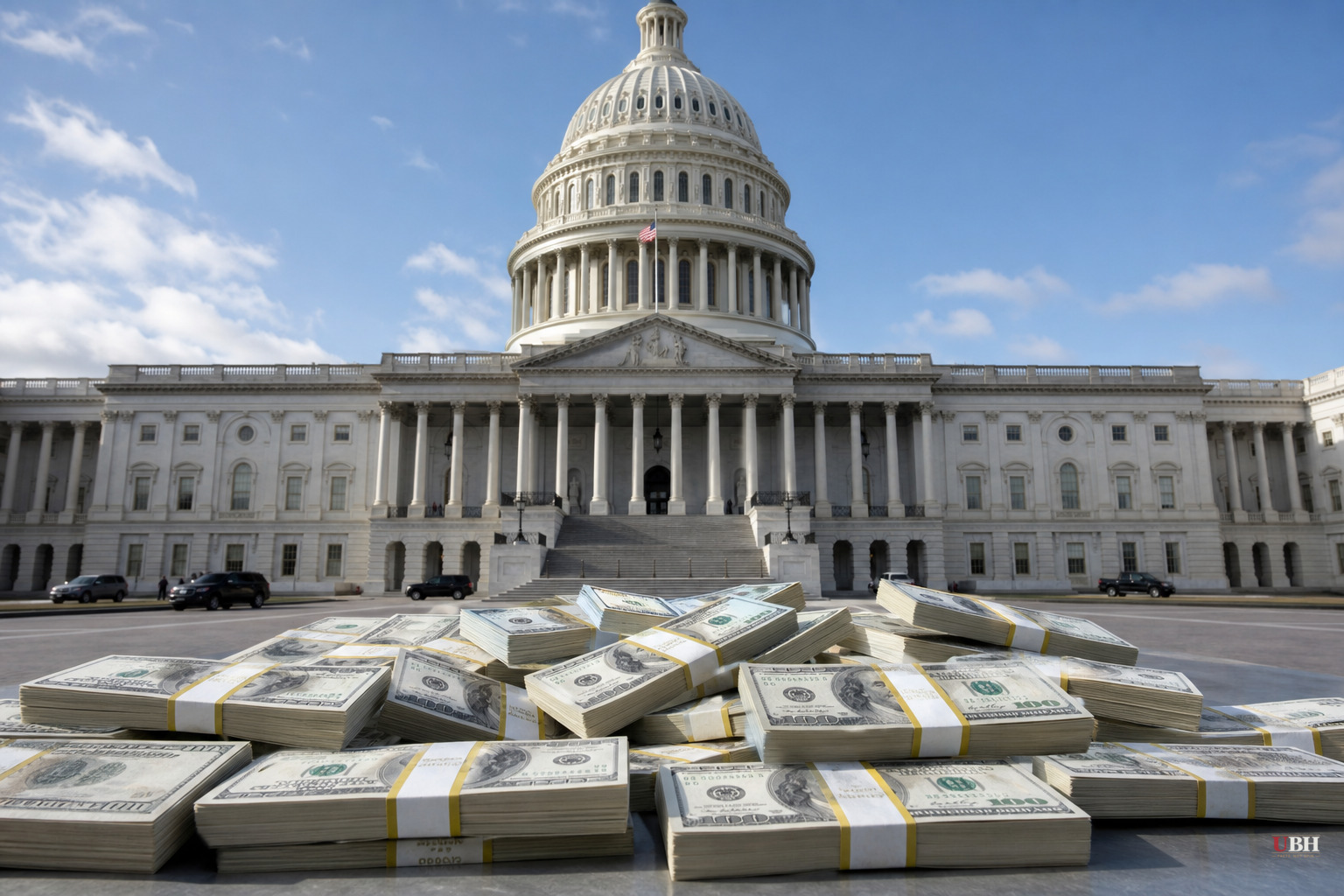
Donald Trump has always said money is proof you know what you're doing. His second-term Cabinet is the receipt.
A report from the consumer advocacy group Public Citizen, published Monday, found 57 Trump administration officials worth at least $100 million. That includes 17 ambassadors and 40 senior executive branch officials. Eight of the 23 Cabinet members qualify, including two billionaires: Commerce Secretary Howard Lutnick and Education Secretary Linda McMahon.
Compare that to the last three administrations. George W. Bush had five officials worth $100 million or more. Joe Biden also had five. Barack Obama had three. Combined, that's 13. Trump's 57 is more than four times that number, according to Public Citizen's count.
The roster of nine-figure fortunes runs deep. Deputy Secretary of Defense Stephen Feinberg is a billionaire. So is Small Business Administrator Kelly Loeffler. Treasury Secretary Scott Bessent and special envoy Steve Witkoff are each worth hundreds of millions. None of this counts Trump himself, whose net worth Forbes pegs above $6 billion, or Elon Musk, the world's richest man, who spent part of last year advising Trump on downsizing the federal government.
Is this actually new, or just bigger?
Presidents stacking their administrations with rich donors and supporters isn't some Trump invention. Treasury Secretary Andrew Mellon served three presidents in the 1920s while sitting among the wealthiest men in the country. Ambassadorships have functioned as rewards for major donors for generations, under Republicans and Democrats alike. Wealthy people bringing business experience into government is a defensible tradition, not a scandal by itself.
Trump has been upfront that he sees financial success as a credential. He's said as much repeatedly: if you built something worth hundreds of millions or billions of dollars, you've proven you can run something. That's a coherent argument. Plenty of voters buy it.
But scale matters. Going from 13 ultra-wealthy officials across three prior administrations to 57 in one is a different category of thing, not just more of the same. Public Citizen co-president Lisa Gilbert put the concern plainly: "When the people holding the reins of government are drawn overwhelmingly from the ranks of the ultra-rich, it leads to misplaced incentives and corruption, and begs the question, 'Whose interests they are truly serving?'"
That's a fair question to ask of any administration this concentrated at the top. It's also fair to note Public Citizen is an advocacy group with its own institutional lean toward more government regulation of wealth and business, not a neutral scorekeeper. The number itself, 57, comes from their methodology and their $100 million threshold. Nobody in these sources disputes the underlying figure, but the framing around "corruption" is Public Citizen's editorial conclusion, not a proven fact.
The political problem for Trump
Trump won back the presidency largely on the strength of working- and middle-class voters angry about inflation and the cost of living. He promised to bring prices down.
Public approval of his handling of the economy has since dropped to 32%, down from 40% at the start of his second term, according to Ground News' aggregation of recent polling. A Cabinet stacked with billionaires and hundred-millionaires is a tough sell to voters who feel like they can't afford groceries.
Trump's own political team seems to know it. According to Axios reporting cited by the Daily Wire, White House political director James Blair, pollster Tony Fabrizio and Senate Leadership Fund executive director Alex Latcham briefed Senate Republicans on August 5 that healthcare messaging, not voter-integrity messaging, tests as the strongest issue heading into the midterms. Republicans held a 46-point advantage on a message accusing insurers of "lining insurers' pockets," versus just a 14-point advantage on the SAVE Act's proof-of-citizenship voting requirement.
This suggests the GOP's own data sees economic populism, not culture-war messaging, as the play for November. A Cabinet full of billionaires doesn't obviously help that pitch.
None of the coverage reviewed here found any allegation of illegal conduct tied to these appointments. No investigation, indictment, or charge has been announced against any official named in the Public Citizen report. The concern raised is about incentives and access, not proven wrongdoing, and it remains an open question whether personal wealth among appointees has actually shaped any specific policy decision versus simply reflecting who Trump likes to hire.
What happens next is a numbers question for November. MAGA Inc. has more than $400 million on hand and the RNC holds roughly $128 million in cash, against just $16 million for the DNC, which is carrying about $18 million in debt, according to the Daily Wire's sourcing on Axios polling memos. Whether a billionaire-heavy administration becomes a Democratic attack line, or whether the GOP's health care and anti-fraud messaging drowns it out, is something the midterm results will settle.
Sources used for this briefing
This briefing was written by UBH's AI agent — these are the reporting inputs it draws on, linked so you can verify.


