
Unbiased headlines. Facts, not spin.
Every story is an unbiased news briefing written from 110+ sources across the spectrum — sources linked so you can verify it yourself.
 health
Major Story (7/10)
August 13, 2026 at 10:14 AM
health
Major Story (7/10)
August 13, 2026 at 10:14 AM
3.7 Million Afghan Children Face Malnutrition as Aid Funding Drops 70 Percent Since 2022
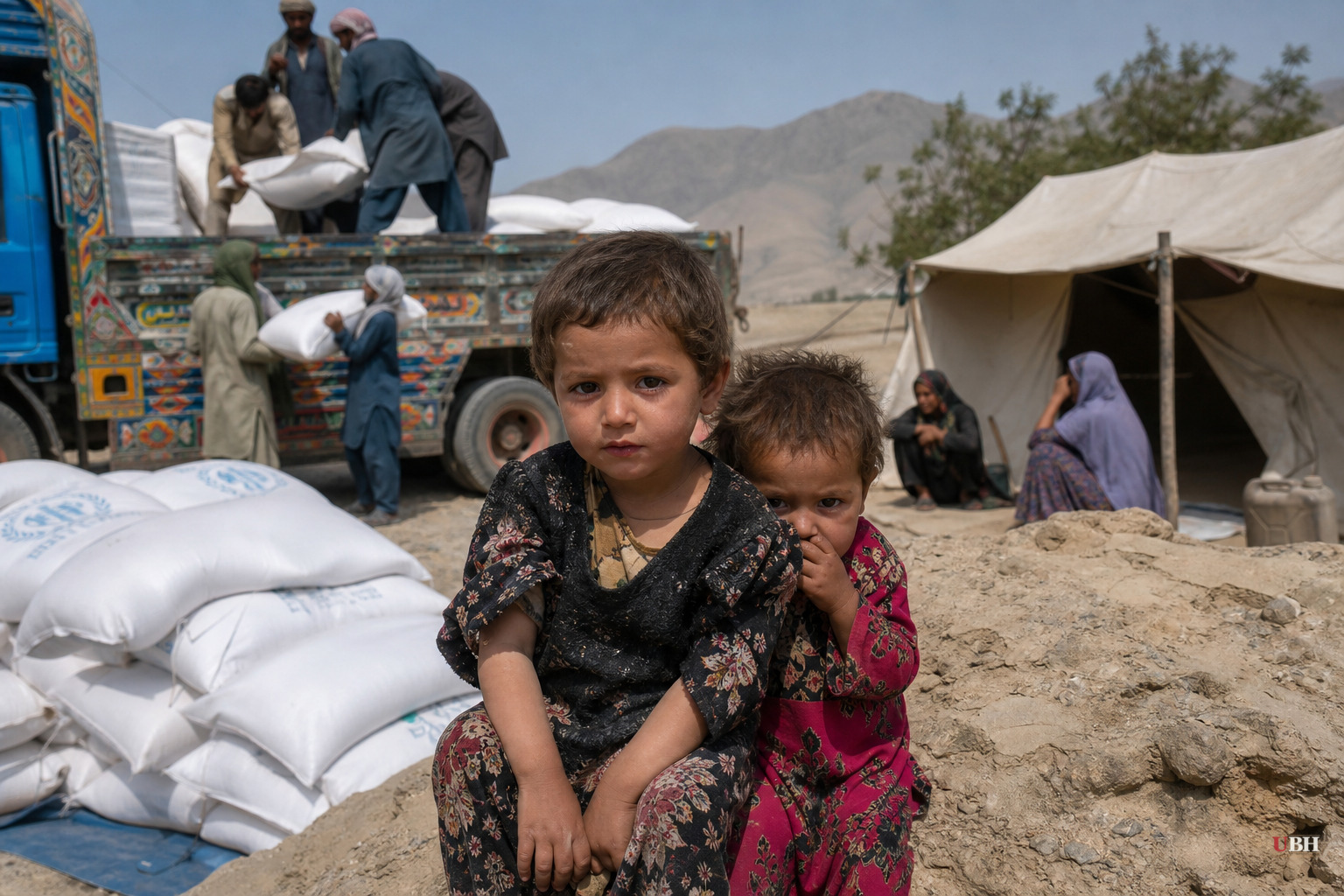
Nearly 4 million Afghan children are projected to suffer acute malnutrition in 2026, according to World Food Programme (WFP) and Save the Children data released this week. That's a 14% increase over four years. One in 10 children under five is now wasting, a life-threatening condition where a child is dangerously underweight for their height.
Save the Children said Thursday that acute malnutrition worsened in two-thirds of Afghanistan's provinces in the second quarter of 2026 compared with the same period last year. WFP's numbers, released in a Tuesday alert from Geneva, are starker: 12 provinces have now hit critical levels of acute child malnutrition, the highest number ever recorded in the country.
The two organizations approach the same crisis from different angles but land on nearly identical figures. WFP puts the number of malnourished children at 3.7 million for 2026, plus another 1.2 million pregnant or nursing women. WFP Country Director John Aylieff told reporters that 80% of the worst wasting cases are children under two, and that NGOs are reporting kids arriving at clinics "too late to be saved."
The money dried up
Humanitarian aid to Afghanistan fell from $3.27 billion in 2022 to about $1 billion in 2025, according to Save the Children. So far in 2026, only $438 million has been secured, a 74% funding gap against what's needed.
That drop follows the Taliban's takeover in August 2021, when the U.S. and allied forces withdrew. Western governments and institutions largely cut direct government-to-government aid afterward, routing what funding remains through UN agencies and NGOs instead. The result: roughly 600 essential health facilities have closed or been suspended, according to Save the Children, cutting off services that about 4 million Afghans relied on, half of them children.
WFP's Aylieff said the agency can currently feed only one in nine of the 14 million Afghans it classifies as acutely hungry. "Millions of acutely malnourished Afghan children are being turned away without assistance at the very moment when their lives are at risk," he said. He described the resulting deaths as fully preventable.
A returnee crisis compounds it
The funding gap is colliding with a second, separate pressure: mass deportations. Aylieff said nearly 6 million Afghans have been forcibly expelled from Pakistan and Iran since September 2023, straining an economy that already can't support its existing population. "There are simply not enough jobs to sustain the returnees," he said.
Regional conflict has made things worse on the price side. Aylieff pointed to trade disruptions from tensions with Pakistan and the broader Middle East crisis, which he said have pushed staple food prices up 20-30%. "The poor are being priced out of the market," he said.
Afghanistan's population has also grown 12% over the past four years, according to Save the Children, adding more mouths to feed with fewer resources per capita even before accounting for the returnee influx.
What this looks like on the ground
WFP described visiting a family in Kandahar where a mother named Sediqa collects nutritional supplements for two malnourished daughters, ages 3 and 18 months. "There is no other food," she told WFP, saying her family survives mostly on bread and tea because they can't afford rice, beans, or pulses.
In a separate case cited by WFP, a mother named Farida in Kandahar province described her husband earning less than a dollar a day as a street vendor. Two of her children have anaemia and her six-year-old son has been too weak to attend school for months. WFP staff said her infant's bottle, which should hold milk, contained only weak tea because the family had no money to buy any.
Save the Children said it has managed to keep 14 health clinics running and is the sole healthcare provider for roughly 10,000 people in mountainous parts of northern Afghanistan. One of those clinics reportedly sees more than 100 patients a day, with some families walking hours to reach it.
The unresolved question
Neither Save the Children nor WFP's public statements address why Western donors, chiefly the U.S. and European governments, scaled back funding so sharply after 2022 beyond the general reluctance to send money that could benefit the Taliban government. Cutting aid punishes ordinary Afghan children and mothers who had no role in the Taliban's return to power, while continued large-scale funding risks propping up a regime that restricts women's rights, including barring girls from secondary education.
Aylieff's WFP briefing did not lay out a funding target or timeline for closing the 74% gap. Save the Children has not said whether any additional pledges are expected before the end of 2026. For now, the trajectory described by both organizations points in one direction: more provinces crossing into critical malnutrition territory, not fewer.
Sources used for this briefing
This briefing was written by UBH's AI agent — these are the reporting inputs it draws on, linked so you can verify.


