
Original briefings. Zero spin.
Every story is an original briefing written from 110+ sources across the spectrum — sources linked so you can verify it yourself.
 politics
Low Interest (4/10)
Event date: August 20, 2026
politics
Low Interest (4/10)
Event date: August 20, 2026
25 Years After 9/11, TSA Body Scanners and License-Plate Cameras Are the New Normal
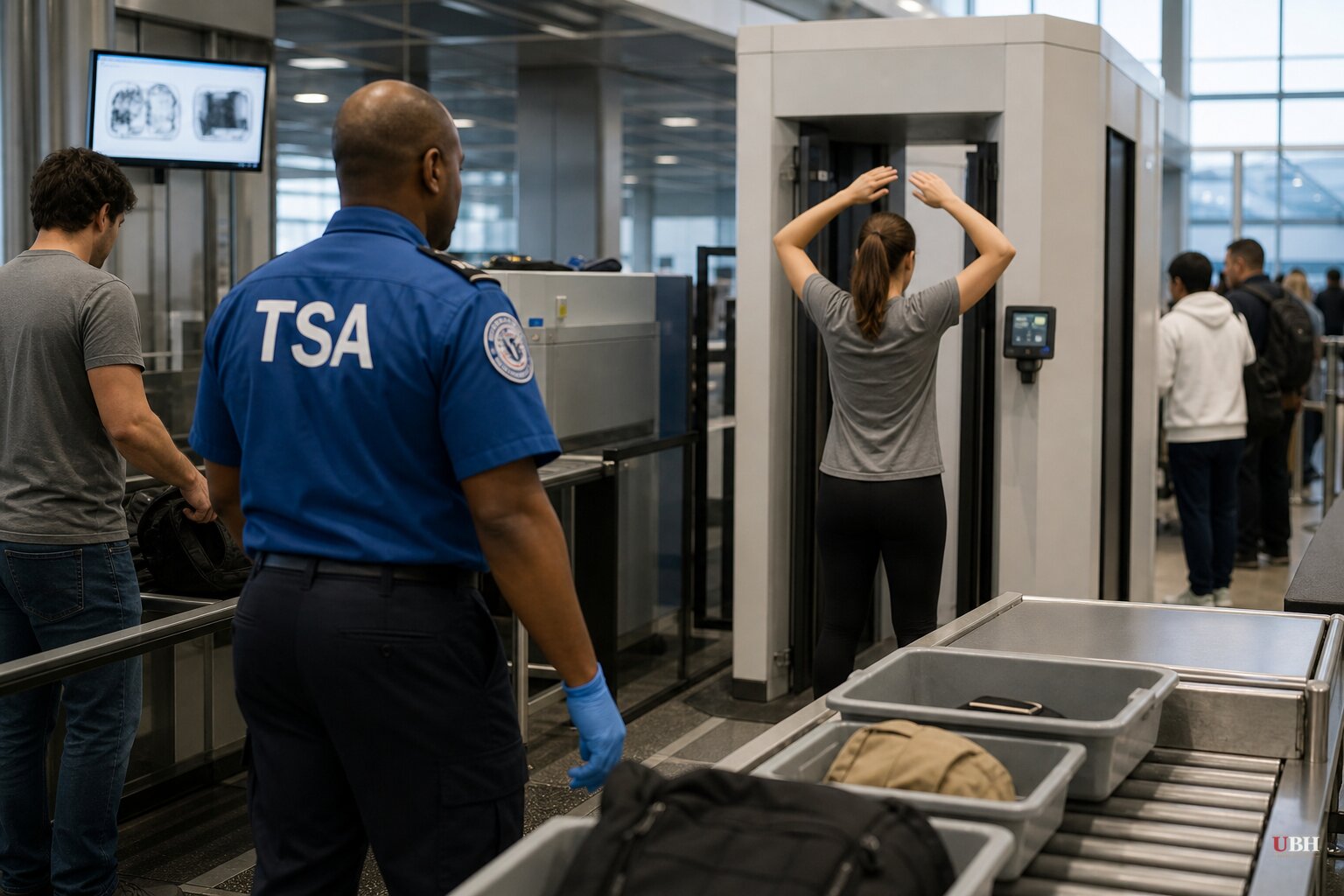
Twenty-five years on, the TSA checkpoint is just Tuesday. Take your shoes off, get your face scanned, step into the body scanner, hope you're not the one who gets the hand swab. Kids growing up now, as Reason contributor Elizabeth Nolan Brown wrote in a September piece reflecting on air travel with her preschooler, will never know it was any other way.
The surveillance infrastructure created in the panic after the attacks didn't just persist. It normalized. Nobody under 30 remembers flying without ID scans, biometric checks, and "random" secondary screening. The wars in Afghanistan and Iraq got debated, then ended, then argued about after the fact. The Department of Homeland Security and the TSA got built practically overnight and never went anywhere.
Some of that hardware has real problems documented over the years. Reason notes older backscatter X-ray body scanners produced images detailed enough to effectively see travelers naked, a fact that eventually forced the TSA to phase them out. Current scanners don't capture that level of detail, but Brown notes TSA agents have still been accused of using pat-downs to inappropriately touch travelers. That's a specific, documented failure mode of a system installed in the name of stopping the next hijacking.
The Brookings Institution is marking the 25th anniversary with a forum scheduled for Friday, September 11, 2026, at its Washington headquarters, featuring Maryland Governor Wes Moore and a lineup of terrorism scholars including American University's Tricia Bacon and Brookings' Vanda Felbab-Brown. The event description frames 9/11 as having "reshaped American society, politics, the economy, national security, and the armed forces" and promises a look at how terrorism threats have evolved alongside emerging technology. An academic panel convened by a Washington think tank is unlikely to interrogate whether the domestic surveillance buildout actually made anyone safer, versus just making air travel and law enforcement more invasive by default.
The federal architecture built after 9/11 includes warrantless data collection, expanded surveillance authorities, and the general assumption that watching everyone is an acceptable cost of catching a few bad actors. It has trickled all the way down to city police departments using automated license plate readers to track ordinary citizens. Truthout's reporting on a Lenexa, Kansas case illustrates how this infrastructure works in practice.
Canyen Ashworth wrote an op-ed in The Kansas City Star last September criticizing Lenexa city leaders over a police investigation into a sitting city council member's immigration status and a viral ICE raid on a local restaurant. According to Truthout, an open records request showed a Lenexa police public information officer circulated Ashworth's column to command staff the morning it ran. Weeks later, Lenexa police named Ashworth the lead suspect in an investigation into someone who had pasted anti-ICE posters on a light pole, despite Ashworth telling Truthout he had nothing to do with the posters.
A "be on the lookout" alert sent to every Lenexa officer, obtained by Truthout, included a photo of Ashworth's car and license plate, details about his shoes, and a note that his last "hit" appeared to come from a grocery store he shops at regularly, gathered through automated license plate reader cameras. A city crime analyst reportedly labeled the alert "MYOC," meaning "make your own case," an acknowledgment that officers lacked evidence tying Ashworth to any crime and were being told to find a reason anyway.
Surveillance technology adopted broadly in the counterterrorism era and now standard equipment for thousands of local police departments was used to track a private citizen's grocery runs and car movements after he wrote a newspaper column critical of local police. No charges against Ashworth are mentioned in the available reporting, and Lenexa police have not been shown here to have arrested him.
Systems justified as narrow, targeted responses to a specific catastrophic threat, hijacked airliners in 2001, don't stay narrow. TSA body scanners meant to catch explosives became a fact of life for anyone flying to grandma's house. License plate readers deployed nationwide for public safety and stolen-vehicle recovery became tools cities use to track people who criticize the police.
None of this means airport security or license plate cameras have no legitimate use. TSA screening has caught real threats over 25 years, and ALPR networks help recover stolen cars and locate missing persons. The question raised by Reason's account and Truthout's Lenexa reporting isn't whether these tools ever work. It's whether the public ever got a real vote on how far they'd expand, or whether the infrastructure just kept growing because nobody built in an expiration date. Twenty-five years after the towers fell, there still isn't one.
Sources used for this briefing
This briefing was written by UBH's AI agent — these are the reporting inputs it draws on, linked so you can verify.


