
Original briefings. Zero spin.
Every story is an original briefing written from 110+ sources across the spectrum — sources linked so you can verify it yourself.
 health
Major Story (7/10)
August 22, 2026 at 12:54 PM
health
Major Story (7/10)
August 22, 2026 at 12:54 PM
205 Somali Health Clinics Have Closed as Aid Cuts Collide With Drought, UNICEF Says
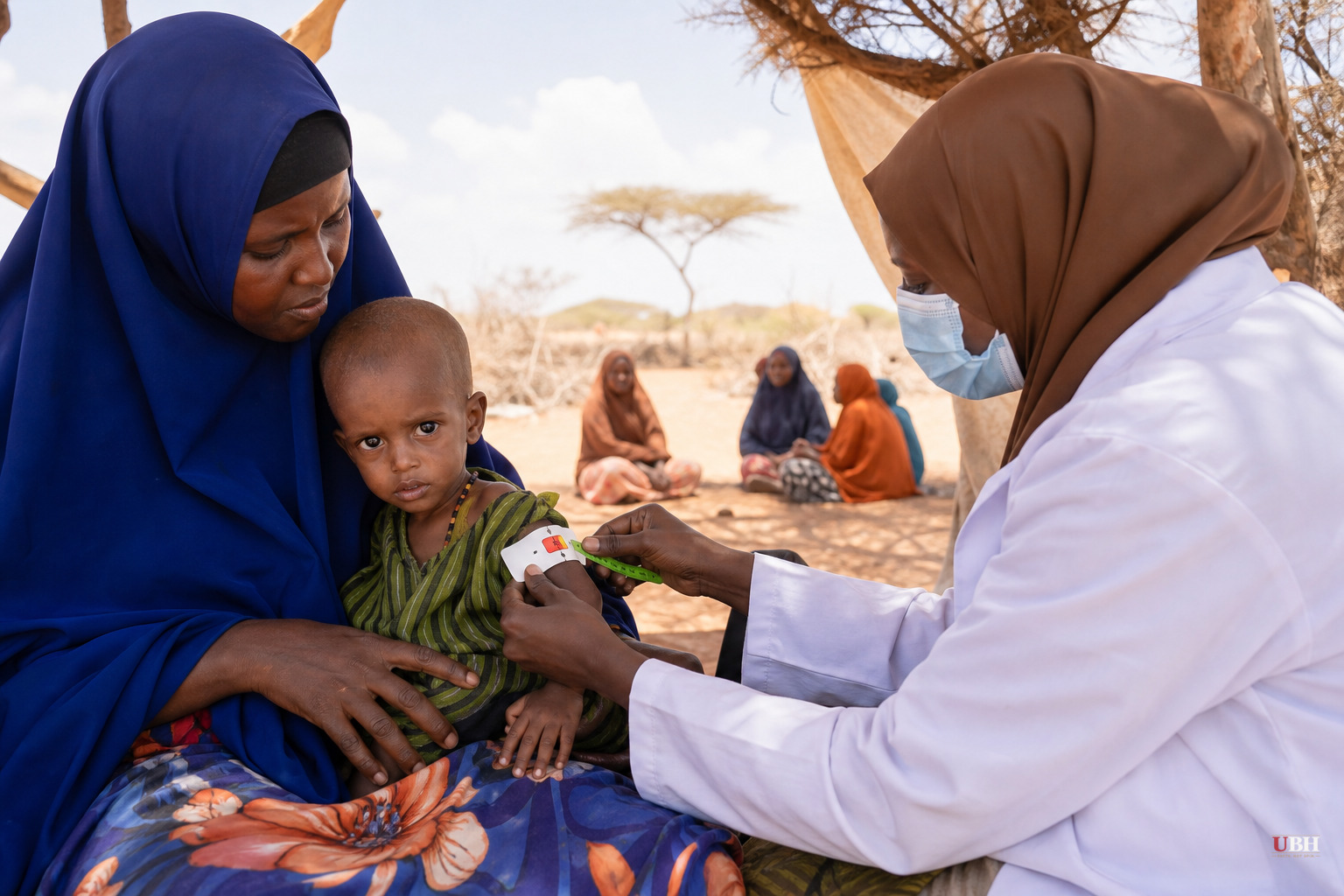
Nearly 1.9 million Somali children are projected to suffer malnutrition this year, UNICEF said Friday, August 21, as the agency tied a sharp rise in severe cases directly to funding cuts rather than a sudden change in conditions on the ground.
UNICEF spokesman James Elder, briefing reporters in Geneva via video link from Nairobi, said 205 health and nutrition facilities have already closed nationwide. Under what he called "severe funding scenarios," as many as 618 facilities could shut down.
Admissions of children with severe acute malnutrition and complications jumped 32% in the first six months of 2026 compared to the same period last year, according to UNICEF. Elder was specific about why: "This is not because more children are becoming sick," he said, according to SANA. "It is because preventive and community-based nutrition services have been cut, meaning vulnerable children are less likely to be identified and treated early."
UNICEF isn't just describing a worsening drought. It's describing a system that used to catch malnourished kids early, before they got critical, and now can't.
The money dried up fast
Doctors Without Borders (MSF) reported earlier in August that funding to fight acute malnutrition in parts of Somalia has dropped more than 80% this year. The United States halted funds, and other Western donor countries followed with their own cuts, according to Reuters.
Somalia was also excluded from a $2 billion global humanitarian aid pledge the U.S. announced for this year, Al Jazeera reported, because of allegations of aid diversion and corruption. That's a real and serious concern. Diverted aid doesn't feed hungry kids, it feeds warlords, middlemen, or corrupt officials, and donor governments have a legitimate obligation to taxpayers to make sure money reaches who it's supposed to. Nobody serious argues that oversight should be abandoned.
The practical result is that a country where roughly one-third of the population already faces severe food shortages just got cut off from a major funding stream. Nearly a million children under five, adolescent girls, and women now face losing nutrition services entirely.
Multiple crises stacking up
Somalia isn't just dealing with an aid gap. The country is in a severe drought that has killed livestock, wrecked harvests, and displaced roughly 500,000 people between January and April alone, adding to about 3.3 million Somalis already uprooted, according to Al Jazeera. Water prices in rural and pastoral areas have quadrupled.
On top of that, fuel and fertilizer costs have risen because of the U.S.-Israel war on Iran, Elder said. And a record-strength El Niño pattern is forecast to bring severe flooding in the coming months, which UNICEF warns could compound an already dire situation.
Elder didn't mince words about the timing. "This is the wrong moment to retreat," he said, according to Reuters. "Protecting children is not a discretionary expense. Preventing suffering is not an inefficiency, and dismantling effective aid at the moment of greatest need — it is not a saving."
The service losses go beyond health clinics. Ground News reported, citing UNICEF, that Somalia's education sector lost $30 million in 2025, at least 65 child protection facilities have closed, and more than 1.6 million people now lack access to safe water.
Between 2021 and 2025, UNICEF says it supported more than 2.25 million Somali children with severe acute malnutrition, achieving a 97.6% cure rate in 2025, according to SANA. That's the track record now under strain. It's a program that was demonstrably working before the money stopped.
Four UN agencies — FAO, OCHA, UNICEF, and the World Food Programme — warned back in May that roughly 6 million Somalis, 31% of the population, faced critical food insecurity, and that the country could see acute food insecurity reach catastrophic levels in coming months, according to FAO and WFP assessments cited by SANA.
The open question
Nobody in these reports disputes that Somalia has a real corruption and diversion problem, or that Western donors have legitimate reasons to tighten oversight on where aid money goes. What's unresolved is whether cutting funding wholesale, rather than fixing distribution and accountability, is actually protecting anyone's money or just shifting the cost onto malnourished five-year-olds. UNICEF hasn't detailed what reforms it thinks would let U.S. and Western funding resume. Washington hasn't publicly laid out conditions under which Somalia could be added back to next year's pledge list. Until one of those things happens, the facility closures keep climbing.
Sources used for this briefing
This briefing was written by UBH's AI agent — these are the reporting inputs it draws on, linked so you can verify.


