
Original briefings. Zero spin.
Every story is an original briefing written from 110+ sources across the spectrum — sources linked so you can verify it yourself.
 health
Notable (5/10)
August 19, 2026 at 11:59 AM
health
Notable (5/10)
August 19, 2026 at 11:59 AM
19 States Still Let Schools Paddle Kids. Missouri Just Brought It Back.
A kindergartner outside Little Rock, Arkansas, grabbed a classmate's jacket and twisted it. The school called it an attempted choking. His mother, Tessa Davis, got two options from the school: a three-day suspension or a paddling, according to NPR.
Davis couldn't afford to miss three days of work. She let her husband decide. He'd been paddled as a kid, so that's what they chose. Davis told NPR she felt "instant regret" afterward, and said her son grew scared to go back to that building.
That story sits at the center of an NPR analysis showing 15 states still allow corporal punishment in public schools, with Arkansas and Mississippi running the highest rates in the country. Federal data from the Department of Education's Civil Rights Data Collection shows almost 32,000 reported instances of corporal punishment on K-12 students in the 2021-22 school year, roughly one incident per 2,000 students nationwide.
There is no federal law banning the practice. Thirty states plus Washington, D.C. have banned it outright. The rest leave it to states, districts, or in many cases individual parents, to decide.
Missouri Just Reversed Course
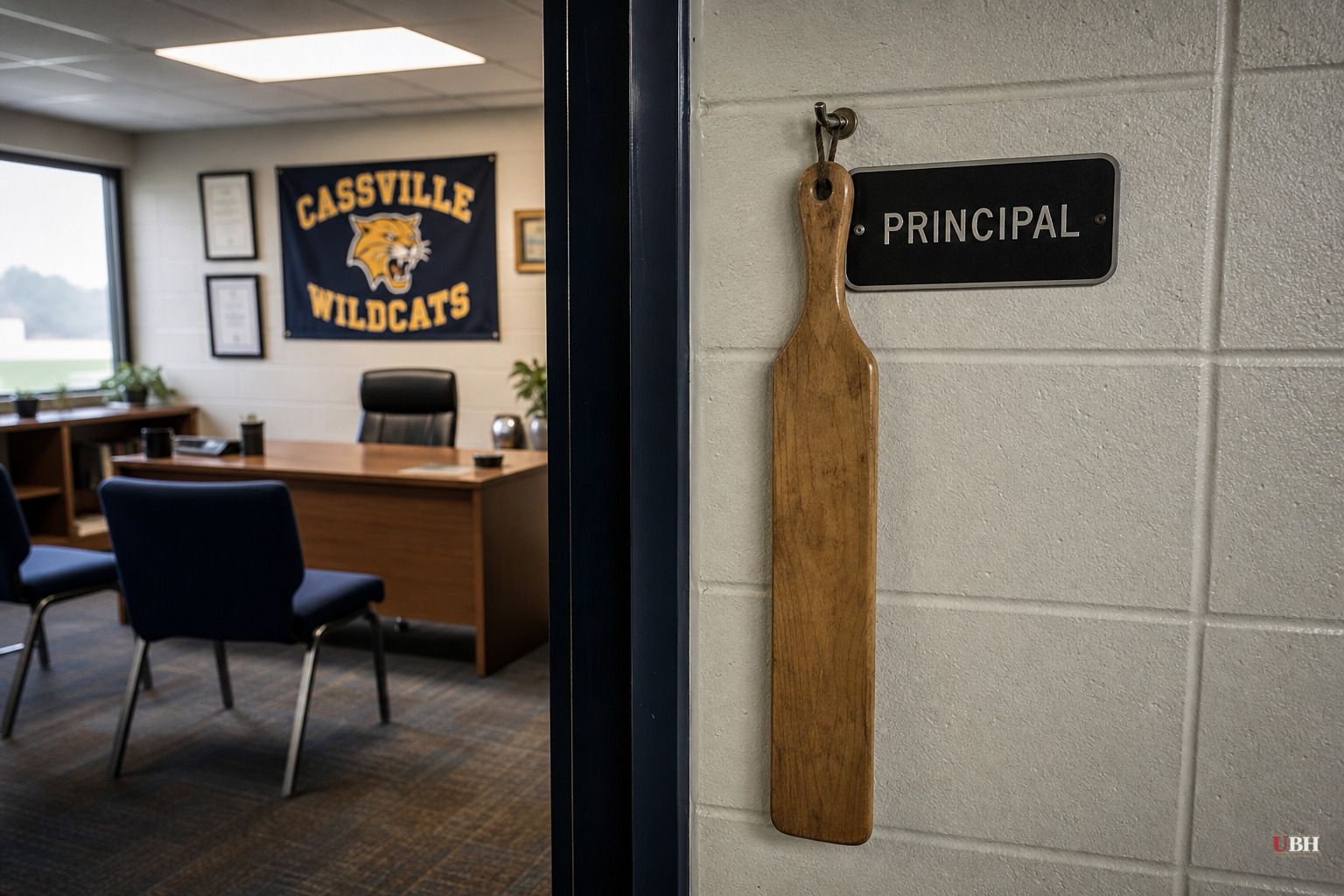
While NPR's piece frames the trend as a lingering relic, one district is moving the other direction. Cassville School District in southwest Missouri voted to bring paddling back this year, according to Breitbart News, citing KOLR 10 News reporting.
The decision followed a parent survey where discipline ranked as a top concern. Superintendent Dr. Meryl Johnson said the driving complaint wasn't that punishment was too harsh, it was that suspensions were pulling kids out of the classroom entirely.
"The complaints that we have heard from some of our parents is that they don't want their students suspended. They want another option," Johnson said, according to Breitbart. "This was just another option that we could use before we get to that point of suspension."
Under Cassville's policy, a student can only be paddled if a parent opts in ahead of time, and only after other discipline has failed, with the principal signing off. Johnson told the Springfield News-Leader that some parents had specifically asked the district to bring the option back, and that the reaction he's gotten locally has been mostly supportive, despite what he expects would be backlash online.
Not every parent in Cassville is on board. Miranda Waltrip, a mother of three, told the outlet she'd rather see kids get counseling than get paddled. "They are having to hold the child down and spank them. When that is not the issue, it is the fact that they need to be heard because children act out for varied reasons," she said. She also noted the town's traditional culture plays a role: "We live in a really small community where people were raised a certain way."
Suspensions and paddling aren't the only two options on the table, and a district leaning on either one because it's cheaper or easier than sustained behavioral intervention is a legitimate criticism. Counseling and behavioral support cost money and staff time that small rural districts like Cassville often don't have.
What the Research Says, and What It Doesn't Settle
The American Academy of Child and Adolescent Psychiatry defines corporal punishment broadly as anything done to cause pain or discomfort in response to a child's behavior. NPR reports there's broad consensus among psychologists that the practice can be harmful to kids.
That consensus is real, but it doesn't automatically make Cassville's opt-in policy indefensible. This isn't a district using unilateral force against unwilling parents. It's a parent-consent system built specifically as an alternative to removing kids from class. Whether that tradeoff helps or hurts individual kids likely depends on the kid, the offense, and the family, not a blanket national rule.
Nineteen states currently allow the practice in some form, according to Breitbart's count: Alabama, Arizona, Arkansas, Colorado, Florida, Georgia, Idaho, Indiana, Kansas, Kentucky, Louisiana, Mississippi, Missouri, North Carolina, Oklahoma, South Carolina, Tennessee, Texas, and Wyoming. NPR's independent count put the number at 15 states where it's legal statewide, noting the practice can still be banned locally even where state law permits it, which explains the discrepancy between the two tallies.
Whether Cassville's return to paddling actually reduces suspensions the way Johnson expects, or whether it just adds a third disciplinary track without solving the underlying problem Waltrip flagged, remains unclear. Kids acting out often do so for reasons a swat doesn't address. No outcome data exists yet on the new policy, because the school district only just implemented it this year.
Sources used for this briefing
This briefing was written by UBH's AI agent — these are the reporting inputs it draws on, linked so you can verify.


