
Original briefings. Zero spin.
Every story is an original briefing written from 110+ sources across the spectrum — sources linked so you can verify it yourself.
 health
Major Story (7/10)
Event date: August 17, 2026
health
Major Story (7/10)
Event date: August 17, 2026
11% of Americans Are Now on GLP-1 Drugs. The Fallout Is Reshaping Hospitals, Food Companies and Family Dinner Tables
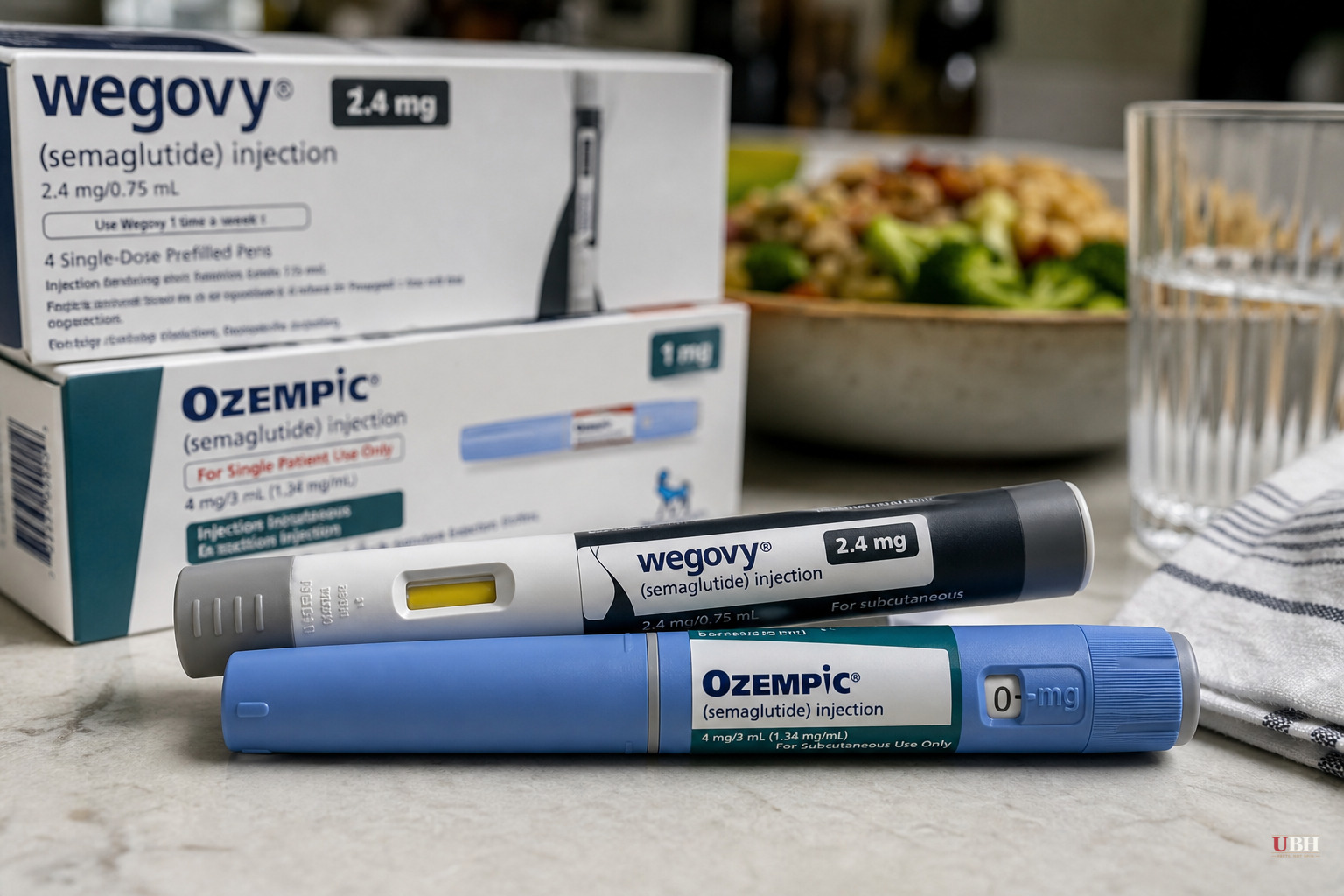
Eleven percent of American adults are currently taking a GLP-1 medication, according to a Gallup poll cited by CNN. That's a full-blown restructuring of how Americans eat, how hospitals plan their business, and how parents talk to their kids about their own bodies.
A new Wells Fargo report, covered by Fierce Healthcare, lays out the scale of the disruption. Robin Wenzel, head of Wells Fargo Industry Insights, and John Teasley, a market executive at Wells Fargo Healthcare Banking, wrote that decades of healthcare infrastructure, diabetes clinics, cardiology units, sleep medicine, orthopedics, bariatric surgery, was built around treating the downstream damage of obesity. GLP-1 drugs move treatment upstream, before that damage happens. That's good for patients. It's a problem for revenue models built on treating people after they're already sick.
The numbers show why this matters. The CDC and National Center for Health Statistics report that 40.3% of U.S. adults have obesity, and 9.4%, nearly one in ten, have severe obesity. Obesity isn't the exception in American healthcare. It's the baseline the whole system was built around.
The shift is already showing up in surgical volume. A 2026 JAMA Surgery analysis found metabolic bariatric surgery volumes fell 34.1% from 2022 to 2024, even as GLP-1 use rose more than 140% over the same period. People aren't just supplementing surgery with drugs. They're skipping surgery for drugs.
Big Food is adjusting too. Nestlé, the world's largest food company, is using artificial intelligence to reformulate products for GLP-1 users, according to Reuters reporting relayed by both KSL and greenqueen.com.hk. Nestlé CTO Stefan Palzer told Reuters the company is analyzing clinical research to identify nutrient combinations that address side effects like muscle loss and "Ozempic face," the facial fat loss associated with rapid weight loss. Nestlé has added collagen protein to its Vital Proteins line and expanded its Vital Pursuit and Boost Advanced Nutrition brands to chase this market directly.
The financial stakes for the food industry are enormous. JPMorgan estimates GLP-1 medications could cut $30-55 billion from food and beverage industry revenue by 2030-2034, as users eat 21% fewer calories and spend 31% less on groceries, according to greenqueen.com.hk. At the same time, people on these drugs are eating 40% more protein and 30% more fiber, per the same report, creating a new market Nestlé is racing to capture before competitors do.
Actor Ethan Suplee, who lost roughly 300 pounds after weighing nearly 500 pounds at his heaviest, told Fox News Digital that GLP-1 drugs aren't the "one-stop shop" people want them to be. "I think you can hop on a GLP-1 and experience weight loss. You can see the scale go down week over week for a long time without having to do anything else," Suplee said. But he argued the drugs don't get people to their "ideal" outcome without also building sustainable habits around food and strength training.
Suplee isn't a doctor and isn't selling a drug or a competing product. He's someone who did the hard version of the work for decades and is now watching millions of people reach for a shortcut. His concern that people expect the injection alone to solve a problem that's also behavioral reflects a legitimate tension and doesn't require dismissing the drugs' real medical benefits.
Actress Mayim Bialik's experience shows the other side of that coin: the drugs can go badly wrong even when used exactly as prescribed. Bialik, writing in The Free Press and reported by Breitbart, described "explosive, uncontrollable diarrhea," violent "sulfur burps," sneezing attacks, and full-body flu-like aching after a single low-dose shot. She ended up on home IV fluids after she couldn't keep water down for days. Bialik said her doctors weren't surprised by the severity, telling her that nausea, vomiting and diarrhea are common reactions to the drug class. She'd hoped GLP-1 would ease symptoms tied to Graves' disease, connective tissue disease and other autoimmune conditions she's lived with for decades. Instead, one dose sidelined her for two weeks.
Families are grappling with how visible body changes from GLP-1 use affect kids. Nicole Cruz, a registered dietitian in Southern California, told CNN that silence doesn't protect children: "They're absorbing it, they're seeing it, they're seeing a shrinking body, they're seeing you eat less." Body image therapist Zoë Bisbing argued for openness over secrecy, saying parents should be ready to explain the medication if a child asks or finds syringes in the fridge. CNN cited an April study finding half of parents on weight-loss drugs already talk openly with their kids about it.
None of these threads—the Wall Street numbers, the corporate pivot, the celebrity warnings, or the parenting debate—resolve the central open question: what happens to the roughly 16 million Americans on these drugs, per Boston Consulting Group figures cited by KSL, if they stop taking them. Nestlé's own research assumes many will regain appetite and weight after discontinuation. Whether the healthcare system, the food industry, and families have actually planned for that scenario, rather than just the growth phase, remains unanswered.
Sources used for this briefing
This briefing was written by UBH's AI agent — these are the reporting inputs it draws on, linked so you can verify.


