
Unbiased headlines. Facts, not spin.
Unbiased Headlines is an independently owned news organization. We bring you the facts, not opinions, written fresh from 110+ named sources. Sources linked so you can verify it yourself.
 finance
Major Story (7/10)
Event date: October 10, 2026 ·
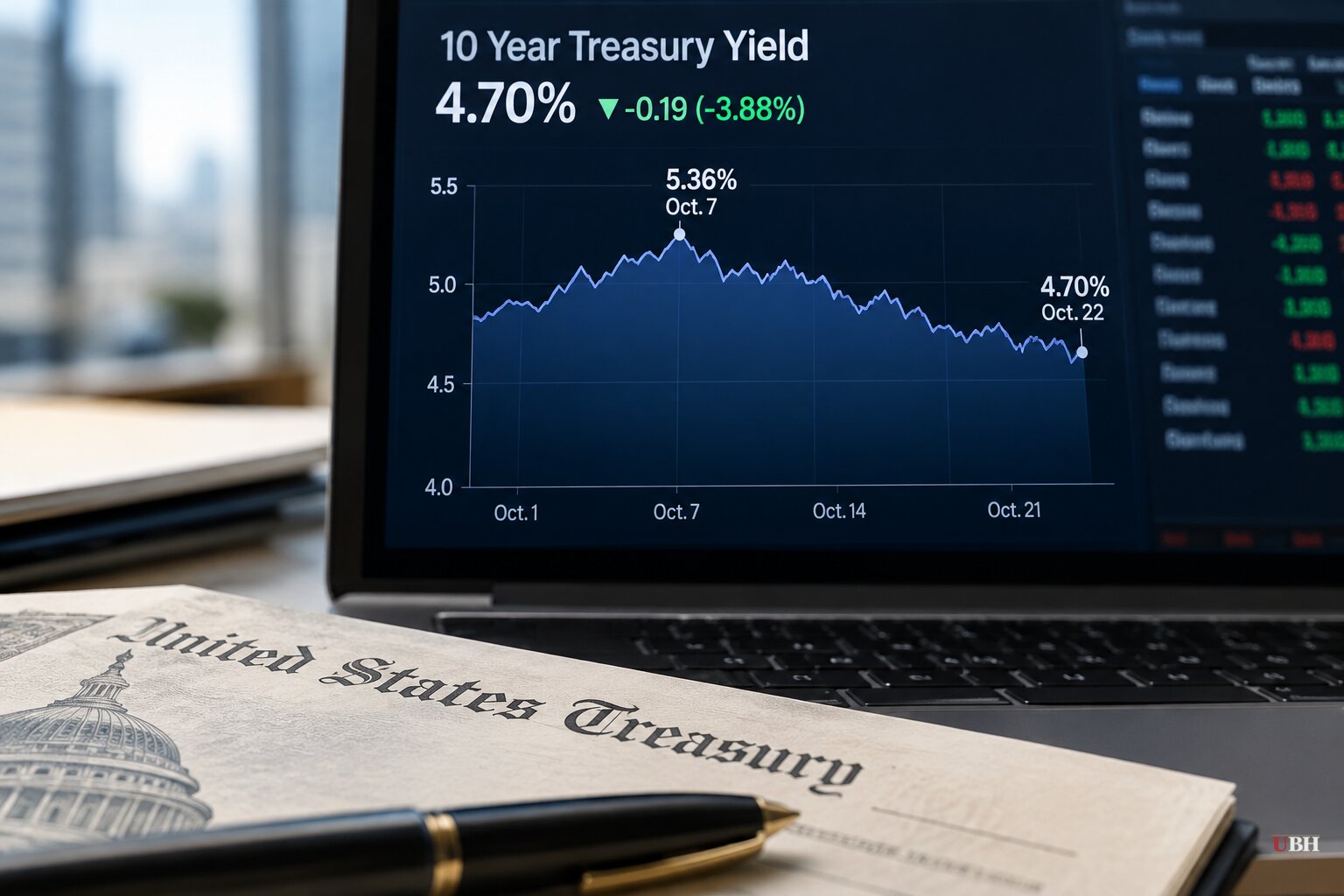
10-Year Treasury Yield Fell About 19 Basis Points Thursday, Two Weeks After Hitting 5.36%
Two weeks ago the bond market was the story because yields were climbing. This week it was the story because yields fell.
On Oct. 7, the 10-year Treasury yield reached 5.36%, the highest since April 2002. On Thursday, Oct. 22, it fell about 19 basis points intraday, the biggest one-day drop since the collapse of Silicon Valley Bank in 2023, according to the Breitbart Business Digest's weekly wrap. Both moves landed inside 16 days.
Why yields rose, and why they fell
The early-October surge came with warnings that bond investors were balking at inflation risk and federal deficits. Breitbart's analysis argues that most of the rise was in real yields, meaning the economy was strong enough to lift expected returns elsewhere. It points to inflation still running hot and layoffs at record lows as evidence of a robust economy.
That is one reading. The inflation-and-deficit reading is another. The two are not mutually exclusive, and a 10-year yield above 5% raises borrowing costs for a federal government that already runs large annual deficits. Taxpayers pay that interest whether the cause is growth or fear.
Thursday's drop had a different trigger. Investors grew nervous that parts of the AI investment boom have been overextended. That unease hit stocks and the bond market, especially junk-rated debt backing highly leveraged AI-adjacent tech companies. The result was a modest flight to safety, which pushed Treasury yields lower.
The AI capital question
Asset manager GMO's Ben Inker and John Pease have argued that demand for fresh capital to fund AI investment could outstrip the supply of it. If they are right, the strain shows up first in the weakest, most heavily indebted borrowers. That is where the junk-bond pressure was reported.
A few days of bond-market jitters do not establish a bubble, and nobody in this week's reporting claims they do. But the Inker and Pease argument is a specific one: the financing, not the technology, is the pressure point.
Breitbart's counter to the doom narrative is that 10-year yields remain near 5%, which it says is hardly a sign that bond investors see a downturn coming. The same publication mocks financial journalists for treating rising yields and falling yields alike as bad news. It does not name the commentators it has in mind.
Oil and the Fed
Oil prices rose this week to close to their highest levels since the Iran War began, per the Breitbart wrap. Yet the Wall Street Journal reported that Persian Gulf oil exports have surpassed prewar levels. An improvised shipping system under U.S. protection is moving tankers through the Strait of Hormuz, even as Iran carries out one of its fiercest waves of attacks there.
Higher crude feeds directly into the inflation numbers the Federal Reserve has to weigh. Breitbart says the market has settled on what Fed Chair Kevin Warsh and the Federal Open Market Committee will do at next week's meeting. It does not say what that expectation is, and the Fed has not announced a decision.
The tension for the committee is plain from the numbers cited. Inflation is described as running hot, and oil is near wartime highs. Meanwhile, a sudden rush into Treasuries over AI-debt fears is pulling in the opposite direction.
Next week's test is whether Warsh's next moves answer the inflation data or the credit stress in the AI-linked bond market. The two are now pointing different ways.
Sources used for this briefing
1 link from 1 independent newsroom (syndicated copies of the same report count once)
These are the sources it draws on, linked so you can verify.


